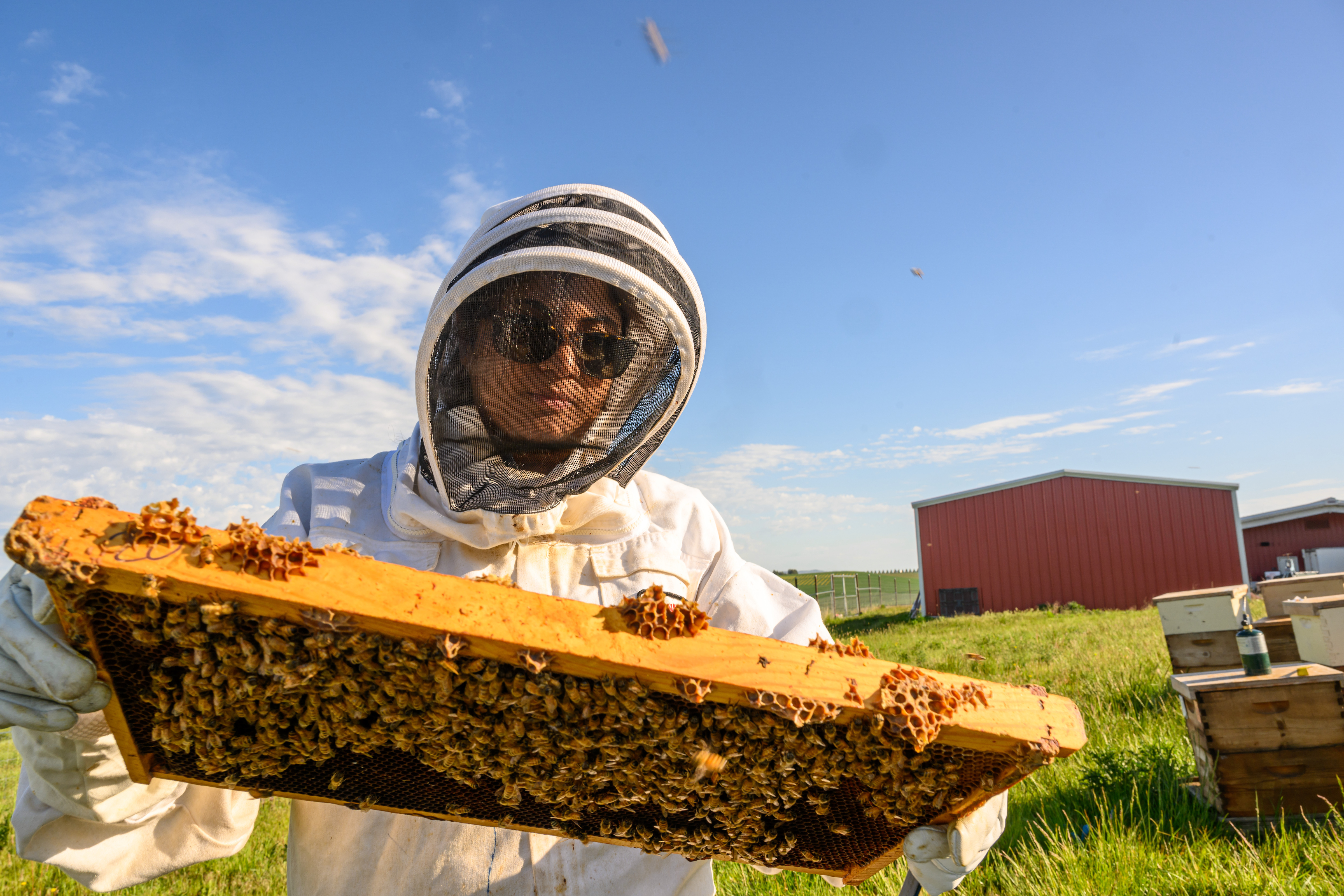
The honey bee is having a rough couple of decades, and the fact that WSU scientists are the ones digging in the dirt to pull it back from the edge should make every Coug who has ever driven past a Palouse field of canola feel a little better about the state of the world. This is not a story about a feel-good research grant or a headline grab. It is about the unglamorous, relentless work of keeping the thing that feeds us from collapsing, and it is happening in Pullman because that is where the work has always happened. When the bees wobble, the entire food chain wobbles with them, and Washington State University is not waiting for someone else to fix it.
What we appreciate about this story is that it does not try to sell you on the romance of the hive. It is not about saving the bees because they are pretty or because a bumper sticker told you to care. It is about the hard, specific, often tedious labor of understanding why the colonies are dying and what can be done to keep them alive. That is the same spirit that runs through the rest of the university's best work. You see it in the way rural schools swap diesel for sun, and the whole town breathes easier, a reminder that WSU's reach goes beyond the campus borders and into places where the payoff is not a publication but a cleaner classroom and a lighter utility bill. And you see it in the way WSU's old reactor know-how is writing the next chapter, where the university is not pretending the past is a museum piece but using it as a foundation for something that could power the future.
The practical takeaway here is not that you should run out and buy a hive or start a pollinator garden, though that would not hurt. It is that WSU is doing the kind of work that does not make the evening news but keeps the lights on and the groceries stocked. The scientists are not looking for a pat on the back; they are looking for a solution, and that is a different kind of motivation. It is the same stubbornness that got a land-grant school built in the middle of a wheat field in the first place. When the bees are in trouble, you do not call a consultant. You call the people who have been studying them for years, and you let them do what they do.
Here is the detail to watch: the bees are not going to be saved by a single miracle fix, and anyone telling you otherwise is selling something. The question is whether the state and the industry will give WSU the runway to keep going, because this kind of research is a marathon, not a sprint. If the university can keep the pressure on, the payoff is not just a healthier hive; it is a more stable food supply for everyone who eats. That is the point. That is the whole point. Go Cougs.