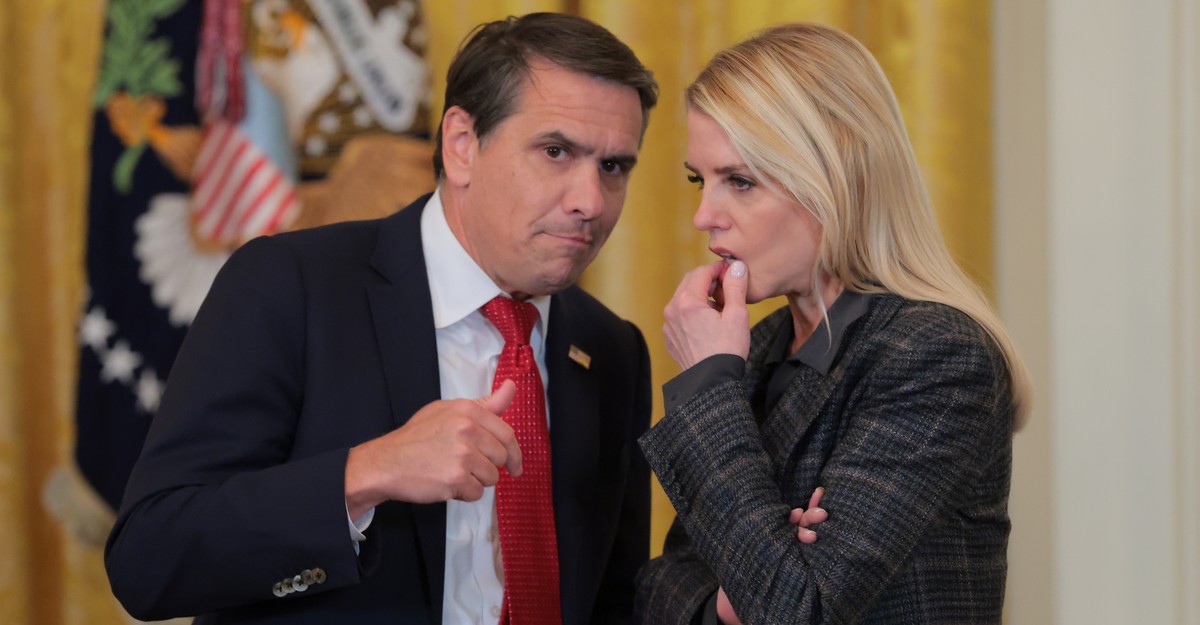
The recent departure of Attorney General Pam Bondi from her role in Donald Trump’s administration underscores a troubling trend within the U.S. government, where loyalty to the president often supersedes the rule of law. Over the years, we have witnessed the instability of Trump’s Cabinet, characterized by a revolving door of dismissals and appointments. As noted in analyses like Pam Bondi Couldn’t Possibly Succeed, her tenure highlights how even those with a strong track record can find themselves ensnared in the politically charged environment of the Trump administration. As Bondi exits, it’s essential to contemplate what her departure signifies for the future of the Justice Department and the integrity of its operations.
Bondi's initial appointment seemed promising; she was a known ally of Trump, with a respectable legal background as Florida's attorney general. However, her inability to navigate the tangled web of Trump’s expectations—particularly regarding the Epstein scandal and perceived failures to launch politically motivated investigations—ultimately led to her downfall. The frustration Trump expressed in his Truth Social post about her departure reveals a larger issue: the impossible demands placed on those in high office, particularly within the Justice Department, to act as political enforcers rather than impartial legal guardians. This dynamic risks eroding public trust in the institutions designed to uphold justice, as the lines between political loyalty and legal obligation blur.
Moreover, Bondi’s tenure, marked by a significant departure of seasoned attorneys from the Justice Department, raises critical questions about the long-term impact on legal integrity. Many of those who left cited a decline in the Department's core mission—serving justice independently from political pressures. This situation is emblematic of a broader trend in which the executive branch's increasingly politicized approach to governance threatens the foundational principles of American democracy. As detailed in the article, the Justice Department, under Bondi, became a tool for advancing Trump’s agenda rather than a bastion of impartiality. This transition has profound implications for the rule of law and civil liberties in the United States.
Looking ahead, the appointment of Bondi’s successor will be pivotal. Trump’s choice for a new attorney general will likely reflect his need for unwavering loyalty, rather than a commitment to uphold the law impartially. As the administration continues to grapple with the constraints of reality versus the expectations of its most ardent supporters, we must consider what this means for the future of governance in America. Will the next attorney general further entrench the politicization of the Justice Department, or will they push back against the currents of loyalty that threaten to undermine its independence? The answer to this question may well define the future trajectory of legal accountability in the United States, signaling whether the Justice Department can reclaim its role as a fair arbiter of the law or if it will continue to be perceived as an extension of presidential power.
As we observe these developments, it’s crucial for citizens to remain vigilant and engaged. The integrity of our institutions hangs in the balance, and the choices made by those in power today will echo in the legal and political landscape for years to come. What steps will the incoming attorney general take to restore faith in a justice system that currently feels compromised? How will they navigate the expectations set by a president who seems more concerned with loyalty than legality? As we ponder these questions, the importance of accountability and transparency in governance becomes ever clearer.