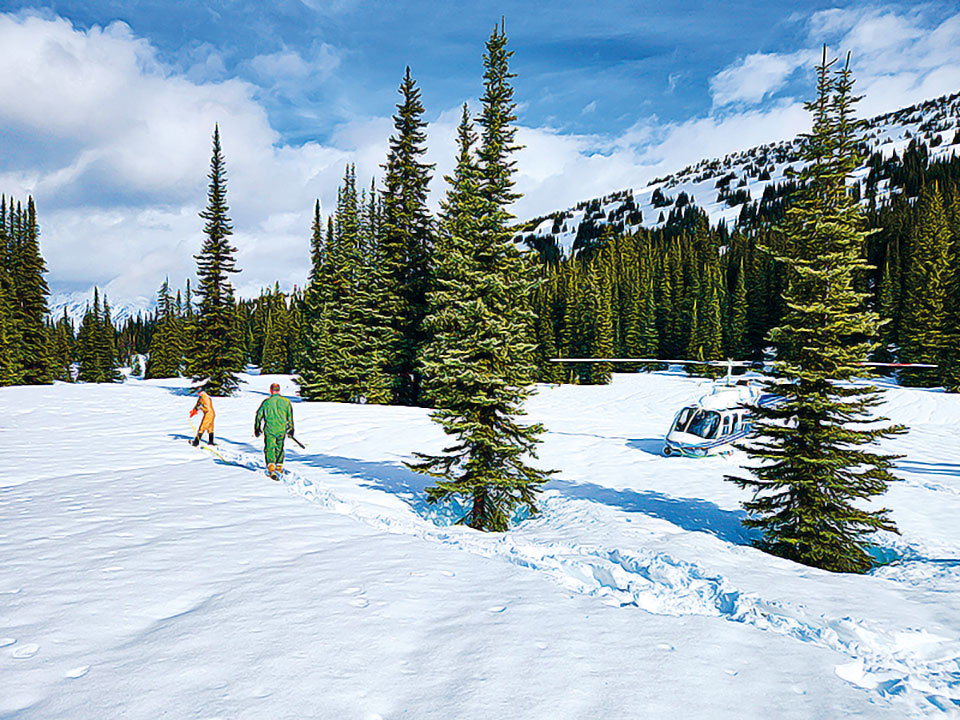
We're going to say this plainly: AI predicting snowpack sounds like the kind of futuristic tech that belongs in a lab far from the Palouse, but this is exactly the sort of work Washington State was built for. Toby Rodgers ('00 MS Soil Sci.) is stepping out of a helicopter near Hart's Pass and standing on eight feet of snow after a warm winter, and that disconnect, between what we feel in the air and what's actually sitting on the ground, is the multibillion-dollar riddle that researchers are betting AI can solve. It is not a flashy bet. It is a practical one, and it matters for every farmer in the Northwest who watches the spring melt like a stock ticker.
This is the same institution that is also figuring out how to treat the nightmares PTSD leaves behind, and we think that is not a coincidence. Land-grant universities are supposed to tackle the hard, unglamorous problems that keep people up at night, whether that is a veteran sleeping through the dark or a grower wondering if the irrigation ditch will run dry. Dean Khosla made the case that land-grant still means something, and this snowpack project is exactly the kind of proof he is talking about. It is not about publishing a paper for the sake of it. It is about asking a question that has a direct line to someone's livelihood.
This is the kind of story that reminds you why Pullman matters even when you are not in the stands. The snowpack riddle is not solved yet, and there is a long way between a helicopter landing and a reliable forecast. But the fact that WSU is putting the resources into this, that they are willing to let AI chew on decades of field data, says something about how the university thinks about its job. It is not trying to be the biggest name in tech. It is trying to be the one that answers the question nobody else has the patience to crack.
The specific takeaway for a Coug texting a friend is this: pay attention to how this project handles a warm winter. If the AI can learn from an anomaly like the one Rodgers measured in April, it becomes more than a lab experiment. It becomes a tool that could tell a wheat farmer in the Palouse whether to plant early or hold off. That is the kind of difference that keeps a town running, and it is the kind of work that makes you proud to have a degree from a place that still thinks that is its job. Go Cougs.