Critics trade new labels for old ones as the administration shifts gears.This is an edition of The Atlantic Daily, a newsletter that guides you through the biggest stories of the day, helps you discover new ideas, and recommends the best in culture. Sign up for it here.
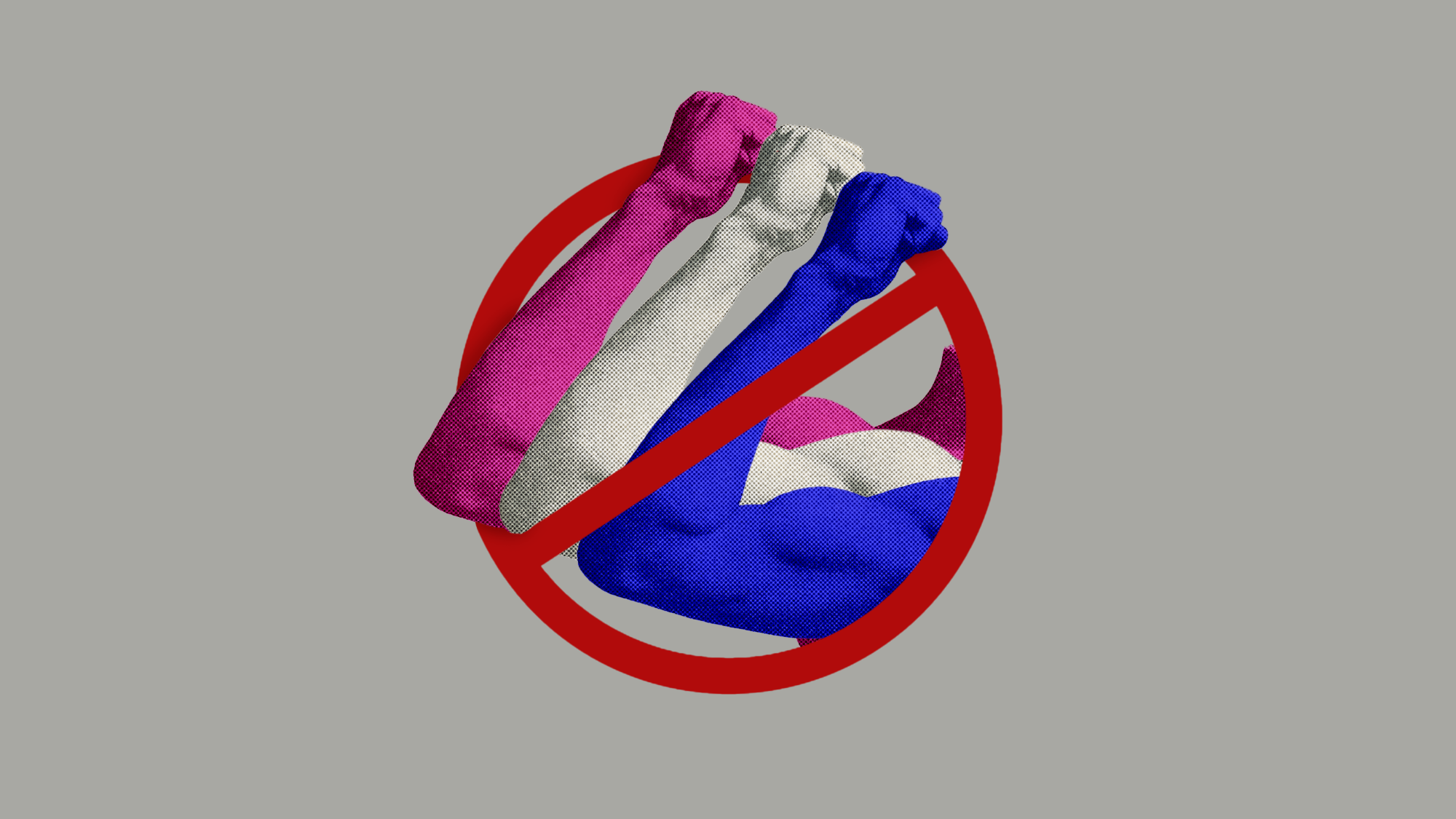
Critics have used many phrases to describe Donald Trump’s presidency, some of them unprintable. Scholars and journalists have debated whether Trump’s approach is “authoritarian,” “white supremacist,” or “fascist.” More recently, however, a growing number of people have begun referring to the “Trump regime.”
“The Trump regime has proven over and over,” The New Republic’s Michael Tomasky wrote, that its morality is “the advantage of the stronger.” A fellow at the libertarian Cato Institute complained that oversight tools “were effectively destroyed by the Trump regime last year.” And a writer for The Nation called for Democrats to “launch a ‘Nuremberg Caucus’ to investigate the crimes of the Trump regime.”
Google Trends shows that although the phrase was occasionally deployed during Trump’s first term, it has become far more common over the past year. These usages are meant to tell us something about the state of contemporary politics in the United States—although exactly what is not always clear.
Ambrose Bierce, the sardonic author of The Devil’s Dictionary, might have observed that a “regime” is any government that one doesn’t like. Those referring to the “Trump regime” this way seem to be implying that the administration is rapacious and authoritarian. But few of them are explicit about that, and their counterparts in the academy indulge in the same vagueness. “Very rarely do regime analysts stop to define what they mean by political regime,” the political scientist Gerardo L. Munck complained in 1996. The word was popularized in American politics as a sort of euphemism: During the George W. Bush presidency, regime change was a bloodless, technocratic term for the bloody, chaotic effort to topple Saddam Hussein and install a democratic system of government in Iraq.
A good working definition, Munck told me in an email, is “the set of rules that regulate how people come to occupy government offices and how government decisions are made.” But even scholars often employ the term as a pejorative, used to describe authoritarian government. These “regimes” tend to have two main characteristics, sometimes overlapping though also in tension: first, the personalization of government around a single individual, and second, a set of informal power structures, such as business oligarchs or a “deep state,” that operate outside of the formal system of government.
One could argue that the U.S. has had the same “regime” since 1789, when the Constitution entered into force and George Washington became president. Alternatively, one could look to moments such as the post–Civil War amendments or the New Deal as shifts in the regime. Either way, to state that Trump oversees a regime is to suggest an epochal change.
That’s how Robert Reich sees it. Reich, a commentator and professor who served as secretary of labor under Bill Clinton, has been one of the most consistent and prominent users of the phrase. “I began referring to the Trump ‘regime’ rather than ‘administration’ because, especially in his second term, Trump has acted more like an authoritarian ruler than a president in a constitutional system of governance,” he wrote to me in an email. “This is no ‘administration’ that manages the executive branch by implementing the will of Congress, as expressed by the citizens of the United States.”
I thought that perhaps scholars of regime systems would push back on using the label for Trump’s government, but the ones I spoke with cautiously endorsed it. “In the past, it was common to refer to the Pinochet regime in Chile or the Saddam Hussein regime in Iraq,” Munck said. He told me that the use of Trump regime “is a correct appreciation, that highlights a key weakness in the current state of democracy in the U.S.” And Licia Cianetti, a political scientist who recently co-authored a paper on defining the word, wrote to me that “the personalisation of Trump’s style of rule, and some features like its oligarchization, make the use of ‘regime’ in this pejorative sense expedient to express what seems to be happening to American democracy.”
Without downplaying the dangers that Trump poses to the American way of government (perils that The Atlantic has been aggressive in describing), I am not ready to join the “Trump regime” crew yet. One reason is that regimes can be resilient—a point that, ironically, Trump’s actions have demonstrated. “We have, really, regime change,” Trump said about Iran this week. “This is a change in the regime because the leaders are all very different.” That’s nonsense. Although American forces have arrested Venezuelan President Nicolás Maduro and killed several Iranian leaders, removing the dictators has not dislodged the dictatorships in either Caracas or Tehran.
The 250-year-old democracy in Washington might also be stronger than those who wish to undermine it believe. Trump may hope to topple the laws and checks that constrain him, but he has not yet fully succeeded. Polls show widespread voter disapproval of Trump’s presidency and suggest trouble for the president’s allies in the midterm elections. Fair elections in 2026 and 2028 would not undo all of the damage Trump has done, but they would show that some observers have overstated his ability to demolish the constitutional system. Long live the regime!
Related:
Jonathan Rauch: Yes, it’s fascism
John R. Bolton: A foreign policy worse than regime change
Here are four new stories from The Atlantic:
A turning point in the Iran war
Is the end of NATO near?
The worst airport in America
The immigration restriction Trump won’t try
Today’s News
Iran allowed several Pakistan-flagged oil tankers to pass through the Strait of Hormuz, a move President Trump described as a “present” to the U.S. that signals Iran’s openness to negotiations.
Nicolás Maduro and his wife, Cilia Flores, appeared in New York federal court for the first time since their seizure by U.S. authorities in January, as Maduro’s lawyer pushed to dismiss drug-trafficking charges, arguing that U.S. restrictions are preventing them from funding their defense. The couple—who have pleaded not guilty—remain in custody.
Several Senate Republicans are urging the White House to invoke the National Emergency Act and temporarily pay TSA officers if the Department of Homeland Security funding standoff over immigration enforcement continues, according to people familiar with the matter.
Dispatches
Time-Travel Thursdays: Rafaela Jinich explores work in The Atlantic by Tracy Kidder, the Pulitzer Prize–winning journalist who died this week at 80.
Explore all of our newsletters here.
Evening Read
Illustration by The Atlantic. Source: clavicular0 / Instagram
What Was Clavicular?
By Will Gottsegen
Clav, as he’s known, has had a moment this year. Seemingly overnight, he became wildly popular among the lost boys of the internet—the kinds of people who spend their time watching Nick Fuentes, the white-supremacist influencer, and Andrew Tate, the proudly misogynistic elder statesman of the manosphere, who is currently awaiting trial on charges of rape and human trafficking (he has denied the allegations). In January, Clavicular joined Tate, Fuentes, and the extremist podcaster Myron Gaines at a nightclub in Miami. Videos of the group listening to the Kanye West song “Heil Hitler” went viral; Clavicular was singing along.
Read the full article.
More From The Atlantic
The countdown to a ground war
Elizabeth Bruenig: The evidence that God exists
ICE might be violating America’s other bill of rights.
Protecting a hero too long
OpenAI is doing everything … poorly.
RFK Jr. is losing his grip on the CDC.
Culture Break
Illustration by Lore Mondragon
Read. Robert Rubsam on a novel about women who trade one kind of captivity for another.
Explore. Lindy West has unwittingly written the obituary for Millennial feminism, Helen Lewis writes.
Play our daily crossword.
Rafaela Jinich contributed to this newsletter.
When you buy a book using a link in this newsletter, we receive a commission. Thank you for supporting The Atlantic.
The Market's Quiet Vote on What Comes NextThis is an edition of The Atlantic Daily, a newsletter that guides you through the biggest stories of the day, helps you discover new ideas, and recommends the best in culture. Sign up for it here.
On Friday, after almost a full month of bombing Iran, Donald Trump offered a glimpse of the end. American military operations in the country, he said, could soon be “winding down.” A day later, he swerved, giving Iran an ultimatum: Should its leaders refuse to lift their effective blockade on the Strait of Hormuz within 48 hours, unfreezing much of the world’s oil, he would “obliterate” the nation’s energy infrastructure. Then, yesterday morning, another swerve: Following “productive” diplomatic talks, Trump would postpone the deadline until Friday. Never mind the fact that Iran has denied that any such talks took place.
The president hasn’t always been clear about what he wants from this war—or how he plans to mitigate the energy crisis it has created. At one point, he suggested that the spike in oil prices might actually be a good thing, because “we” could stand to “make a lot of money.” That’s true for oil producers, although not exactly a counter to all of the negative effects of a global energy shock. But the timing of this ultimatum and the timing of its subsequent deferral are revealing in their own way. Oil-futures markets don’t trade from Friday to Sunday evening. Because Trump’s threat to Iran arrived on a Saturday night, speculators had a short buffer—a little less than a day—to assess the potential price impact before trading resumed. And the reprieve, which lasts exactly five days, will conclude as markets head into the weekend pause.
The persistent rise of U.S. Treasury yields, coupled with the news yesterday morning that Asia’s markets (which start trading before Western markets) had plummeted after the ultimatum, probably also contributed to the postponement. John Bolton, who served as Trump’s national security adviser from 2018 to 2019, told The Atlantic that during Trump’s first term, foreign-policy announcements were sometimes timed with trading hours in mind. Those calls were made both by the president himself and by Treasury officials who advised him to do so. Trump’s second term has only clarified how much power the markets seem to have over his decision making—and other countries are likely paying attention.
Intentionally or not, certain military actions in Iran have aligned with weekend market pauses. And Trump has made at least one big decision that explicitly hinged on the market’s reaction: The initial announcement of last year’s “Liberation Day” tariffs, which resulted in the most significant equities-market shake-up of Trump’s second term, was deliberately delayed until the end of the trading day, Atlantic reporting has confirmed. The president has also enjoyed his power over the markets more broadly. My colleague Jonathan Lemire told me that, according to his reporting, Trump has in the past alerted aides when he thought an upcoming social-media post would get a reaction from Wall Street—and then watched the ticker move in real time. (“The Administration is naturally attuned to how major policy decisions affect financial markets and the economy, but any implication that the President’s decision-making—and timing—is influenced by anything other than the best interest of the American people is baseless and false,” a White House spokesperson wrote in a statement to The Atlantic.)
It’s easy to get conspiratorial about how, exactly, Trump times these moves. After all, not every foreign-policy decision can be chalked up to markets alone. The United States’ and Israel’s initial strikes on Iran were planned to coincide with a meeting of top Iranian leaders. That meeting happened to be on a Saturday. The timing of the raid on Nicolás Maduro’s compound reportedly had to do with the weather in Caracas in January; unfavorable cloud conditions delayed the capture of the Venezuelan president for days. Lucky, then, that the clouds cleared up on a Saturday—energy markets had a chance to figure out what the effects of the intervention might be before they reacted.
Thomas Wright, an Atlantic contributing writer and a senior fellow at the Brookings Institution, told me that although Trump has long cared about shifts in U.S. Treasury yields (Barron’s went so far as to call them his “kryptonite”), his recent actions have underscored the importance of energy markets in his decision making. “We’ve discovered in the Iran war that he’s also very sensitive to the price of oil—which we could have gathered from what he said over many years—but I think we have some evidence to it,” he said. Yesterday, Trump appeared to acknowledge the link between oil prices and the timing of his policies; after he announced the delay of his ultimatum on Iran, the price of oil slid and the stock market bounced back. “The price of oil will drop like a rock as soon as a deal is done,” Trump told reporters. “I guess it already is today.”
Iran is likely keeping tabs on Trump’s sensitivity to the markets too. When the price of oil shot up after the start of the war, the consequences set in for Americans pretty quickly: Gasoline is up; jet-fuel prices are up, compounding the ongoing chaos at American airports; and groceries and other everyday items are poised to get more expensive as well. Iran knows it has at least some leverage here. Trump’s apparent willingness to make decisions based on the markets is a liability—the more he reacts, the more easily he can be exploited.
Jonathan Lemire and Vivian Salama contributed reporting.
Related:
Is Trump actually having “very good” talks with Tehran?
What happens if oil hits $200 a barrel?
Here are four new stories from The Atlantic:
George Packer: The end of human rights
Canada’s polite pogrom
Military families once again brace for a knock.
“You want to leave us alone with Mojtaba?”
Today’s News
The Pentagon is preparing to deploy an elite combat brigade from the Army’s 82nd Airborne Division to the Middle East, adding to recent U.S. military buildups in the region. Officials say no decision has been made about whether they will send troops into Iran.
Senators said that they are nearing a deal to fund most of the Department of Homeland Security, including TSA, while excluding the agency responsible for immigrant arrests and deportations. Political pressure to end the partial shutdown has mounted due to massive airport disruptions across the country.
Minnesota sued the Trump administration, seeking access to evidence in the killings of Alex Pretti and Renee Good, who were shot by federal immigration agents. The state alleged that federal officials have blocked state investigators.
Evening Read
Illustration by Alisa Gao / The Atlantic
The Most Urgent Issue for the U.S. Catholic Church Isn’t Abortion Anymore
By Francis X. Rocca
Not so long ago, when U.S. Catholic leaders said something political, they tended to sound like conservatives. American bishops’ most prominent policy statements focused on three issues: same-sex marriage, contraception, and—above all—abortion. Their frequently stated opposition to all three put them at odds with not just the left but also many Catholics. It even created tension with Rome.
Since Donald Trump’s reelection, however, the Church in the United States has been sounding more liberal. Its teaching hasn’t changed, but the president’s second term has shifted the bishops’ attention. The most urgent political concern for America’s Catholic leaders is no longer abortion; it’s immigration.
Read the full article.
More From The Atlantic
The meme-washing of RFK Jr.
Iran is trying to defeat America in the living room.
Americans are learning that public safety is not a given.
Europe’s far right is turning on Trump.
The strategic follies of the Islamic Republic
Culture Break
Illustration by Matteo Giuseppe Pani / The Atlantic
Explore. A new WNBA labor agreement represents a breakthrough in women’s-sports history, Jemele Hill writes.
Watch (or skip). Project Hail Mary (in theaters now) should be easier to root for, David Sims argues.
Play our daily crossword.
Explore all of our newsletters here.
Rafaela Jinich contributed to this newsletter.
When you buy a book using a link in this newsletter, we receive a commission. Thank you for supporting The Atlantic.