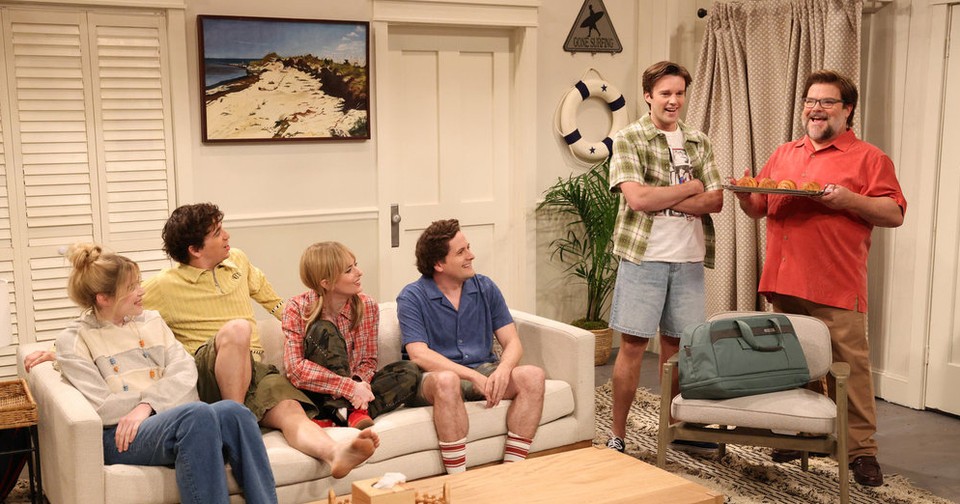
The recent *Saturday Night Live* sketch featuring Jack Black as an overzealous Airbnb host shines a light on a growing tension in social interactions, particularly in our increasingly digital world. What defines a “good” host can vary widely among travelers; some crave a personalized experience complete with homemade pastries and quirky activities, while others simply want a clean, private space to unwind. This discrepancy in expectations not only reflects individual preferences but also highlights a broader societal challenge: the struggle to navigate the boundaries of human interaction in an era marked by both hyper-connectivity and depersonalization. This theme resonates with other recent discussions, such as how peer mentoring supports neurodivergent students or the ethical implications of disinviting commencement speakers in academia.
The sketch cleverly illustrates how a friendly impulse can become intrusive when social cues are misread. Bob, the over-eager host, misunderstands the dynamics of his guests' desire for privacy, showing how, in contemporary life, the line between hospitality and over-familiarity can easily blur. The discomfort experienced by the guests is emblematic of a cultural shift where traditional social norms are often challenged by the expectations set by online interactions. In a time when we can connect with anyone at the click of a button, the nuances of face-to-face communication can become lost, leading to awkward, even invasive situations. This highlights a vital conversation about how we cultivate and maintain boundaries in our interactions, both online and offline.
Moreover, the sketch's humorous take on Bob's obliviousness reflects a broader societal trend toward casualness in relationships, often facilitated by platforms like Airbnb that promise a more intimate, home-like experience. Yet, the expectation of camaraderie can backfire, as illustrated by the guests’ mounting frustration. Their experience serves as a cautionary tale for both hosts and travelers: while genuine friendliness is often appreciated, it can easily cross the line into discomfort if boundaries aren't respected. It’s a reminder that the art of hosting—or simply interacting—requires a delicate balance of warmth and respect for personal space.
As we reflect on the implications of this sketch, it raises an important question for our evolving social landscape: How do we establish and communicate boundaries in a way that fosters genuine connection without overstepping? The intersection of technology and social interaction is a topic worthy of exploration, especially as we navigate relationships in diverse settings. As more people turn to short-term rentals for travel and experiences, understanding the nuances of hospitality will be crucial. What can we learn from Bob’s blunders to enhance our own social interactions, whether at home or in public spaces? It’s a question that invites both humor and introspection, urging us to consider how we can create welcoming environments that respect individual comfort levels.