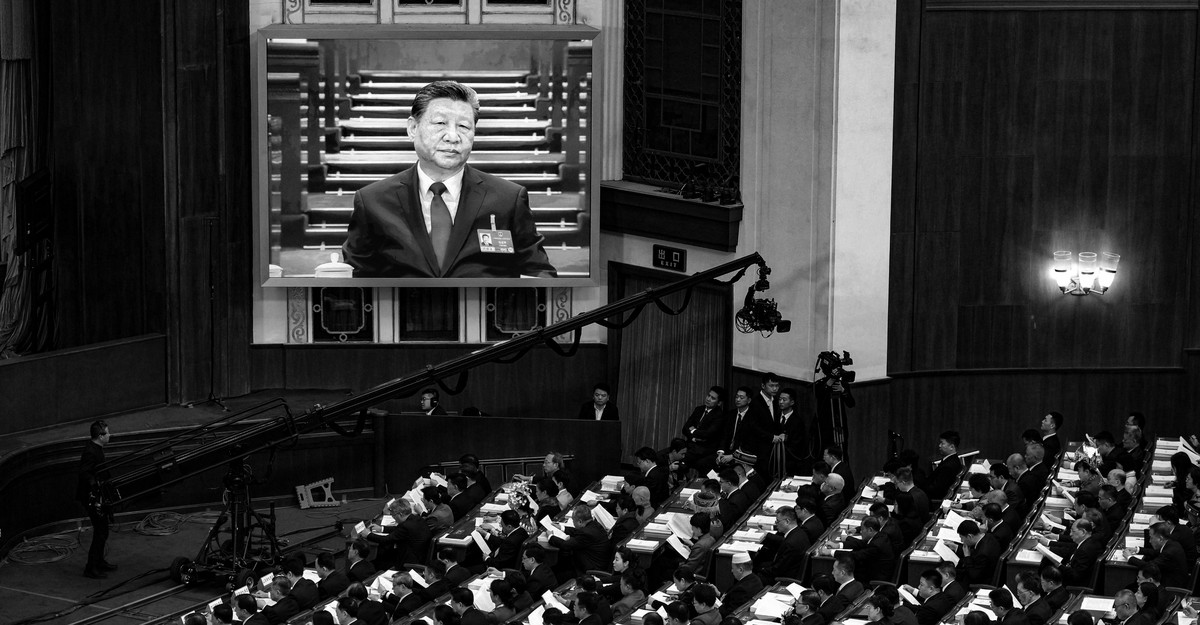
The recent discourse surrounding Donald Trump’s admiration for Chinese President Xi Jinping raises serious questions about the allure of authoritarian leadership and its implications for global politics. In a 2024 episode of Joe Rogan’s podcast, Trump praised Xi as a “brilliant guy” for his ability to control 1.4 billion people with an “iron fist.” This reflection on Xi's leadership style appears to romanticize autocratic governance, overlooking the significant challenges that such a centralized authority can present. As seen in other contexts, including the court ruling for Texas State and the Kentucky State University lawsuit, the implications of prioritizing power over accountability can be dire.
What Trump seems to ignore is how Xi’s heavy-handed approach has, in many respects, weakened China. The removal of key military figures, like General Zhang Youxia, signals a regime more focused on consolidating personal power than fostering institutional strength. The ongoing purges within the People’s Liberation Army, where 40 out of 44 top officers have been either dismissed or gone missing, demonstrate a dangerous trend. As noted by analysts, these actions can sap military readiness and effectiveness, rendering China vulnerable at a critical time, especially amid geopolitical tensions exacerbated by Trump’s own foreign policy maneuvers. The implications of these leadership choices are profound, particularly as China’s economy struggles under the weight of Xi's rigid policies and lack of reform.
Xi’s leadership style starkly contrasts with the technocratic pragmatism that characterized China's rise to economic prominence in the past. In the 1980s, the Communist Party embraced a system that encouraged power transitions and policy discussions, all of which have eroded under Xi's tenure—replaced by a culture of fear and loyalty. This shift has not only stifled innovation but has also created a bureaucratic environment where dissent is dangerous and conformity is rewarded. The lack of diverse viewpoints in decision-making processes can lead to catastrophic miscalculations, as seen in Xi’s handling of the pandemic in Shanghai. The repercussions of such decisions extend beyond borders, affecting international relations and trade.
Looking forward, it’s essential to consider the broader implications of Trump’s admiration for Xi. The allure of authoritarianism may appeal to those seeking quick solutions to complex problems, but as history has shown, such governance often backfires. As the world watches China grapple with its internal contradictions and external pressures, it becomes crucial to question whether the centralization of power truly leads to stability or merely breeds chaos and uncertainty.
In this context, one must wonder: are we witnessing the dawn of a new era where the failures of authoritarian regimes serve as a cautionary tale for democracies? The ongoing developments in China and the lessons drawn from them could hold significant relevance for political landscapes across the globe. As leaders like Trump may seek to emulate such styles, the path forward remains fraught with peril and opportunity, demanding careful scrutiny and engagement from a global audience.