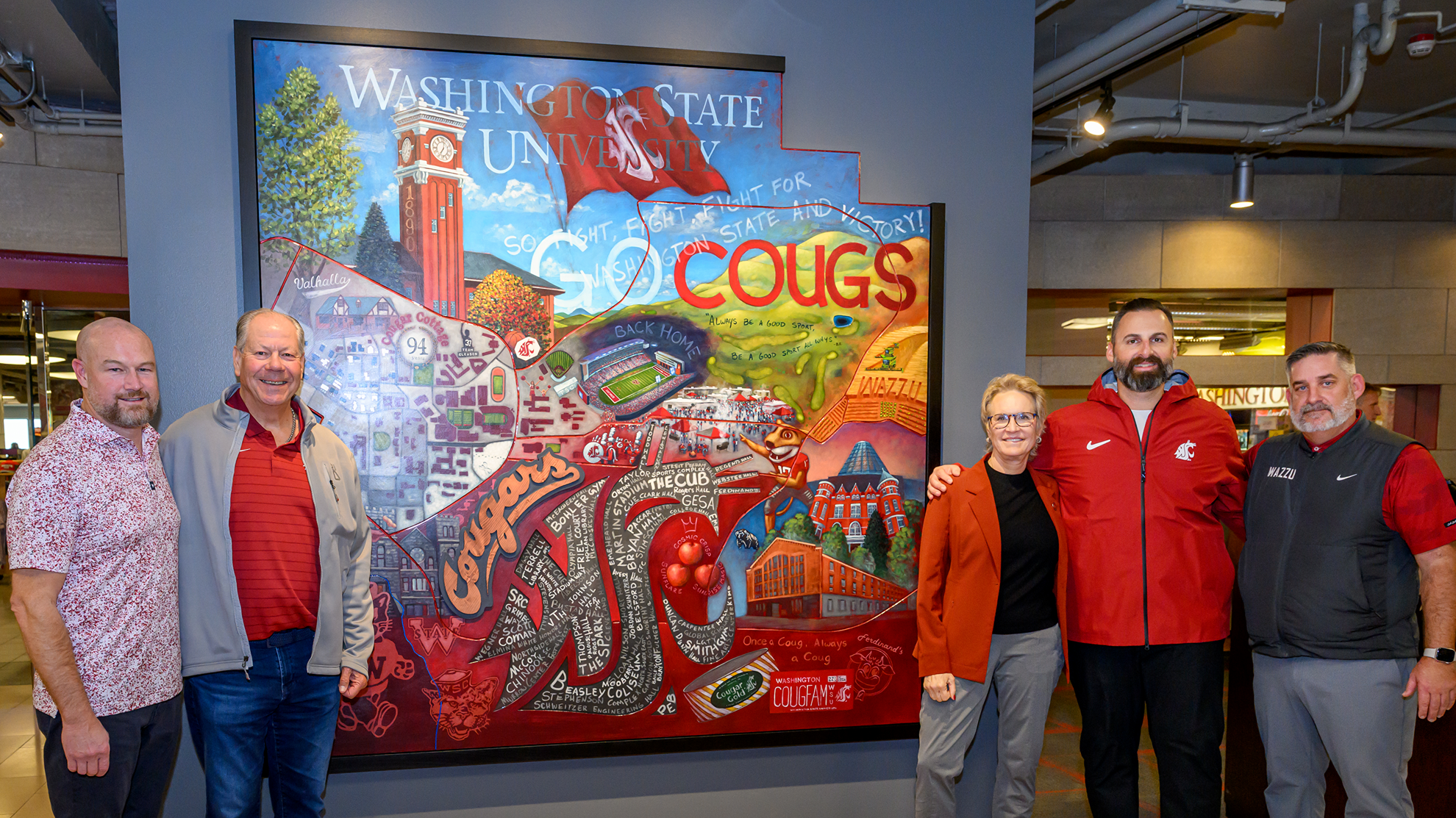
A hundred years of Cougar history, painted on a wall by a photographer who has been documenting it all along. That is worth stopping for. Our take is simple: this mural is not just art, it is a record we should pay attention to, because it captures the Pullman most of us carry around in our heads but rarely see preserved in one place. The photographer, a Pullman local, has spent decades shooting the town and the university, and now he has turned those images into a permanent installation that spans generations of students, games, and quiet moments on campus. For anyone who has ever tried to explain what it felt like to walk through a snowy College Hall or sit in the stands when the wind cut through your jacket, this is the visual shorthand you have been looking for. We covered the artist’s earlier work documenting Pullman’s changing face and how alumni have tried to preserve campus memories, and this mural feels like the natural next chapter.
What this means for us, practically, is that we now have a place to point people when they ask what made Pullman different. Not just the football games or the wheat fields, but the texture of the place: the light in October, the way the Palouse hills looked from the top of Thompson Flats, the faces of people who spent four years there and never quite left. The mural holds a century of that, and it is not tucked away in a gallery. It is on a wall where people walk by every day. That matters because memory fades faster than brick, and this is a concrete anchor for stories that might otherwise slip away. If you are a Coug who has not seen it yet, you should. If you are a Coug who cannot get back to Pullman, ask someone to send you a photo. It is worth a text.
There is a specific detail to watch here: the mural includes images from different decades, and the photographer chose them based on what he had shot over his career. That means the mural is not a generic nostalgia piece. It is one person's honest archive, shaped by what he saw through his viewfinder. That gives it a truth that a commissioned painting might miss. The takeaway is direct: this mural is the closest thing we have to a public family album for Pullman, and it exists because one person kept showing up with a camera for decades. Go Cougs.