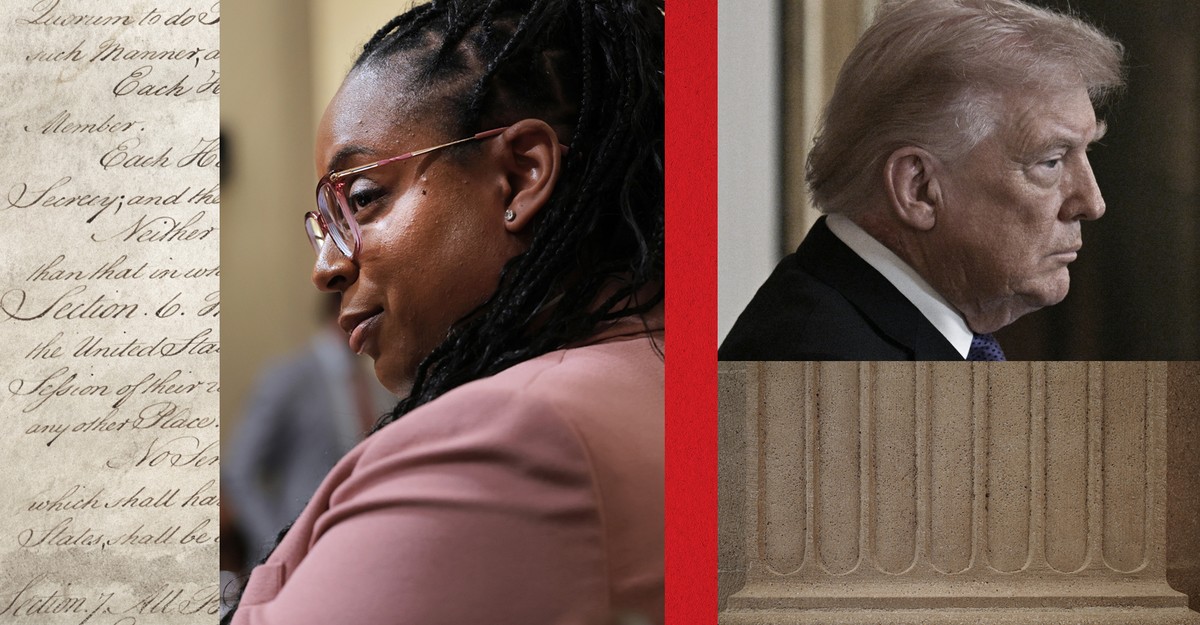
The recent case of Congresswoman LaMonica McIver, charged with “assaulting, resisting, or impeding” federal officials, raises significant questions about the balance of power between the executive and legislative branches, particularly in the context of President Trump’s administration. McIver’s confrontation with ICE agents outside a Newark immigration detention center underscores a worrying trend where dissenters, especially those in political office, face legal repercussions for their actions aimed at holding the government accountable. This situation is reminiscent of other instances where members of Congress have felt the heavy hand of executive power, such as the recent court ruling compelling Texas State University to reinstate a professor for speaking on controversial issues. Both scenarios highlight the increasingly fraught environment in which lawmakers operate, where political intimidation seems to be a tactic employed by those in power.
McIver’s appeal to the speech-or-debate clause of the Constitution is particularly noteworthy. This clause is designed to protect members of Congress from legal repercussions connected to their legislative duties. Yet, as the article notes, the application of this clause is not straightforward. Judge Jamel K. Semper’s ruling that McIver’s actions during the scuffle were separate from her legislative responsibilities raises critical questions about the nature of legislative immunity. In essence, this case could set a precedent that either fortifies or undermines congressional protections against executive overreach. Given the increasing aggressiveness of executive actions, especially regarding immigration enforcement, the outcome of this case matters not just for McIver but for the entire legislative body. This situation is similar to the recent developments where students and alumni at Kentucky State University have taken legal action to block new state laws affecting their educational environment, as reported in Kentucky State University Students, Alumni Sue to Block New State Law.
Moreover, McIver’s case serves as a stark reminder of the vulnerabilities lawmakers face when confronting executive power. The financial and personal toll that defending against such charges can take on a public servant is significant, especially as McIver has reportedly accrued nearly $1 million in legal expenses. This reality forces lawmakers to weigh their commitment to oversight against the potential personal and financial repercussions. As noted, other members of Congress have begun to take out liability insurance in response to the chilling effect of such prosecutions, which may further stifle dissent and oversight in a democracy that thrives on accountability.
As McIver's case moves through the appeals process, it will be essential to watch the broader implications for congressional authority and the potential for future legislative actions against executive overreach. Will this case set a new standard for the protections afforded to lawmakers, or will it reinforce the chilling atmosphere of political intimidation? The stakes are high—not just for McIver, but for the fabric of American democracy itself, as the balance of power continues to be tested in a landscape where the lines between lawful oversight and criminalization of dissent are increasingly blurred.