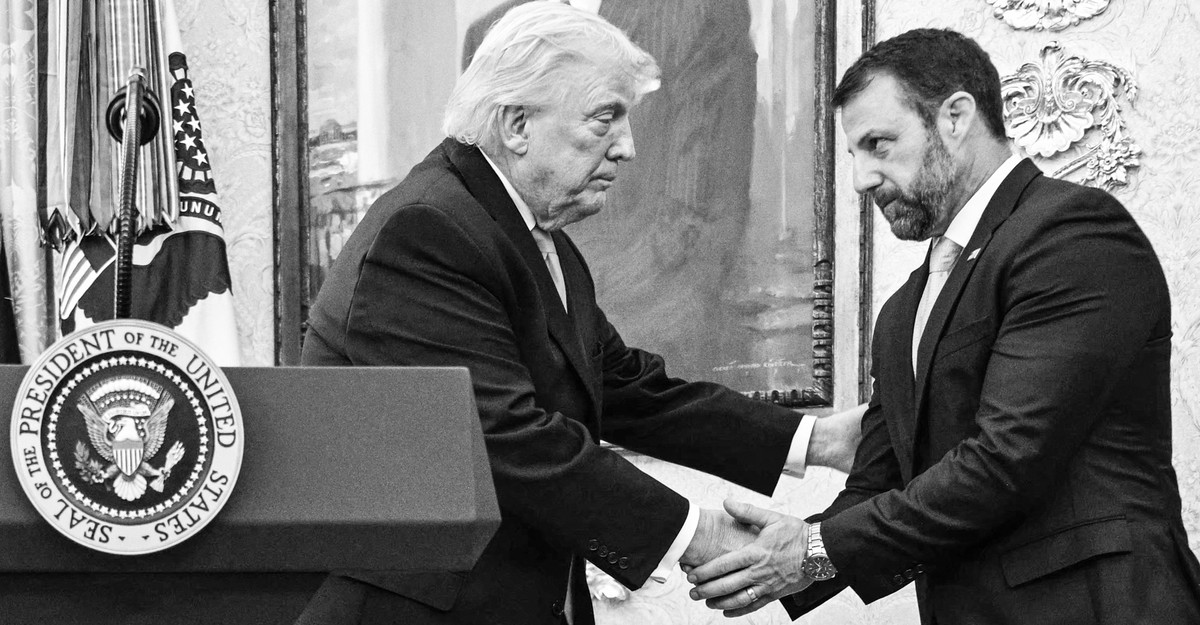
The recent appointment of Markwayne Mullin as the Secretary of the Department of Homeland Security (DHS) marks a significant pivot in the Trump administration's approach to immigration enforcement. While Mullin’s initial tone suggests a more conciliatory and peacemaking stance, the underlying goals of the administration remain unchanged. As noted in the article, the administration's overarching aim is to enforce mass deportations, with a target of removing one million people annually from the U.S. This continuity in policy amidst a shift in leadership raises important questions about the effectiveness and ethics of such an agenda, particularly in light of the recent criticism of aggressive enforcement tactics under former Secretary Kristi Noem.
Mullin's appointment comes at a time when the DHS is grappling with internal strife and external pressures regarding its immigration policies. The article highlights the dysfunction within Noem’s team, which struggled to meet deportation targets while facing resistance from lawmakers and the public. In contrast, Mullin seems to be positioning himself as a more approachable leader, indicating a willingness to cooperate across party lines. This shift could signal a new operational style that focuses on “targeted enforcement” while still maintaining the administration’s hardline stance. However, the lingering influence of figures like Stephen Miller, who continues to advocate for extreme measures, raises concerns about the actual impact of Mullin's leadership on immigration policy.
For many, the implications of these changes in DHS leadership extend beyond mere political maneuvering; they affect real lives. The article discusses how ICE has been ramping up its operations, including hiring thousands of new officers and expanding detention facilities. This expansion of resources paired with a potentially more strategic approach to enforcement could lead to increased apprehensions and deportations, impacting immigrant communities across the country. The ethical ramifications of such a policy—especially in light of the administration’s past practices that have drawn significant backlash—cannot be overstated. The public must consider whether these actions are in line with American values of fairness and justice or whether they further entrench a culture of fear and division.
The recent political climate has also prompted a civic resistance that challenges the administration's authoritarian tendencies. As mentioned in the article, the actions of grassroots movements in cities like Minneapolis reflect a growing discontent with aggressive immigration policies. This resistance offers a counter-narrative to the administration’s hardline approach and underscores the importance of community engagement in shaping policy. Voter sentiment on immigration is shifting, and it remains to be seen how Mullin will respond to this evolving landscape.
As we look ahead, the question remains: will Mullin’s tenure as Secretary of Homeland Security lead to a more humane approach to immigration enforcement, or will it merely serve as a façade for the same aggressive policies? The stakes are high, not just for the millions of immigrants living in the U.S. but for the broader societal values we uphold. Observing how Mullin navigates the complex interplay of internal politics, public sentiment, and immigration enforcement will be critical in determining the future of U.S. immigration policy.