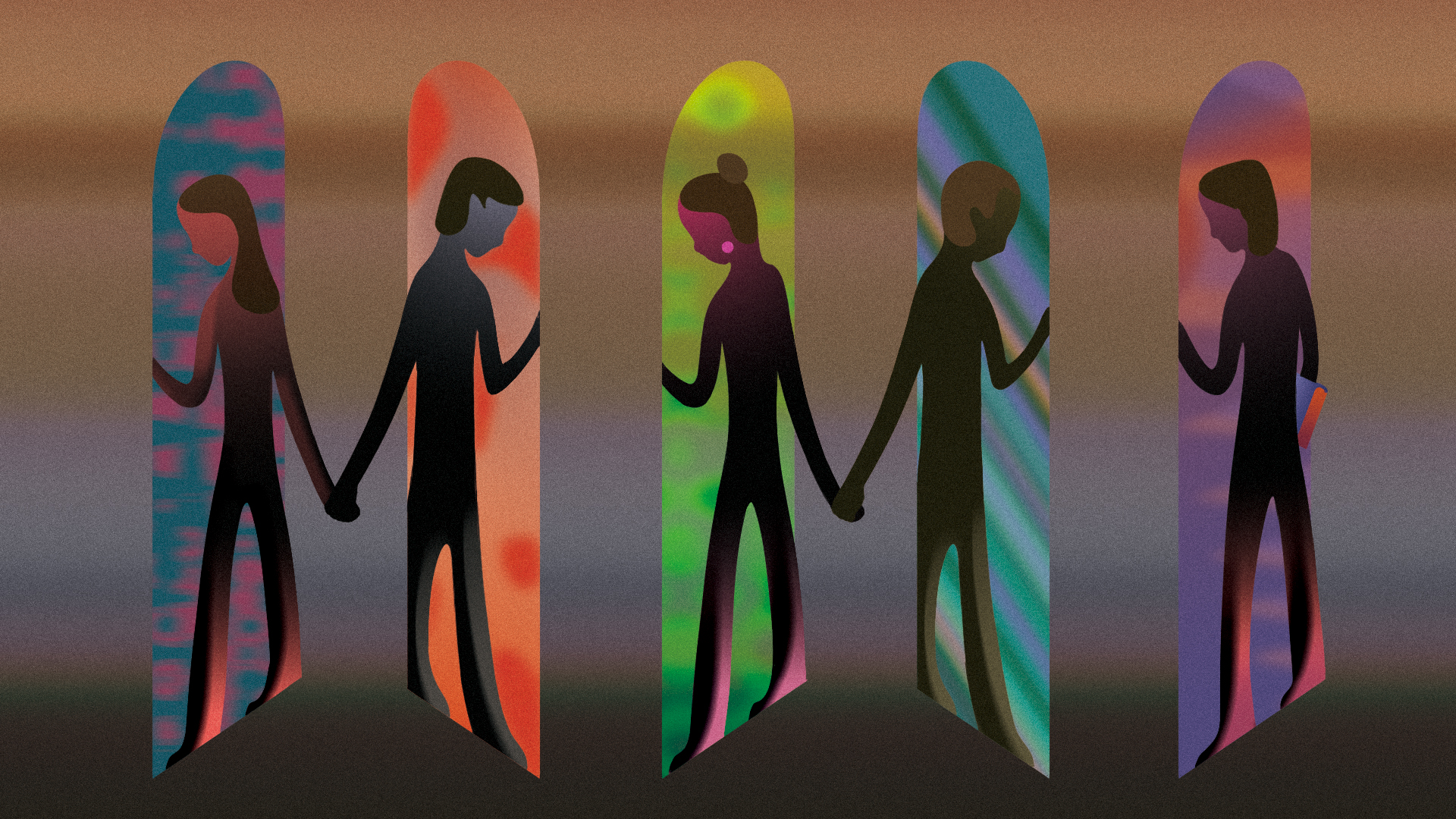
Margin notes are just a conversation with future me.

Welcome to "Let a Book Annoy You," part of The Atlantic’s Books Briefing.

3 min readThe Atlantic
Margin notes are just a conversation with future me.
Illustration by Haley Jiang

The idea that books can annoy us is not just a quirky observation; it’s a profound reflection on the complexity of human character and experience. The recent piece "Let a Book Annoy You" from The Atlantic sheds light on how characters who frustrate us can enhance our reading experience and mirror our own flaws. This notion of embracing annoyance in literature isn't just a whimsical thought; it resonates deeply with the realities of our social interactions and personal growth. In fact, it aligns with the sentiments expressed in "Unconventional Novels About Conventional People" where the exploration of relatable, albeit imperfect characters, is celebrated.

Characters that evoke frustration, like Barbara from Daniel M. Lavery’s upcoming novel, serve a dual purpose. They not only reflect the multifaceted nature of human behavior but also grant readers permission to confront their own shortcomings. As noted in the article, “Annoying characters let us admit that we might be annoying too.” This insight is vital for readers navigating their own lives, as it encourages self-reflection and fosters a sense of connection with the literature. It invites us to consider how our quirks and imperfections are part of the broader human experience, something that resonates with the community-first spirit many of us strive for.

Moreover, the act of annotating books with emotional reactions—whether it’s “Absolutely not” or “girl get UP”—is a form of engagement that enriches our relationship with literature. These annotations become a dialogue between the reader and the text, showcasing the reader's investment in the narrative. This is particularly significant in an age where digital distractions abound, as it reinforces the idea that the emotional labor we put into reading is both valid and valuable. It echoes the sentiment from the article on “Unconventional Novels About Conventional People” that literature can provide a reflective surface for our own lives, pushing us to engage with narratives that provoke thought and challenge our perceptions.

Books that feature characters who irritate us can also expand our empathy. By immersing ourselves in the lives of characters who may be grating or self-absorbed, we learn to navigate the complexities of our relationships with others—friends, family, and peers. The nuanced portrayal of a character like Barbara, who struggles to maintain friendships but is still relatable, offers a lens through which we can examine our own social dynamics. This kind of storytelling fosters a real sense of belonging, as it encapsulates the messy, often uncomfortable nature of human interaction.

As readers, we should cherish the moments when a book annoys us. They push us to engage more deeply with the narrative and to reflect on our own lives. This week, as you pick up your next read, consider how the characters might be a mirror reflecting your own traits—both the pleasant and the annoying. Are these characters simply vessels for our frustration, or do they serve a greater purpose in helping us grow? With literature that challenges the status quo and encourages us to embrace our complexities, we may find that the books that annoy us the most can, in fact, lead us to greater understanding and connection with ourselves and the world around us.

From The Atlantic

This is an edition of the Books Briefing, our editors’ weekly guide to the best in books. Sign up for it here.

Read the original at The Atlantic

Briefing

Source
The Atlantic
Published
March 28, 2026

Related

  • Aging radicals trading protest signs for quiet lives

    This is an edition of the Books Briefing, our editors’ weekly guide to the best in books. Sign up for it here. This week, my colleague Lily Meyer investigated “what happened to the radicals.” In her article, she was writing about a type of plot shared by several recent books, as well as the Oscar-winning film One Battle After Another. These works follow aging revolutionaries who have given up the fight after being forced into hiding or choosing to raise a family; some have simply grown tired of the struggle. Meyer’s essay reminded me of another common storyline in fiction, one that might seem to trace an opposite trajectory but in fact runs a parallel course. You could call it “what happened to the conformists.” First, here are three new stories from The Atlantic’s Books section: What Tracy Kidder stood for Will people ever stop eating animals? “Following,” a poem by Chase Elodia In some ways, the rebel-gone-to-seed story mirrors a plot found in some classic 20th-century literature: that of an Everyman who has lost a youthful dream of joyful conformity. Think of Rabbit Angstrom, the antihero of a four-novel series by John Updike—each volume written a decade apart, as the former high-school-basketball phenom witnesses, and experiences, the decline of the middle-class American dream. Rabbit gets married young, settles in a suburb, eventually takes over his father-in-law’s car lot, and claws his way to bland prosperity. He is instinctively patriotic, and also entitled, selfish, and more than a little bit racist. The reader has plenty of reasons to hate him, but they might also grow to love him—partly because Updike paints him masterfully, but also because Rabbit’s journey is so common. Who doesn’t feel on top of the world at 25, and tired and at least a touch disillusioned 30 years later? The conformist’s journey is described by so many white, male mid-century novelists—Philip Roth, John Cheever, Richard Yates—that it can feel like a story past its prime. But old forms are always ripe for reinvention, and a recent book managed to make this one feel fresh. In a recent Atlantic essay, Isle McElroy called Jordy Rosenberg’s Night Night Fawn “a striking, darkly comic portrait of a mind narrowed by disappointment.” Barbara, the narrator of the novel, resents her gender-nonconforming child even as he ministers to her in her dying days. McElroy calls the novel, whose author is trans, “autofiction from a sidelong distance”—a story of prejudice told through the eyes of the bigot. Yet Barbara is so much more than a foil; Rosenberg sketches out the life of a woman who dreamed of ascending in status, of moving from working-class Brooklyn to the Upper East Side on the arm of a surgeon. When this fails to happen—and her hopes of marrying off a perfect daughter are dashed—Barbara grows hateful and ultimately delusional. A reader might be tempted to loathe her, but she’s too funny and too sad. And her story, like Rabbit’s, is a universal one: Life didn’t turn out the way she’d hoped it would. Many of Barbara’s dreams are superficial and retrograde. Her values—including her severe rigidity about gender roles—alienate her from her only child and set her up for inevitable disappointment. A reader can see her loneliness as just deserts but still mourn her losses. Meyer, in her essay, surmises that “the message audiences really want” from ex-revolutionary stories is that “the radicals can’t win.” The solace and the pathos in Updike’s and Rosenberg’s work come from realizing that in many cases, conformists can’t win either. Illustration by Jamiel Law How Long Can You Live Your Ideals? By Lily Meyer Stories about revolutionaries seem to entrance readers and moviegoers alike—especially if they don’t end well. Read the full article. What to Read Other Minds, by Peter Godfrey-Smith A philosopher of science wrote this book, so readers should expect some pretty heavy intellectual lifting, but I promise it is well worth the effort. In Other Minds, Godfrey-Smith—a lifelong, nearly fanatical snorkeler from Australia and, most recently, a scuba diver and a world-class underwater videographer—attempts to understand the inner life of the octopus, not by observing them in captivity or for a short summer in their habitat but from the perspective of a man who’s spent many years observing octopuses in the twists of reefs and along the sea floor. The book goes beyond analyzing their behavior: As a philosopher, Godfrey-Smith considers the nature of consciousness, using the animals’ evolutionary development to theorize about the similarities between their minds and ours. At one point, in what felt like a long, mesmerizing tangent about cuttlefish, I realized I was actually reading an explanation for why animals, including us, die. I was challenged again and again, scribbling in the margins, gasping. If you are going to read one book this year, I’d suggest this one.  — Deb Olin Unferth From our list: Nine books to reset your view of the world Out Next Week 📚 Attention: Writing on Life, Art, and the World, by Anne Enright 📚 My Dear You, by Rachel Khong 📚 Against Breaking: On the Power of Poetry, by Ada Limón Your Weekend Read Illustration by The Atlantic. Sources: Dave Bjerke / Bravo / Everett Collection; Jamie Trueblood / Bravo / Everett Collection. We’re All Real Housewives Now By Michael Waters Just as the Housewives formula has become part of pop culture’s texture, its fuzzy relationship to “reality” has coincided with the ascension of a powerful idea in entertainment: that people’s private lives are inextricable from their public success. That notion has now spread beyond the confines of TV. In a world of fractured attention spans, many public figures are accustomed to mining their personal dramas to stay at the top of their audience’s feeds. No matter that ratings are down across cable; what matters today, as in 2006, is holding on to whoever’s still tuned in. Read the full article. When you buy a book using a link in this newsletter, we receive a commission. Thank you for supporting The Atlantic. Sign up for The Wonder Reader, a Saturday newsletter in which our editors recommend stories to spark your curiosity and fill you with delight. Explore all of our newsletters.