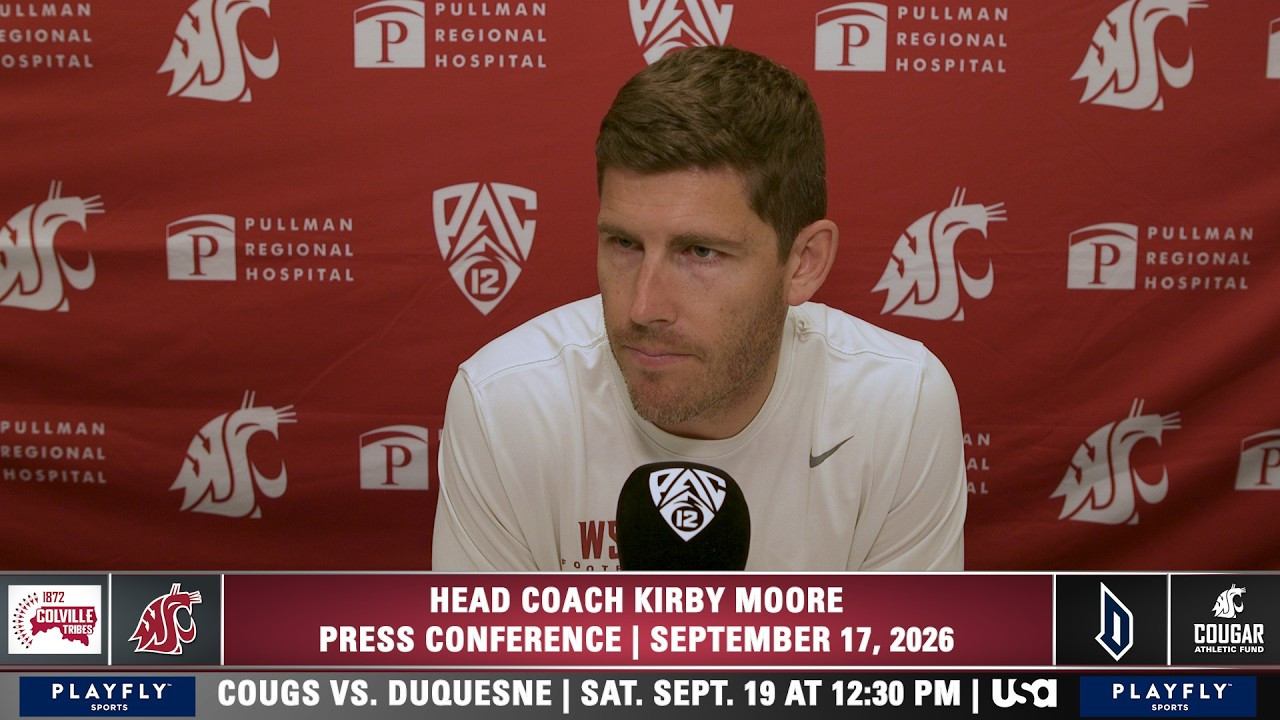
Kirby Moore saw things in that Duquesne film that you and I probably missed. That's his job, and he is good at it. What matters for Coug fans is that he saw enough to call a game that let the offense breathe, and the result was a win that felt cleaner than the scoreboard might suggest. We already knew the defense could hold its own, and Five sets, no quit: Cougar volleyball leaves it all on the floor showed us the same kind of fight from another team in town. But Moore's breakdown of what he saw, and what he adjusted, is the kind of detail that should give you confidence going forward.
Our take is simple: this win was not about talent overwhelming an opponent. It was about preparation and adjustment. Moore walked through the tape and found the cracks in Duquesne's scheme that weren't obvious on first watch. He talked about formation tells, safety rotations, and the specific leverage that let his receivers get free. That is not coachspeak. That is a guy who spent the week earning his paycheck. In Kirby Moore breaks down the Cougar win and what it took to get there, he laid out the same kind of process. This is a staff that treats every opponent like a puzzle, not a pushover. For us, the practical takeaway is that the offense has a coordinator who will scheme to what the defense gives him, not just run his favorite plays.
The trap for a Coug fan is to look at a 17-point win over Duquesne and shrug. Do not do that. The margins in college football are thin, and Moore's eye for detail is what turns a close game into a comfortable one. He did not panic when the first few drives stalled. He adjusted. He found a rhythm that the defense could not answer. That matters more for the next three games than any single highlight. Duquesne came to Pullman. The Cougs handled business. Go Cougs was the headline, and it is true, but the story is the work that got them there.
Here is the specific detail to watch: Moore mentioned a particular route concept that Duquesne kept biting on in the second half. If that same concept shows up against the next opponent, you will know he is building a library of what works, not just calling plays off a card. That is the difference between a coordinator who wins and one who just survives. Go Cougs.