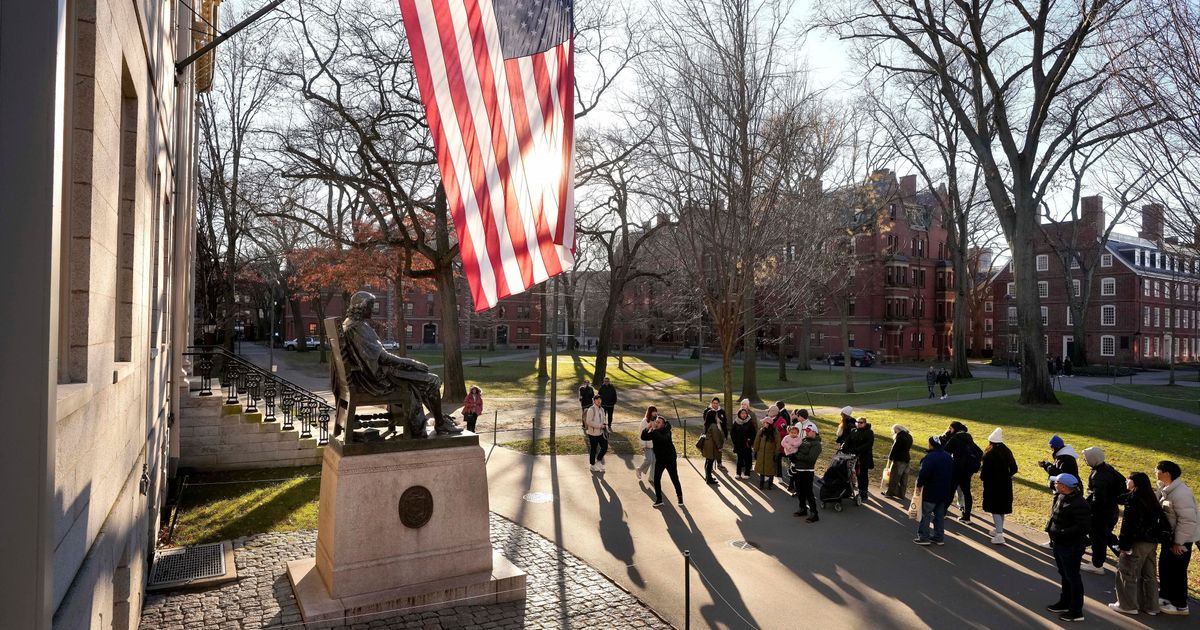
The Justice Department is now asking whether Harvard broke the law by letting Chinese donors fund scholarships that shut out American students. That's a serious question, and it's one that hits close to home for anyone who's ever filled out a FAFSA or applied for a department grant. But here's the thing: we've been watching this kind of scrutiny build for a while now, and it's worth paying attention to how it lands, not just what the headlines say. This isn't some abstract D.C. drama. It's about who gets a shot at a degree, and who decides that. And honestly, that's a conversation every student should be in, not just the ones at Ivy League gates.
We've seen similar tensions play out closer to our own campus life. The Heads Up, Cougs: New Academic Officer Survey Drops reminded us that universities are constantly making choices about who gets what, and how they explain it. And when a school like Utah drops a probe into a student group, like in Utah University Apologizes After Dropping College Republicans Probe, it shows that the line between "investigation" and "political pressure" can get blurry fast. So when the feds come knocking on Harvard's door, our first instinct isn't to pick a side, it's to ask: what's the actual rule here, and who benefits from enforcing it that way?
Here's our honest take. Scholarship money is scarce, and every dollar that goes to one student is a dollar someone else doesn't get. That's true whether you're at Harvard or at WSU. So the idea that a donor could carve out a scholarship that excludes American students feels off, because it makes the financial aid system feel less like a shared resource and more like a private favor. But we should also be clear: not every restriction is illegal, and not every exclusive scholarship is a scandal. The feds have to prove intent, not just discomfort. If they can, fine. If they can't, this becomes a fishing expedition, and that's a bad look for everyone involved.
What would we tell a student asking about this? Simple. Watch where the money goes, and watch who's asking the questions. If you're applying for aid, you deserve to know if your school is playing fair. If you're a donor, you should know that strings attached to gifts can get pulled in court. The real takeaway here isn't about Harvard specifically, it's about accountability. Every time a university takes a big gift, it's making a promise about fairness. When that promise gets questioned, students should be paying attention. So here's the concrete thing to watch: whether this investigation turns up actual evidence of exclusion, or whether it fizzles out. Because if it fizzles, that tells you just how much of this is about protecting students, and how much is about sending a message. And we'd rather know which one it is before we pick a side.