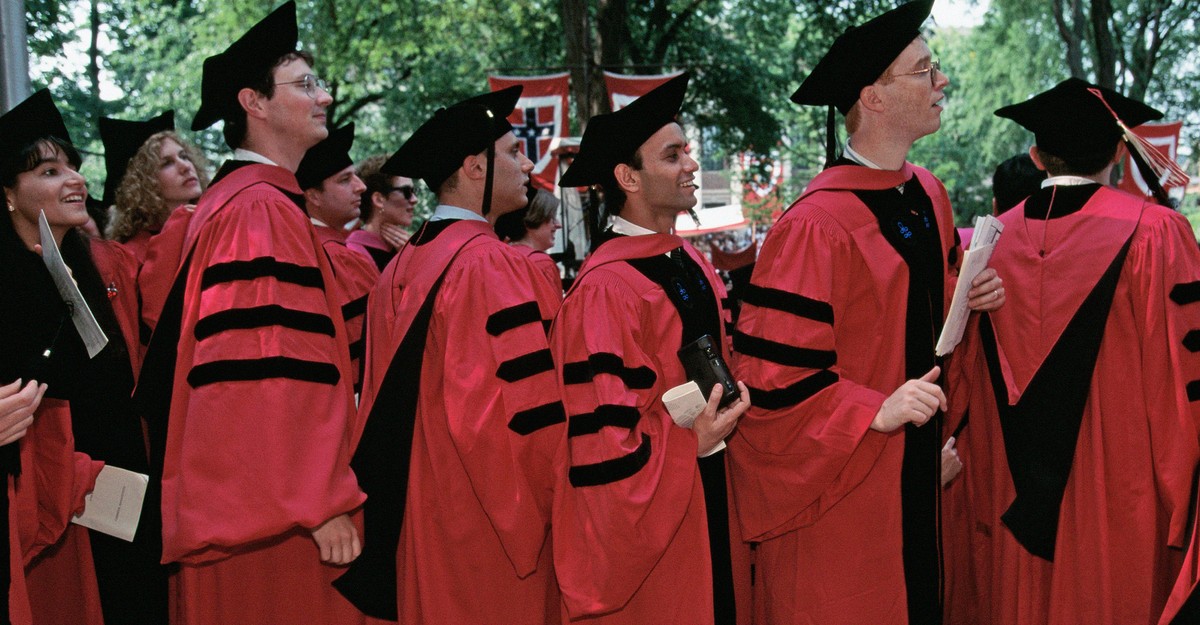
The recent piece titled “What an Ivy League Education Really Gets You” dives deep into the striking disparity between graduates of elite universities and their peers from less selective institutions. As highlighted in the article, Ivy League alumni represent a staggering percentage of high-profile positions in America, comprising over 12% of Fortune 500 CEOs and 32% of New York Times journalists. This phenomenon raises critical questions about the value of elite education and the broader implications for social mobility and economic equity. In a society that often equates educational prestige with success, it’s essential to reflect on what this really means for aspiring students and the workforce at large. Similar conversations are surfacing across the educational landscape, as highlighted in articles like Kentucky State University Students, Alumni Sue to Block New State Law and Court Rules Texas State Must Reinstate Prof Fired for Israel-Palestine Talk.
The article argues that the success of Ivy League graduates can’t be attributed solely to privilege or academic rigor; rather, it lies in the unique environment these institutions foster. John Friedman’s research suggests that the real “education” students receive is from being part of a community filled with high-achieving peers. This exposure promotes not only academic excellence but also essential life skills like collaboration and leadership. For many WSU students who might find themselves contemplating their future paths, this insight serves as a reminder that while institutional prestige can open doors, the networks and collaborative experiences you build play an equally crucial role in shaping your career trajectory.
Moreover, this piece touches on the critical issue of accessibility and the notion that success is often a byproduct of opportunity rather than sheer talent. As more students are left grappling with the weight of student debt and the pressure to secure high-paying jobs, it’s vital to consider whether the elitism of Ivy League schools perpetuates socio-economic divides. The stark contrast between Ivy League graduates and those from public universities raises questions about how we define merit and success in today’s economy. Should we be redefining our understanding of achievement to include not just academic accolades but also the diverse experiences and perspectives that students from various backgrounds bring to the table?
As we look forward, it will be intriguing to see how institutions, particularly state universities like WSU, can leverage their unique community dynamics to create transformative experiences for all students. As the article suggests, it’s not merely about the institution’s name on a diploma; it’s about the relationships and skills developed along the way. This perspective invites us to think critically about how every college experience can be enhanced through engagement and collaboration. For students navigating their paths, the focus should not only be on the prestige of their chosen school but also on how they can cultivate their own networks and learning experiences within their communities. Ultimately, as we continue to explore the evolving landscape of higher education, we must ask ourselves: How can we create systems where every student has the opportunity to thrive, regardless of their institution's prestige?