Betting on the food dye ban to win the midterms.

Tony Lyons stands at the forefront of the Make America Healthy Again (MAHA) movement, advocating for a strategy that he believes will help Republicans secure victories in the upcoming midterm elections.

4 min readThe Atlantic
Betting on the food dye ban to win the midterms.

Tony Lyons, the president of MAHA Action, is positioned at the intersection of health advocacy and political strategy within the Republican Party. His recent memo to GOP leaders outlines a potential path to victory in the upcoming midterm elections by aligning with the Make America Healthy Again (MAHA) movement. This strategy hinges on popular initiatives, such as banning soda from SNAP benefits and eliminating artificial food dyes, while advising caution around more divisive topics like anti-vaccine rhetoric. This balancing act is crucial not only for the MAHA movement's credibility but also for the Republican Party's ability to harness a growing concern for public health issues. The importance of this approach cannot be understated, especially in light of the challenges outlined in related pieces, such as MAHA Has Been Given an Impossible Task, which highlight the complexities of integrating health advocacy within a polarized political landscape.

Lyons’ role as a strategist and spokesperson is critical as he navigates the murky waters of political affiliation and health advocacy. His insistence on maintaining unity among MAHA supporters—while managing expectations in light of setbacks, such as the Trump administration's executive order on glyphosate liability—demonstrates the delicate balance he must strike. The discontent among MAHA activists, particularly regarding the Trump administration’s priorities, poses a significant risk to the movement's cohesion. If supporters feel sidelined, the potential for MAHA to influence midterm elections could diminish rapidly. This sentiment is echoed in discussions surrounding the movement's future, particularly in light of Kennedy's fluctuating political capital. Engaging with supporters while also appealing to a broader Republican base is a challenge that requires both finesse and a clear vision, as outlined in the article [The Man Holding MAHA Together].

Moreover, the underlying motivations of the MAHA movement—centered on health, wellness, and the rejection of certain mainstream medical narratives—reflect a growing public distrust in established institutions. The divide between what supporters see as a critical challenge to traditional medical practices and what opponents label as dangerous misinformation is expanding. Lyons’ assertion that MAHA is not anti-vaccine, but rather a push for medical freedom, further complicates this narrative. It raises essential questions about the intersection of personal beliefs, public health, and political identity. As the movement progresses, it will be vital to monitor how these tensions evolve and whether MAHA can maintain a foothold in mainstream discourse without alienating its core supporters.

Looking ahead, the real test for Lyons and the MAHA movement will be their ability to solidify their platform while addressing the concerns of an increasingly skeptical public. As the midterm elections approach, the question looms: Can they effectively bridge the gap between health advocacy and political necessity, or will internal strife and external pressures derail their efforts? The stakes are high, not just for MAHA and the Republican Party, but for the broader conversation about health, wellness, and political responsibility in America. As Lyons and his team push forward, their ability to connect the dots between public health and electoral success will not only shape their future but could redefine how health debates are framed in the political arena.

From The Atlantic

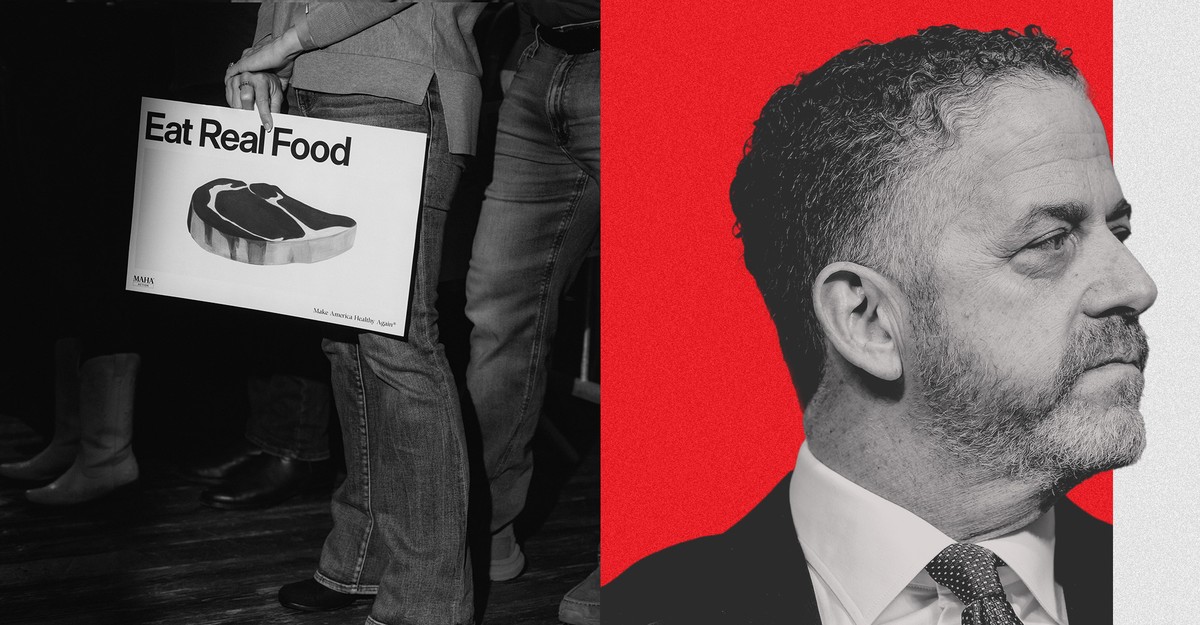
Tony Lyons knows how Republicans can win the midterm elections later this year. All they need to do, as he explained in a memo to GOP leaders in February, is embrace the Make America Healthy Again movement, or at least the popular parts of it, like banning soda from SNAP benefits and ditching artificial food dyes. Divisive anti-vaccine issues, in contrast, must be “addressed carefully and with nuance.” Follow this plan, insists Lyons—who is president of MAHA Action, a nonprofit that promotes Health Secretary Robert F. Kennedy Jr.’s agenda—and the “MAHA Winnable Middle” will be yours.

Read the original at The Atlantic

Briefing

Source
The Atlantic
Published
April 6, 2026

Related

  • RFK Jr. just got asked a fight question nobody saw coming

    When he was interviewed onstage at the Conservative Political Action Conference on Saturday, Health and Human Services Secretary Robert F. Kennedy Jr. was asked a question unlikely to be on anyone’s mind in the midst of upheaval in the department he oversees and a conflict in the Middle East: “Who’s stronger—you or Secretary of War Pete Hegseth?” The exchange was emblematic of the role that Kennedy and other HHS officials played during the four-day conference. As some MAGA attendees grumbled over the war in Iran, they were met with a whole lot of MAHA. Kennedy went after Froot Loops and bemoaned how Americans don’t know how to cook anymore. Mehmet Oz, the Centers for Medicare & Medicaid Services chief, warned about hospice fraud in California. And Jay Bhattacharya, the director of the National Institutes of Health and the acting director (of a sort) of the CDC, explained the value of repurposing already-approved drugs for new diseases. “This sounds geeky,” he told the crowd, “but it is really, really important.” Perhaps the administration thought that leaning into health would distract from what’s going on in Iran—a sore subject for Republicans who want President Trump to focus on domestic issues. Kennedy did say, unprompted, that he believed that his war-averse uncle and his father would have approved of the military action. But he also was the most prominent member of the Trump administration to take the stage at CPAC. Notably absent was anyone named Trump or any official involved in the decision to bomb Iran. If that was indeed the administration’s strategy, it didn’t seem to work among MAGA world’s staunchest opponents to Trump’s recent military action. Although a poll of this year’s CPAC attendees found that 89 percent approve of the administration’s actions in Iran, others I spoke with worried about the specter of another “forever war” in the Middle East. As Madeline Elizabeth, a Republican strategist who attended CPAC, told me, “I think that the MAHA movement is almost the only thing that’s ‘America First’ about this administration.” As he has in his other recent public appearances, Kennedy mostly stuck to his talking points. He touted what he considers to be his wins at HHS—notably, the flipping of the food pyramid to emphasize protein consumption—and insisted that the president was “on my side on virtually every issue” when Kennedy decided to endorse Trump in 2024. But Kennedy didn’t mention his remaking of the CDC’s vaccine-advisory committee or the changes to the recommended childhood-immunization schedule, which are easily among the most consequential policies of his first year in office. Perhaps he avoided doing so because, as The Washington Post has reported, the White House has instructed him to stop taking action on vaccines for fear of Republicans losing the midterms. (The HHS spokesperson Andrew Nixon told me, “We remain focused on the priorities Americans consistently say matter most to them, including tackling chronic disease, improving nutrition and food quality, and lowering the cost of care and prescription drugs.” The White House did not respond to a request for comment.) The closest Kennedy came to any talk of immunization was when he mentioned that, growing up, he didn’t know any kids who had autism—a seemingly veiled reference to his long-standing belief that vaccines have contributed to the rise in autism since the 1990s. That rise, according to experts, is largely due to better surveillance and broader diagnostic criteria. When Bhattacharya did talk about vaccines—to praise the shingles shot and to tease research on whether it might reduce the risk of Alzheimer’s—the crowd was unmoved. Bhattacharya’s only real applause line came when he said, “It’s no longer Tony Fauci’s NIH.” [Read: RFK Jr. is losing his grip on the CDC] Most of the CPAC-goers I spoke with told me they loved Kennedy. Usually in those words: I love him. They weren’t always sure about the specifics of his agenda, but they liked that he was in favor of being healthy. A CPAC attendee named Michael Smith, who was promoting the posting of the Ten Commandments in public schools and dressed as Moses—complete with a staff and a stick-on beard—told me that Kennedy was “getting us back to the Garden of Eden diet.” Several people, including a woman who says she lost 50 pounds just eating meat, told me their personal health stories. (Kennedy recently acknowledged that he’s on the carnivore diet.) Everyone, it seemed, had read Kennedy’s best seller, The Real Anthony Fauci, and many volunteered to me that they had not gotten the COVID vaccine. The Kennedy adoration created an odd sense of tension at the meeting. It’s true that some GOP strategists have argued that the MAHA coalition is the key to Republicans winning the midterms later this year. For the most part, they’re talking about health-conscious voters who might be persuaded to back Republican candidates. Perhaps it should be no surprise that, at CPAC, the fans are MAGA first and MAHA as a kind of bonus. But at the same time, the MAGA loyalties clearly supersede the MAHA hype. It was striking how no one seemed to be there solely, or even primarily, to support MAHA. At one point during Kennedy’s fireside chat, the interviewer, Mercedes Schlapp, asked attendees whether they were “MAHA moms.” In a crowd of several hundred, maybe a dozen hands shot up. Scanning the crowd, I saw no shortage of Trump-themed apparel, but no one wearing MAHA T-shirts or hats. Talking about MAHA priorities “doesn’t electrify anybody, and quite honestly, it’s not the conversation, like, broadly, that’s being had,” Vish Burra, a Republican strategist and MAGA provocateur, told me. (Last fall, Burra was fired from his job as a producer for One America News Network after he posted an anti-Semitic AI-generated video on his personal X account. He later deleted the post.) [Read: The meme-washing of RFK Jr.] Kennedy, who recently underwent surgery for a rotator-cuff injury, ended up telling Schlapp that Hegseth might have the edge in a test of strength: “He’s got a couple of pounds on me.” But even if Hegseth can bench more than the HHS secretary, at the country’s best-known conservative gathering, Kennedy was the one the Trump administration seems to have tasked with lifting up its disappointed fans.