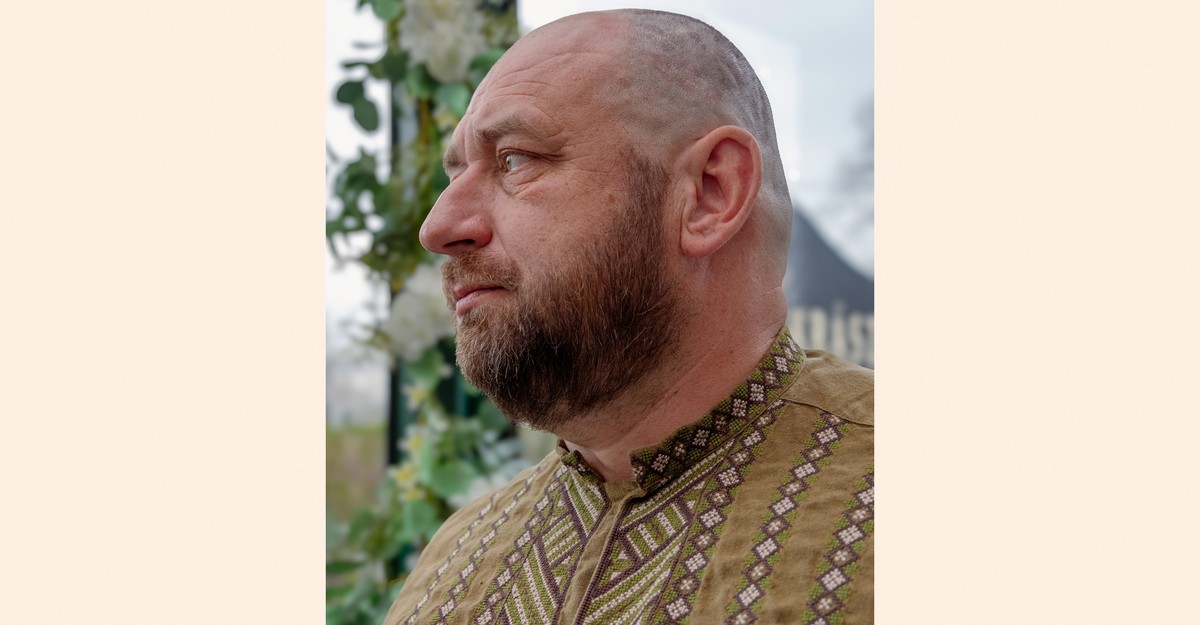
The complexities of international diplomacy are often highlighted in the most unexpected ways, as seen in the recent article about Fedir Shandor, the Ukrainian ambassador to Hungary. His position is fraught with challenges, especially with Hungary's Prime Minister Viktor Orbán leveraging anti-Ukrainian narratives to bolster his electoral prospects. This situation resonates with broader themes of political manipulation and national identity, much like the recent Court Rules Texas State Must Reinstate Prof Fired for Israel-Palestine Talk and the Kentucky State University Students, Alumni Sue to Block New State Law stories, where local politics intersect with broader narratives of identity and freedom of speech.
Shandor's experience illustrates the precariousness of navigating diplomatic waters in an environment ripe with misinformation and political opportunism. Orbán’s campaign suggests a fear-mongering strategy, casting Ukraine as a potential oppressor rather than a nation fighting for its survival against Russian aggression. This tactic not only impacts the Ukrainian narrative but also shapes Hungarian identity and solidarity, raising questions about how citizens perceive their role in regional geopolitics. As Shandor himself notes, the election is a “stupid period,” yet it reflects a deeper societal tension—how do nations define themselves when faced with external threats? The ambassador's role as a "bridge" between Hungary and Ukraine emphasizes the necessity of communication and collaboration amidst a politically charged atmosphere.
Moreover, Shandor's dual heritage and his experiences on the battlefield underscore the human element often lost in political discourse. He embodies the duality of his countries’ identities—Ukrainian and Hungarian—making him uniquely positioned to foster connections that transcend the divisive narratives spun by politicians like Orbán. His efforts to promote humanitarian aid and celebrate cultural ties highlight that while political leaders may exploit fear for campaign gain, individuals and local communities can still forge bonds based on shared histories and mutual support. This dynamic is crucial, especially as Shandor indicates a resilient Hungarian spirit that may resist foreign propaganda, suggesting that the populace is not as easily swayed as their leaders might hope.
Looking ahead, the situation in Hungary serves as a crucial case study of how nationalism can be weaponized in political campaigns, especially during turbulent times. As elections approach, the potential for increased instability—both politically and socially—raises significant concerns. With the Kremlin reportedly attempting to influence the election through disinformation and possibly more aggressive tactics, the ramifications of these actions could extend beyond Hungary, affecting the entire European landscape. Will Shandor’s optimistic outlook and commitment to building bridges withstand the storm of political manipulation? As we continue to witness the unfolding of Hungary's electoral drama, it's clear that the stakes are high—not just for a nation in the midst of an election, but for the broader regional stability and the ongoing struggle against authoritarianism.