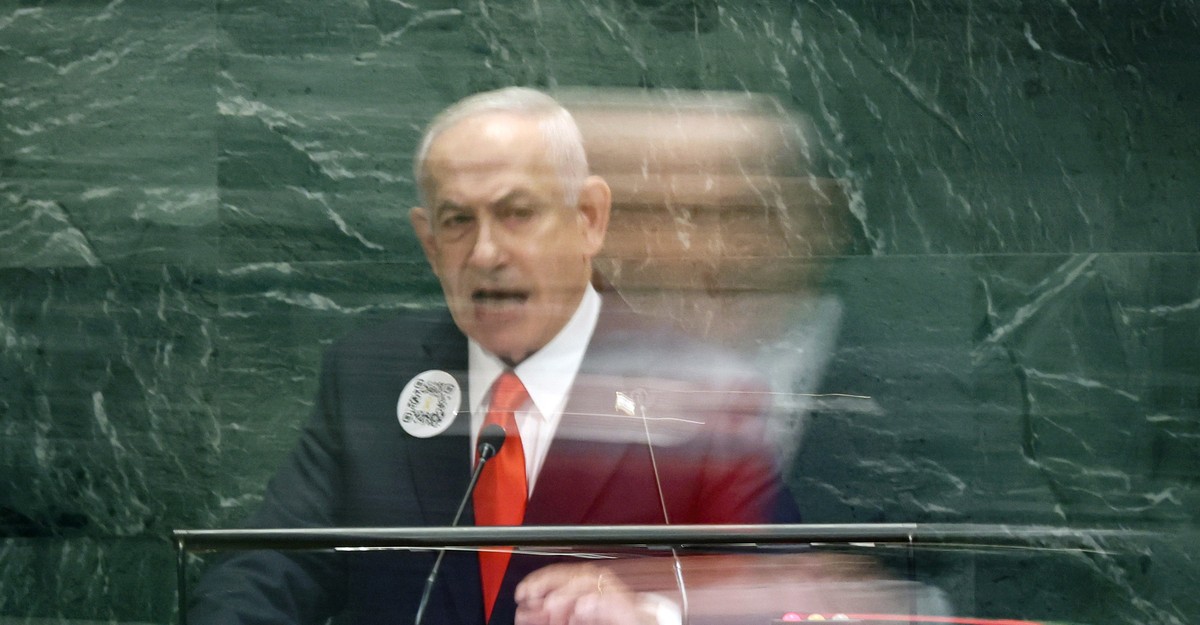
The recent article, "The Worst-Case Scenario for AI and the News Is Already Here," highlights a troubling phenomenon: the intertwining of artificial intelligence, social media, and public perception, particularly regarding Israeli Prime Minister Benjamin Netanyahu. The incident began when CNN reporter Jeremy Diamond questioned Netanyahu at a press conference, a standard journalistic activity that quickly spiraled into a viral digital delusion claiming that Netanyahu was, in fact, a composite figure or perhaps even deceased. This situation mirrors broader societal issues, as seen in related discussions about academia and freedom of speech, such as in the article Court Rules Texas State Must Reinstate Prof Fired for Israel-Palestine Talk and the implications of recent legal actions discussed in Kentucky State University Students, Alumni Sue to Block New State Law.
What’s particularly alarming about the Netanyahu incident is the sheer volume of misinformation propagated on social media. The article notes that the idea of Netanyahu's death generated over 800,000 posts and more than 430 million impressions in just a few weeks. This situation raises critical questions about how we discern fact from fiction in a landscape increasingly dominated by AI-generated content. The phenomenon isn’t new; however, the rapidity with which misinformation can spread today is unprecedented. Social media platforms prioritize engagement over accuracy, creating an ecosystem where sensationalism often trumps truth. This is not only harmful to public discourse but also diminishes the very fabric of informed citizenry.
The concept of the “liar’s dividend,” as outlined by legal scholars Robert Chesney and Danielle Citron, comes into play here. When deepfakes and manipulated content become commonplace, genuine images and videos are met with skepticism, making it easier for propagandists to sow doubt. The public’s inability to trust real footage, as seen with Netanyahu’s case, exemplifies how AI can erode our collective understanding of reality. This isn't merely an academic concern; it has real-world implications, especially in conflict situations where misinformation can escalate tensions. For example, the conflicts surrounding the U.S.-Israel-Iran war create fertile ground for misinformation that could easily fuel further hostilities.
Moreover, the article illustrates a troubling trend: the desire for certain narratives to be true can outweigh the need for factual accuracy. Many individuals may prefer the notion that Netanyahu is dead, as it aligns with their pre-existing biases and hopes. This reflects a broader societal issue, where emotional responses often overshadow rational analysis. As we navigate this complex media landscape, one must wonder: how do we reclaim a foundation of truth in an age where AI can create convincing illusions, and social media amplifies them?
As we look ahead, the implications for journalism, politics, and personal agency are profound. The challenge lies not just in combating misinformation but in fostering a culture that values truth over sensationalism. Moving forward, we must ask ourselves: How can we cultivate media literacy and critical thinking skills to navigate this evolving landscape? The answer may very well determine how effectively we engage in the democratic process and understand the world around us.