‘You Want to Leave Us Alone With Mojtaba?’
Our take
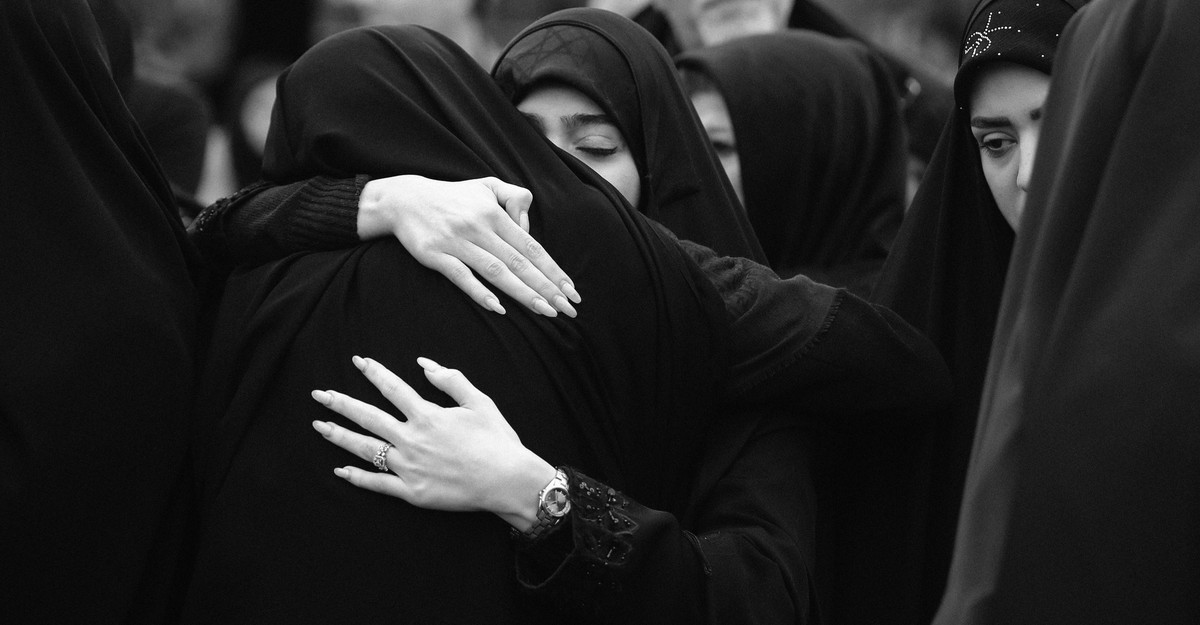
The recent article, “You Want to Leave Us Alone With Mojtaba?” presents a haunting paradox faced by many Iranians: the fear of war juxtaposed with the dread of peace under a regime led by Mojtaba Khamenei. As the conflict continues to claim lives—over 1,400 civilians, including many children—those living in the shadow of the bombs express a complex mix of emotions. Many had initially hoped that foreign intervention by the U.S. and Israel might usher in a new political era, yet now they find themselves confronting an equally terrifying reality. This situation is compounded by the ongoing repression within Iran, including a near-total internet blackout that complicates communication and amplifies the citizens' isolation. The implications of this conflict are not merely national but resonate globally, as seen in discussions around the strategic follies of the Islamic Republic in pieces like The Strategic Follies of the Islamic Republic and Trump Is Flailing on Iran.
The perspectives shared by individuals like Shaghayeh and Ziba illustrate an unsettling truth: the suffering caused by war does not always translate to hope for a better future. For many, the thought of a post-war Iran raises concerns about the potential for a more brutal regime, as the current leadership may feel emboldened by the chaos. This fear is palpable, especially among younger activists who once considered the prospect of regime change a possibility spurred on by foreign intervention. Instead, they now grapple with the reality that their plight may not improve, regardless of the war’s outcome. Such insights compel readers to consider the human cost of conflict and the nuanced dynamics at play in regions grappling with authoritarianism. The Iranian opposition's urgent task continues to evolve, as highlighted in The Iranian Opposition’s Urgent Task.
Moreover, the hesitance among many Iranians to support the war reflects a deeper understanding of their own agency and the complexities of international politics. While some believe that an end to fighting could lead to a temporary cessation of violence, many remain skeptical about the potential for genuine reform. The sentiment that “the war must stop, but the regime must also change” encapsulates the dual struggle against both external aggression and internal oppression. This raises critical questions about the effectiveness of interventionist policies and whether they truly align with the aspirations of the Iranian people.
As we look ahead, the essential question remains: What will happen when the bombs stop falling? Will the end of hostilities open the door for a new chapter in Iranian governance, or will it entrench the current regime's power further? The voices of those like Nastaran and Melika, who cling to hope amid despair, remind us that the future of Iran is not just a question of military strategy but also one of social cohesion and political will. As the situation unfolds, it is crucial for the international community to listen to the nuanced perspectives of those most affected, ensuring that any resolution prioritizes the voices of ordinary Iranians over geopolitical ambitions.
Sign up for our newsletter about national security here.
The war in Iran has horrified many inside the country, but some worry that peace could be just as frightening. “I am shit-scared,” Shaghayeh, a 32-year-old living in Tehran, told me last week. “But I won’t cheer if the war ends now. You want to leave us alone with Mojtaba?”
Shaghayeh, a left-wing activist, was referring to the new supreme leader, Mojtaba Khamenei, whose regime continues to impose a near-total internet blackout. Contacting anyone within Iran’s borders is a challenge, but I have managed to speak with more than a dozen people over the past three weeks. (To protect their safety, I am referring to them by pseudonyms.) I was struck by how many people in Iran expressed the same paradox: They fear the continuation of the war, yet they also fear its end.
Iran is a country of 90 million people, and I can’t claim that the ones I spoke with are representative. But very few of them told me they were content with their lives before the war. At first, some saw America and Israel’s intervention as a sign of hope—a possible escape from economic ruin and social repression. Now some of those same Iranians have begun to fear that the United States and Israel have locked them into a worse fate: Either the war persists and bombs keep falling on their heads, or it ends, giving way to an even crueler regime.
[Read: Iran is trying to defeat America in the living room]
Some Iranians began our phone calls with a dark joke: “As you can see, I am still alive.” Others wasted no time, mindful that the line could cut out at any moment. “We are under bombardment, Arash,” Ali, a left-wing anti-regime activist in Tehran, told me earlier this month. “Get our voice to the world: No to war, no to killing, no to Israeli and American bombs.”
After more than three weeks, the war has killed at least 1,443 Iranian civilians, including 217 children, according to the Human Rights Activists News Agency, a U.S.-based nonprofit run by Iranians. Some in Iran told me that the costs of the war have been so severe that no end could justify them.
Ziba was crying uncontrollably when she left me a voice message. She was staying at her grandmother’s house in Tehran, and a bomb had just broken the windows. “Why can’t people understand that these conditions are no better than a lack of freedom?” she asked. “Fuck freedom if this is the price we pay for it. I was about to have a heart attack. Fuck this freedom. I still can’t breathe.”
When I spoke with Nastaran, her windows had recently shattered too. Still, she was optimistic. “Hope must not die,” she told me. Nastaran, who is 26, said she’d barely had enough money to survive in Tehran before the bombs started falling. “I hate this war. But something better can follow.” Hassan, 32, went further. “I’ll just tell you one thing,” he said. “I am only unhappy when I don’t hear the sound of missiles.”
That may be the strongest endorsement of the war I’ve heard. Most of the people I talked to have soured on the conflict, and not only because of the destruction it has wrought.
Shahrzad moved to Europe several weeks before the war. I had spoken with her in January, days after the regime had massacred protesters. Back then, the 29-year-old told me that she was in favor of foreign intervention, hoping it would dislodge the Islamic Republic. But last week, Shahrzad said she no longer believes that America and Israel care about achieving that result.
[Franklin Foer: Trump is betraying Iran’s pro-democracy protesters]
“I can now see that their intention is perhaps to make Iran weaker than before, even if the regime stays in power.” She pointed to America’s apparent willingness to negotiate with Khamenei and his inner circle. “I thought they had concluded that an Iran without the Islamic Republic was in their best interests too. Now I know this isn’t their priority.”
Melika, a 21-year-old, also recently left Iran for Europe. Back in January, she told me that she wanted to see the supreme leader killed, but now she opposes the war. “When Khamenei died, I was happy, but only for a moment—like you get a hit from a drug,” Melika said. “It didn’t even last a day. After that I’ve only felt one thing: fear, fear, fear.”
Some Iranians said that they had expected anti-regime forces to revolt after the death of Supreme Leader Ali Khamenei—a hope that Donald Trump and Benjamin Netanyahu had expressed too. Reza Pahlavi, the exiled son of the last Shah, has called on Iranians to help bring down the regime. But some of those I spoke with have lost faith in him. “I think people haven’t risen up because they don’t have a proper leader,” Shahrzad said. All Pahlavi does, she said, is “try to placate Trump.”
Even if they did have a proper leader, protesters would still have to contend with American and Israeli bombs, as well as the ample security forces that the regime has mobilized. Dissidents would also face resistance from their fellow citizens, some of whom back the regime. I spoke with one man in his 40s who supported Mojtaba Khamenei and said he would “fight to death to not let Pahlavi come back.”
Some anti-regime Iranians cannot imagine the war yielding any positive outcome without an organized opposition. Melika and Shahrzad both reiterated the grim paradox I’d heard from others: They fear the fighting, but they also fear its conclusion.
“I am amazed at how strong the regime has been,” Melika said. “Even though I want the war to stop, I know they’ll be really brutal once it does.”
Shahrzad echoed her alarm. “The war upsets me, of course,” she said. “But I am worried that when it ends, the regime will be even worse.”
Read on the original site
Open the publisher's page for the full experience
Related Articles
- The Iranian Opposition’s Urgent TaskThe Iranian opposition has never lacked for a common enemy. The Islamic Republic has furnished no end of shared grievances, frustrated hopes, and collective traumas. And yet, its adversaries have long sorted themselves into mutually hostile subgroups. Now the deepest rupture is between those who support former Crown Prince Reza Pahlavi as a transitional figure and those who oppose him. Perversely, this division might prove to be the one that heals. Last Saturday, in Grapevine, Texas, Pahlavi spoke to throngs of his supporters at the Conservative Political Action Conference. Iranians made up a large proportion of CPAC attendees this year, and they greeted Pahlavi with passionate cheers. In his speech, Pahlavi pledged to lead a transition to a “free and democratic Iran.” He called on President Trump to continue the American-Israeli military operation against Iran, in the hope of displacing a regime he decried for placing a “sea of blood” between itself and its people. “President Trump is making America great again,” he concluded. “I intend to make Iran great again.” [Arash Azizi: The ‘existential anxiety’ of the Islamic Republic] Pahlavi’s star turn in Texas showcased both the appeal and the limitations of his project. He rallied an impressive number of supporters, who shouted his name at CPAC just as their counterparts did in street demonstrations in Iran. But his unbridled support for the war and his chumminess with the American right have made him a polarizing figure among Iranians. Worse, the American president he praised and beseeched has shown little trust in Pahlavi and seems much more interested in dealing with the current leadership in Tehran. The day of Pahlavi’s CPAC speech, I was in London, where about 400 Iranians who opposed the regime but were skeptical of Pahlavi had gathered for the launch of something called the Iran Freedom Congress. The groups represented in London had spent years in bitter arguments with one another. The task of the congress was to explore the possibility of building a shared political vehicle. In the two decades I have spent observing and participating in Iranian opposition politics, I had never seen a meeting so broadly representative as the one in London. Perhaps that was in part because the event’s main organizer was not himself a member of any one diaspora activist group; rather, he was a tech entrepreneur and former World Bank analyst named Majid Zamani, who had spent more than five months in prison for supporting street protests in 2009. Zamani’s organizing team included such diverse partners as Shariar Ahy, a monarchist and disgruntled former adviser to Pahlavi; Reza Alijani, a religious-nationalist writer; the filmmaker Mohsen Makhmalbaf; Esmayil Abdi, a former teacher and a trade unionist; Mahdie Golrou, a former student activist and a secular feminist; and the leaders of some of the political parties of Iran’s ethnic minorities. Some of those who came to London were seasoned exiles, but others, including Zamani himself, were more recent arrivals from Iran and had robust links to political figures inside the country. Among the participants were socialists, ex-royalists, liberals, feminists, and nationalists. (I’d been invited as an academic and paid my own way, though the organizers had offered a full ride to all). Many of us had faced one another in online or televised debates in the past. In London, we listened to one another’s speeches and sipped coffee together during breaks. The notion that we might one day be part of the same coalition did not seem so far-fetched. The London conference was not the first of its kind. More than 700 Iranians came together in Berlin in 2004 to found the United Republicans of Iran. That organization still exists (and its leaders attended the London meeting), but many of the original participants dropped out of it because of differences over tactics and strategy, and the group that remains is small and ineffectual. The conditions of this moment, however, confront the non-royalist Iranian opposition with a new urgency. Iran is at war, and its regime, after massacring protesters in January, has now hardened in combat. And then there is Pahlavi. The former crown prince has shown little interest in working with others unless they first accept his mantle. Last year, his group organized a meeting in Munich where speakers professed their loyalty to the would-be king; one even prostrated himself before Pahlavi in the style of the Muslim prayer, declaring that he had “no religion” but that Pahlavi was his “Mecca.” Many in the former crown prince’s camp take a sharply antagonistic stance toward the rest of the opposition. As a result, people in rival groups seem now to understand that they need to come together if they are to offer an alternative. (Zamani’s organizers invited Pahlavi to the London gathering, but there was never a real chance that he would show up.) London was a step in that direction. [From the May 2026 issue: Someday in Tehran] Bringing the non-monarchist opposition together was a feat. But uniting it around a common program will be harder. The congress avoided pushing resolutions or holding debates on the most contentious political questions. Chief among these was the war, which many of those present, particularly those on the left, strongly opposed; others, including some from the Kurdish parties, argued that ending the war under current conditions might help prolong the regime. The attendees also differed over the future of the congress itself—whether it should simply provide a forum for discussion among activists or become a membership organization and a united political front. The Iranian regime is deeply unpopular with its populace. Four waves of protest since 2017 have explicitly demanded its overthrow. But the opposition has lacked an organization and representative leaders. If it wants to have any chance of dislodging the regime, it must build a disciplined force that can overcome its differences to unite around a common agenda. It must also forge links with the opposition inside Iran and perhaps even with elements within the regime who could help ease an eventual transition. The London meeting made me hopeful that such a trajectory just might be possible. But obstacles remain. As if to remind us of this, as the meeting wrapped up, Pahlavi supporters surrounded the building to protest the congress. Fearful of a violent confrontation, the London police escorted us out a back door.
- The Strategic Follies of the Islamic RepublicWhen Western countries engage in conflict with other parts of the world, they often indulge in a kind of strategic orientalism. They attribute to the enemy extraordinary degrees of perseverance, fanaticism, cunning, and farsightedness. The war with Iran has proved no exception: As soon as the missiles began to fly, the familiar tropes returned. The regime possesses strategic patience, akin to the years of effort required to manufacture a Persian carpet; it is animated by indomitable religious zeal; it has mastered the art of winning by losing; and, of course, it thinks half a dozen moves ahead, as you might expect from the land that created the modern game of chess. This gives the leaders of the Islamic Republic of Iran way too much credit. The past half century reveals a record not of strategic brilliance, but of consistent folly, as the regime has waged wars badly—failing to achieve its objectives, creating new enemies, and inflicting more damage on itself than on others. Within a year of the revolution that brought Ayatollah Ruhollah Khomeini to power, Iran was attacked by Iraq: A bloody eight-year war ensued. The war itself was not Iran’s choice. But the regime still had its choice of tactics, and some of those were awful. It chose to launch human-wave attacks—some conducted by young teenagers—that withered under Iraqi artillery barrages and poison gas. The waste was shocking. If that war was unavoidable, picking repeated fights with the United States, first by holding hostages from its embassy and then by attacking shipping in the Persian Gulf, was not. In a series of sharp engagements in the 1980s, American naval and Special Operations forces sank Iranian ships and speedboats and destroyed Iranian bases being used to attack tankers. U.S. forces began large-scale escort-of-convoy operations—yes, it has been done before—to get oil through the Strait of Hormuz. They succeeded, and the Islamic Republic was humiliated. [Read: The trouble with seizing Kharg Island] The Islamic Republic had declared from the outset that Israel was the lesser Satan and the United States the greater. The latter was to be driven from the Persian Gulf, the former to be annihilated. These objectives had absolutely nothing to do with any reasonable definition of Iranian national interest, and their pursuit brought only military devastation and economic misery to the country. Before the revolution, some 50 years ago, Israel’s GDP was a quarter that of Iran. Today, with a tenth of Iran’s population, its GDP is greater than Iran’s. The policies pursued by the Islamic Republic in the 1990s—the death fatwa against Salman Rushdie and attempts to kill his associates, the terror bombing of a Jewish community center in Argentina—gained it nothing but opprobrium. More recently, it attempted to assassinate a former American president. It also began a serious effort to bring Israel to its knees by assembling a crushing array of proxies—Hezbollah in Lebanon, a Syrian client state with a large Iranian and Hezbollah presence, and two irregular groups with which it partnered, the Yemeni Houthis and Palestinian Hamas. At the same time, it built a covert nuclear-weapons program, and assembled an arsenal of ballistic missiles to be able to attack Israel. The aim here—which, judging by their declarations, the Islamic Republic’s leaders believed within reach—was the destruction of Israel. In response to an Israeli strike in Damascus in April 2024 that killed the head of the Islamic Revolutionary Guard Corps’ Quds Force in Syria and Lebanon, Iran fired hundreds of drones and missiles at Israel. In October of that year, following the assassination of the Hamas leader Ismail Haniyeh in Tehran and Hezbollah leader Hassan Nasrallah in Beirut, it did the same. What was the return on its investment? In a series of Israeli campaigns, some grueling (the war in Gaza’s tunnels), some tactically dazzling (the so-called beeper attacks on thousands of sabotaged Hezbollah pagers), the proxies and partners were defeated. Hamas was ground down, Hezbollah shattered, the Syrian regime collapsed in a renewed civil war, and the Houthis silenced, for the moment, by combined Israeli and American attacks. Israel’s punitive raids on Iran were limited. Iran’s strategy of encirclement of Israel had collapsed, and its ballistic-missile counterpunch was largely deflected by Israeli and Western defenses. There remained the Iranian nuclear program, long delayed and stymied by sabotage, assassinations, and sanctions. The Trump administration, like its predecessors, hoped to negotiate the Iranians out of approaching nuclear capacity but failed. And so came, with American approval, the June 2025 12-day war in which Israel demolished Iranian air defenses, killed dozens of senior commanders and scientists, and, together with a one-day American intervention, smashed Iranian nuclear sites. And after another American attempt at negotiation came the current war, the most extensive set of precision attacks on military targets the world has ever seen. The final outcome of the present conflict is unknowable, but some of the results are clear: the destruction of Iranian air defenses and its navy, the elimination of several ranks of senior leaders, the shattering of military infrastructure and industry. The Iranian counterpunch this time consisted chiefly of attacks against its Gulf neighbors, most of whom had declined to get involved in this war. Iran’s strategic logic was the same as in the mid-1980s: attack the world’s oil supply in order to bring the war to a conclusion on favorable terms by holding Western economies hostage. The result thus far has been the intensification of American military pressure and the permanent alienation of Iran’s neighbors, some of whom will support or even join the war against it. [Read: Trump’s eye is already on Cuba] And now, it appears, Iran’s leaders, most of whom dare not touch electronic means of communication or appear in public, have concluded that they have the upper hand. They talk of imposing peacetime tolls on commerce through the Strait of Hormuz, insisting on massive reparations and the expulsion of American bases by their neighbors. It reflects a self-assessment reminiscent of Monty Python’s Black Knight. Meanwhile, what of Iran itself? The capital city running so short on water that there has been serious discussion of having to move it; a drug-addiction problem that is among the worst in the world; hundreds of billions spent on a badly damaged nuclear program, or lost in foreign investment or to sanctions; and a population so seething with anger at its rulers that its risings against them every few years can be controlled only by massacring thousands of unarmed civilians. In the early 1980s, in the full flush of revolutionary ardor and against an age-old enemy who had attacked them without provocation, the Iranian people and armed forces fought and suffered for their country. That enthusiasm was gone less than a decade later, and although some portion of the population may still retain it, it has largely dissipated in the welter of corruption, maladministration, and tyranny that is the hallmark of the regime. Their supposedly clever leaders have fallen, one after another, to American and Israeli bullets and bombs. As for that noble Iranian game, chess. Ayatollah Khomeini initially banned the game, relenting shortly before his death, and today Iran has a few grandmasters playing the game their country brought to the world. But some of the best players, and particularly women, have defected to the West or been barred from playing at home—for the crime of wanting to compete with Israeli grandmasters, or simply for refusing to wear the hijab. It is a revealing record of folly on the part of leaders who are, from the strategic point of view, idiots.
- Trump Is Flailing on IranDonald Trump’s way of talking about war has always swung between extremes. He threatens “fire and fury” one day and extols his dictator buddies for their kind and thoughtful gestures the next. Since the conflict with Iran began, however, the cycle between aggression and conciliation has spun more rapidly. The president issues new and more terrible threats against Tehran, then backs off with soothing praise. He has now begun to do these things simultaneously. The reason may be that world markets, especially for oil, want the war to end, so that shipping can presumably resume through the Strait of Hormuz. Trump has learned that he can encourage the markets to expect a speedy end to the war by promising that talks are proceeding toward a settlement, or at least that he intends to quit the conflict and frame it as a victory. However, the Iranians can also read these messages. Every time Trump signals that he wants the war to end, they recognize his desperation. So, to counter this effect, Trump attempts to threaten Iran with new punishments should it fail to make a satisfactory deal. But of course, the markets can also read the threats. So Trump must counteract the impression caused by his saber-rattling with promises of peace. [Read: Six days of war, 10 rationales] A little more than a week ago, Trump warned, “If Iran doesn’t FULLY OPEN, WITHOUT THREAT, the Strait of Hormuz, within 48 HOURS from this exact point in time, the United States of America will hit and obliterate their various POWER PLANTS, STARTING WITH THE BIGGEST ONE FIRST!” Then he extended the deadline twice, explaining that he was holding promising talks with the Iranians. The Iranians have responded that no such discussions have occurred. It is difficult to assess which of these notably unreliable parties is accurately conveying the state, or non-state, of negotiations. Even so, a discouraging sign emerged yesterday in the form of a morning Trump post on Truth Social. It begins by reiterating his most dovish claims that the Iranian regime has changed, thereby fulfilling his prewar objective, and is now negotiating with him: “The United States of America is in serious discussions with A NEW, AND MORE REASONABLE, REGIME to end our Military Operations in Iran.” Regime change, in fact, refers specifically to ending a country’s system of government, not merely changing the individual people running it. The revolution that deposed the shah and replaced him with an Islamic theocracy was regime change. Replacing one leader with his son does not constitute “regime change” any more than electing a Republican president to succeed a Democratic one does. At least this fiction is consistent with Trump’s apparent attempt to find a way out by spinning his adventure in Iran as a success. Praising the “new” regime as reasonable likewise advances this goal. Yesterday’s Truth Social post reiterates that the U.S.-Iran negotiations—which, again, may or may not be happening—are making progress, and will probably succeed. But Trump also vows that failure will be met with terrible violence: “Great progress has been made but, if for any reason a deal is not shortly reached, which it probably will be, and if the Hormuz Strait is not immediately ‘Open for Business,’ we will conclude our lovely ‘stay’ in Iran by blowing up and completely obliterating all of their Electric Generating Plants, Oil Wells and Kharg Island (and possibly all desalinization plants!), which we have purposefully not yet ‘touched.’” Threatening to commit war crimes—and destroying civilian infrastructure such as desalination plants would certainly qualify—is generally an uncomfortable rhetorical pivot in any presidential text. It is even more awkward when the threat immediately follows praise of the prospective target’s leadership for its reasonableness. Trump does try to supply a moral justification, of sorts, for such a crime: “This will be in retribution for our many soldiers, and others, that Iran has butchered and killed over the old Regime’s 47 year ‘Reign of Terror.’” If the president is planting a defense for a future war-crimes trial at The Hague, he has not given his prospective legal team much to work with. As a motive for committing atrocities, “retribution” is more of a confession than an alibi. What’s more, whatever moral force Trump generates by citing the regime’s “Reign of Terror” as a rationale for harming its citizens is undercut by his casually noting that those offenses were committed by the old regime, the one that Trump claims has changed. The Allies bombing Dresden in 1945 was notorious, but bombing it in 1946 would have been altogether worse. [Watch: Trump’s mixed messages about Iran] A normal politician would attempt to convey that he is being reasonable and negotiating in good faith, whereas his adversaries are violent war criminals. Trump is arguing the reverse. Perhaps he is calculating that Iran has blundered by surrendering its well-honed “unstable aggressive fanatic” identity, and now he has a chance to own that brand. Or, more likely, he is desperately flailing for a message that will reassure the stock market and scare the Iranians—rather than the other way around. To be sure, there is another group that is alarmed both by Trump’s wild threats of escalation and by his intimations of peace: the rest of the world, which is coping with an economic crisis caused by Iran’s closure of the Strait of Hormuz. Trump proposes in a new post this morning that, having changed the regime, he will leave the wee problem of the strait for our former allies to deal with. Not our problem; they should have thought of it before we started the war.