The perfect blend
Our take
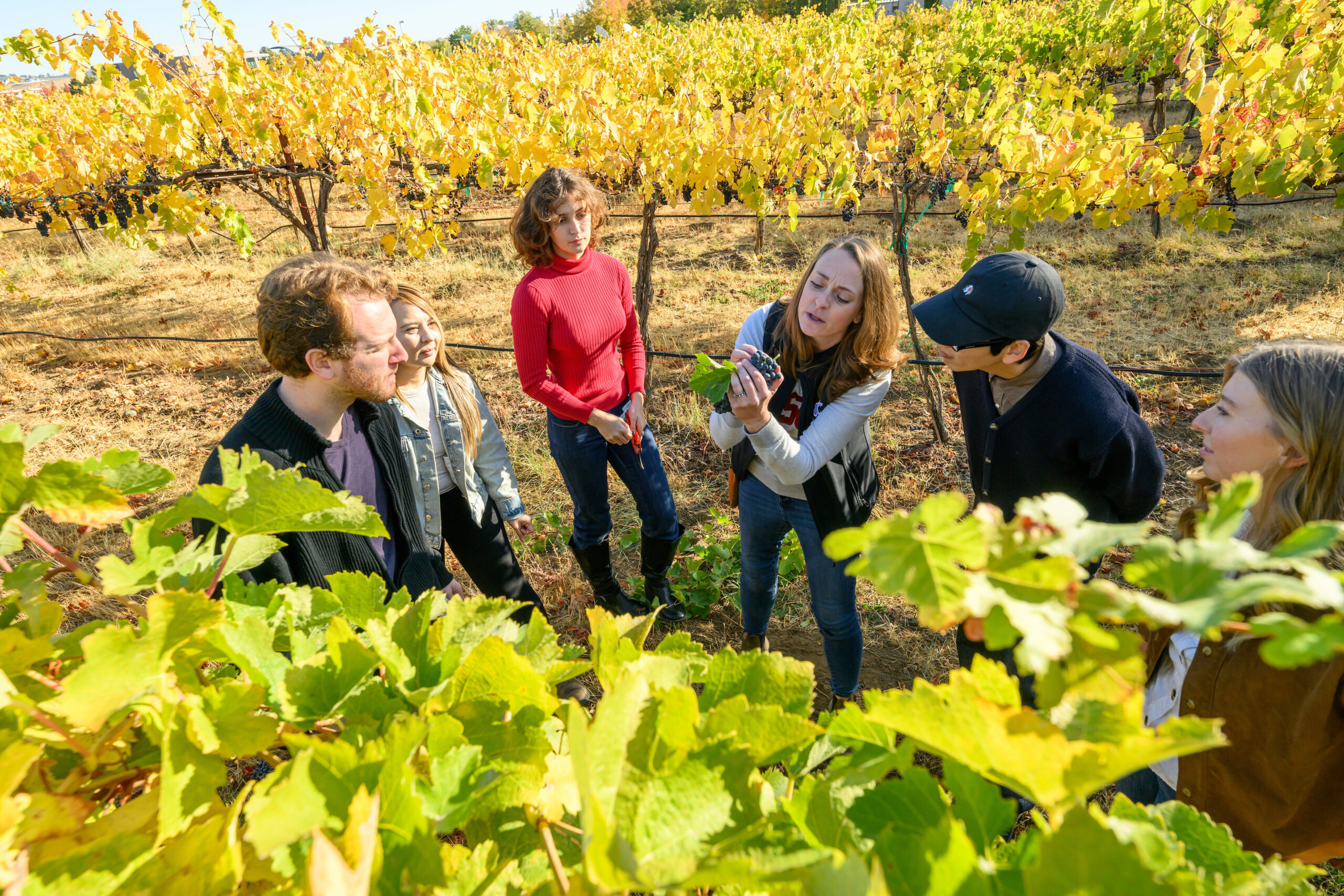
The Washington State University (WSU) partnership with local growers and producers has been a cornerstone of the state's burgeoning wine industry, which has become an economic powerhouse. This collaboration not only supports local economies but also enhances WSU's reputation as a leader in agricultural education and research. As we explore the nuances of the Washington wine landscape, it’s essential to recognize the broader implications of this development for both the community and the student body. The growth of this industry underscores the importance of agricultural innovation, a topic echoed in our coverage of other local achievements, such as the Washington Huskies women finish in top 10 at NCAA rowing championships and WSU baseball stuns No. 7 Oregon State in NCAA tournament opener. Both stories highlight the collaborative spirit and competitive drive that are so integral to WSU's community.
The success of the Washington wine industry is a testament to the rich agricultural heritage of the region, shaped by a combination of ideal climate, soil conditions, and a commitment to sustainable practices. WSU’s role in this narrative is significant, as the university has been at the forefront of research and education in viticulture and enology. By working closely with local producers, WSU not only provides valuable insights into the science of winemaking but also creates opportunities for students to engage in hands-on learning. This symbiotic relationship enriches the educational experience and prepares students for successful careers in an industry that is growing rapidly and demands innovative thinking.
Moreover, the impact of this thriving wine industry extends beyond economics; it fosters a sense of community and belonging among Cougs and local residents alike. The wine culture promotes gatherings, celebrations, and the sharing of resources, which resonate with the values of belonging and connection that are vital to the WSU student experience. As students partake in local wine-tasting events or learn about the industry through their coursework, they become part of a larger narrative that emphasizes the importance of community-first initiatives. Such experiences not only enhance their understanding of the local economy but also encourage them to see themselves as contributors to the region's growth.
Looking ahead, the question arises: how will WSU continue to adapt its programs to meet the evolving needs of the wine industry? As consumer preferences shift and sustainability becomes an increasingly pressing concern, there is a clear opportunity for WSU to lead the way in innovative agricultural practices. The university’s commitment to research and collaboration positions it perfectly to address these challenges and ensure that Washington wine remains a competitive force on the national and international stage.
In conclusion, WSU's collaboration with local growers is not merely about producing quality wine; it’s about fostering a vibrant community that values growth, education, and sustainable practices. As we celebrate the achievements of the Washington wine industry, let’s remain engaged and curious about how these developments will unfold and shape the future of our local economy. Our collective involvement in this narrative is what makes our Coug community strong, and it’s an exciting time to be a part of it.
The perfect blend
WSU has worked with growers and producers for decades to nurture a Washington wine industry that’s an economic powerhouse.
Like a Washington Merlot and Cougar Gold cheese, Washington state’s wine industry and Washington State University are the perfect pairing.
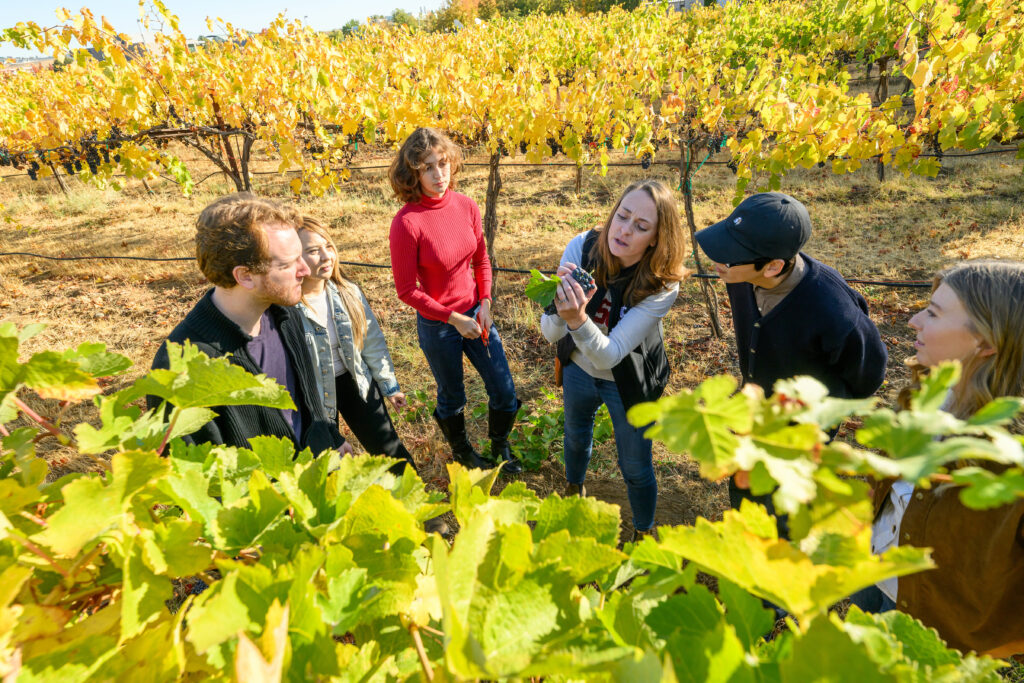
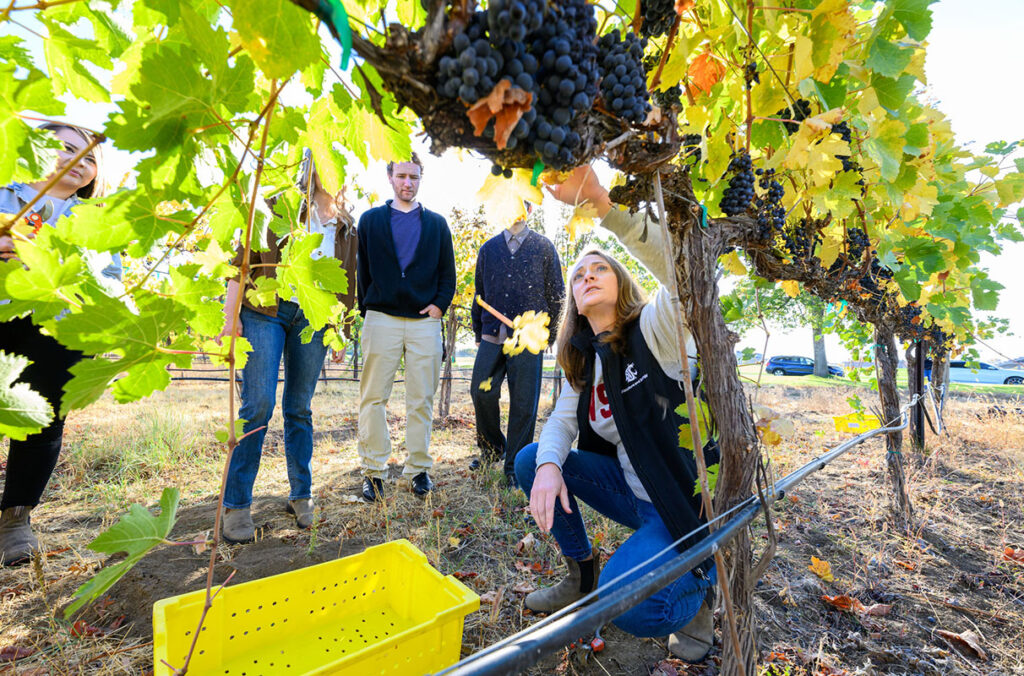
As the state’s wine industry took flight, WSU, an agriculture powerhouse, responded with new research and education programs. WSU has cultivated grape varieties suited to the state’s climate and geography, and offered a range of classes from certificates to degrees to nurture a home-grown wine industry workforce.
Learn more about how WSU and the Washington wine industry work hand in hand to achieve the perfect blend.

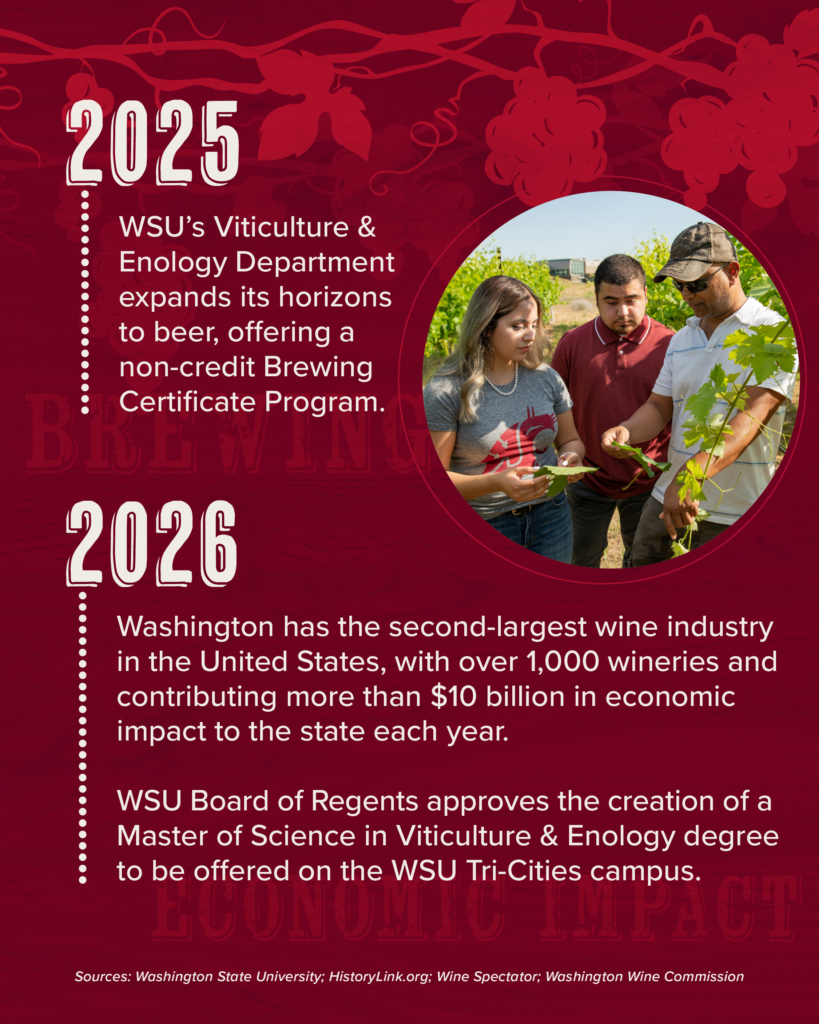

Infographic full text
Taking Root: How WSU helped grow Washington’s wine industry.
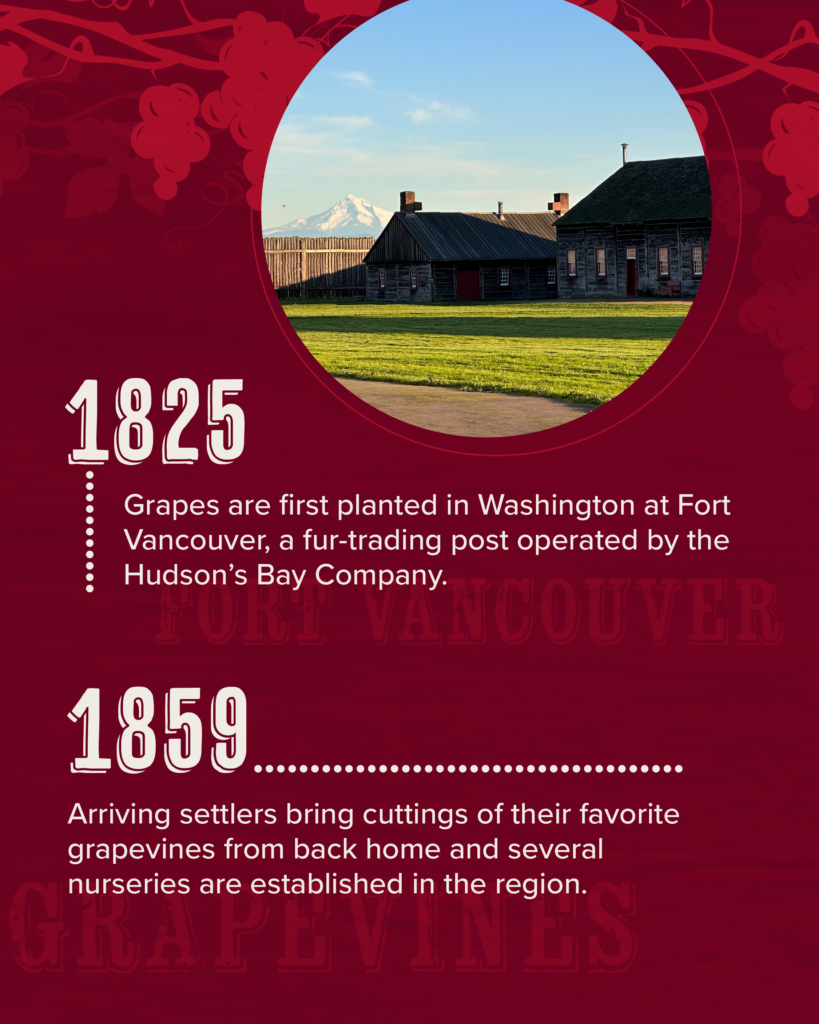
- 1825: Grapes are first planted in Washington at Fort Vancouver, a fur-trading post operated by the Hudson’s Bay Company.
- 1859: Arriving settlers bring cuttings of their favorite grapevines from back home and several nurseries are established in the region.
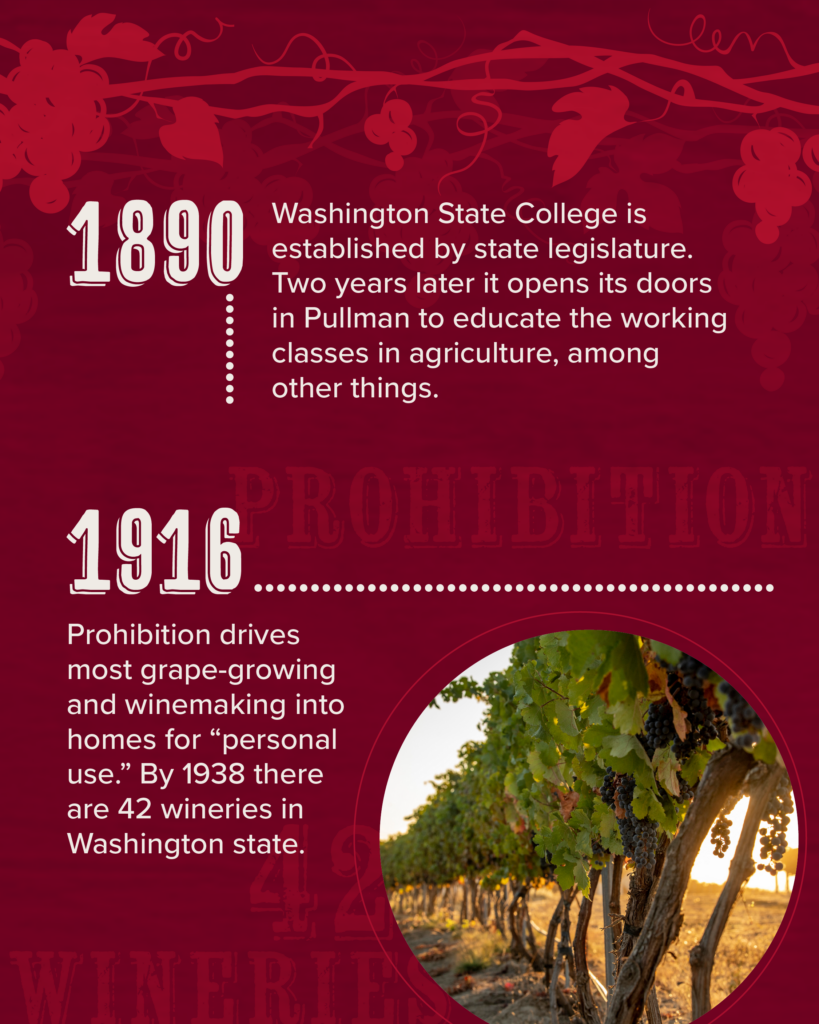
- 1890: Washington State College is established by state legislature. Two years later it opens its doors in Pullman to educate the working classes in agriculture, among other things.
- 1916: Prohibition drives most grape-growing and winemaking into homes for “personal use.” By 1938 there are 42 wineries in Washington state.
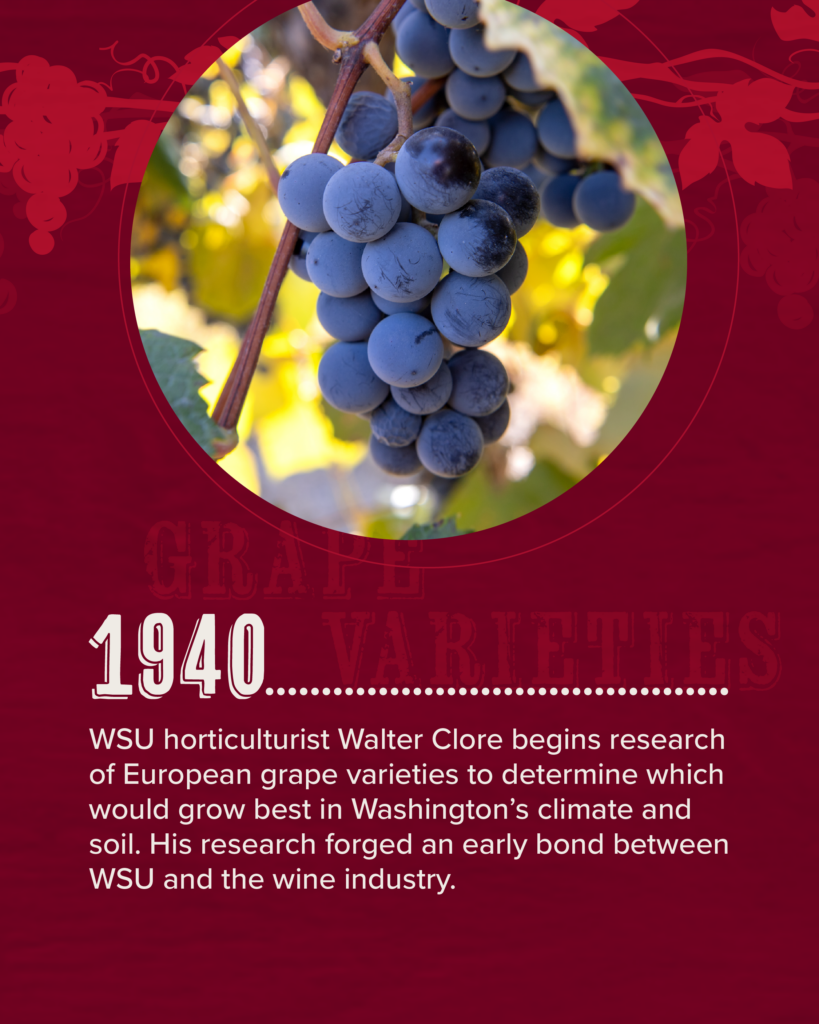
- 1940: WSU horticulturalist Walter Clore begins research of European grape varieties to determine which would grow best in Washington’s climate and soil. His research forged an early bond between WSU and the wine industry.
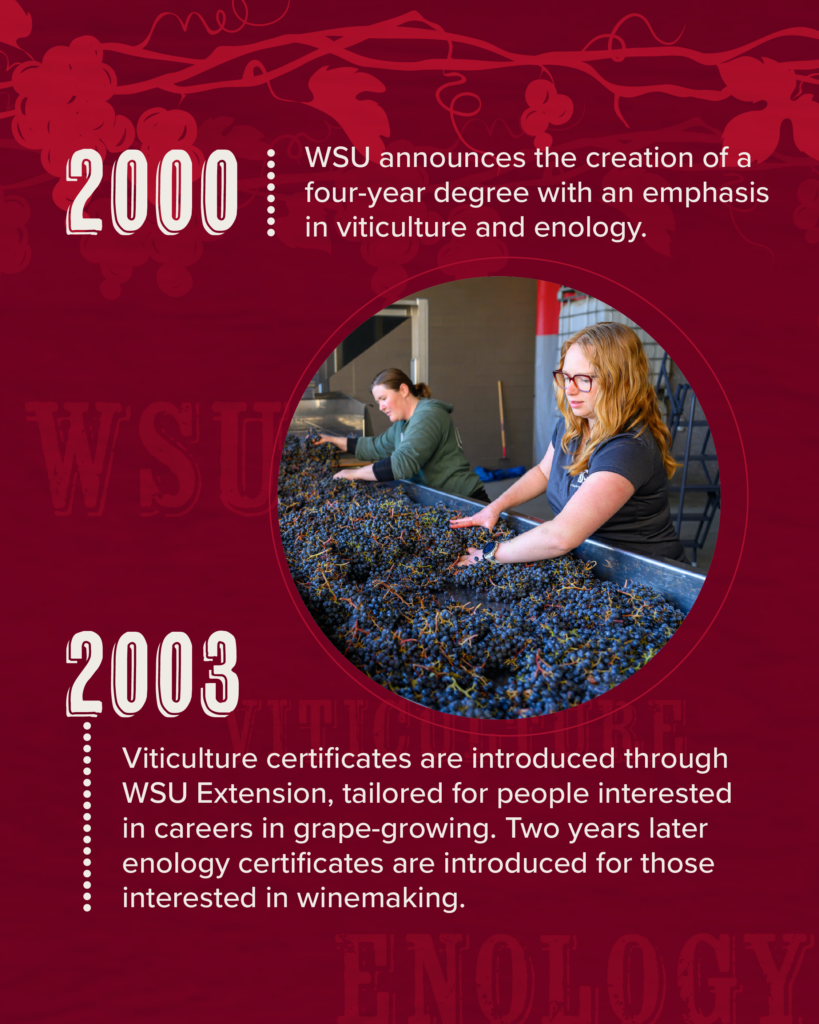
- 2000: WSU announces the creation of a four-year degree with emphasis in viticulture and enology.
- 2003: Viticulture certificates are introduced through WSU Extension, tailored for people interested in careers in grape-growing. Two years later enology certificates are introduced for those interested in winemaking.
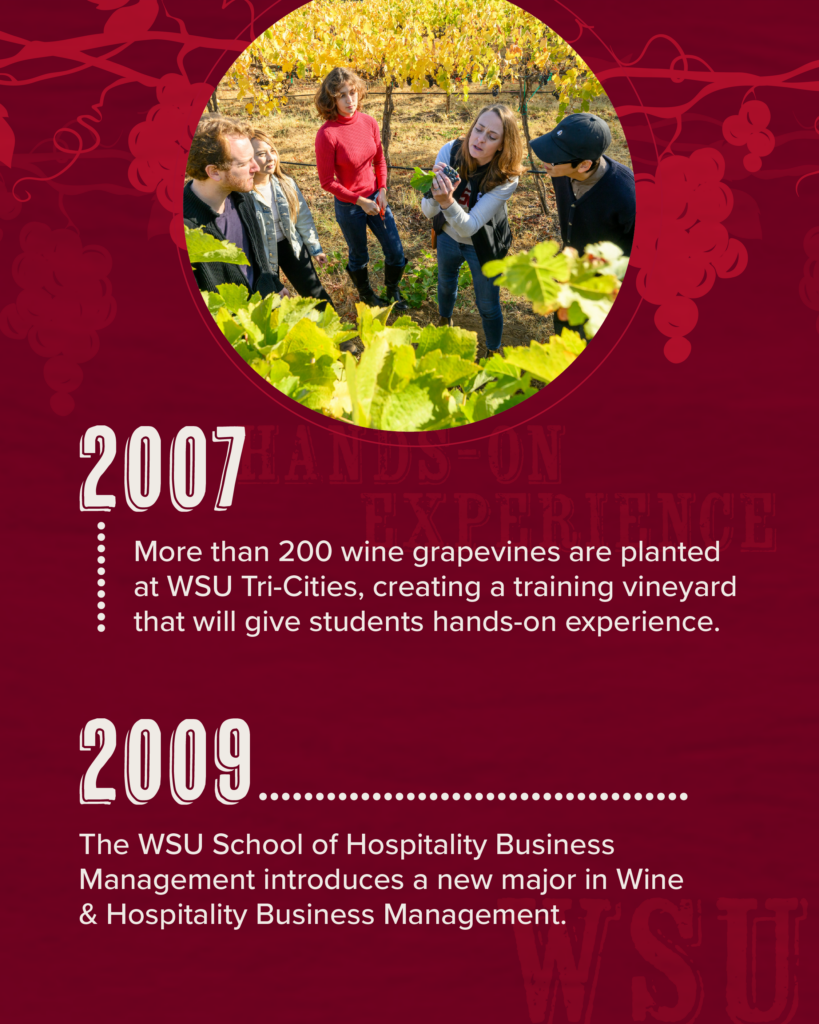
- 2007: More than 200 wine grapevines are planted at WSU Tri-Cities, creating a training vineyard that will give students hands-on experience.
- 2009: The WSU School of Hospitality Business Management introduces a new major in Wine & Hospitality Business Management.
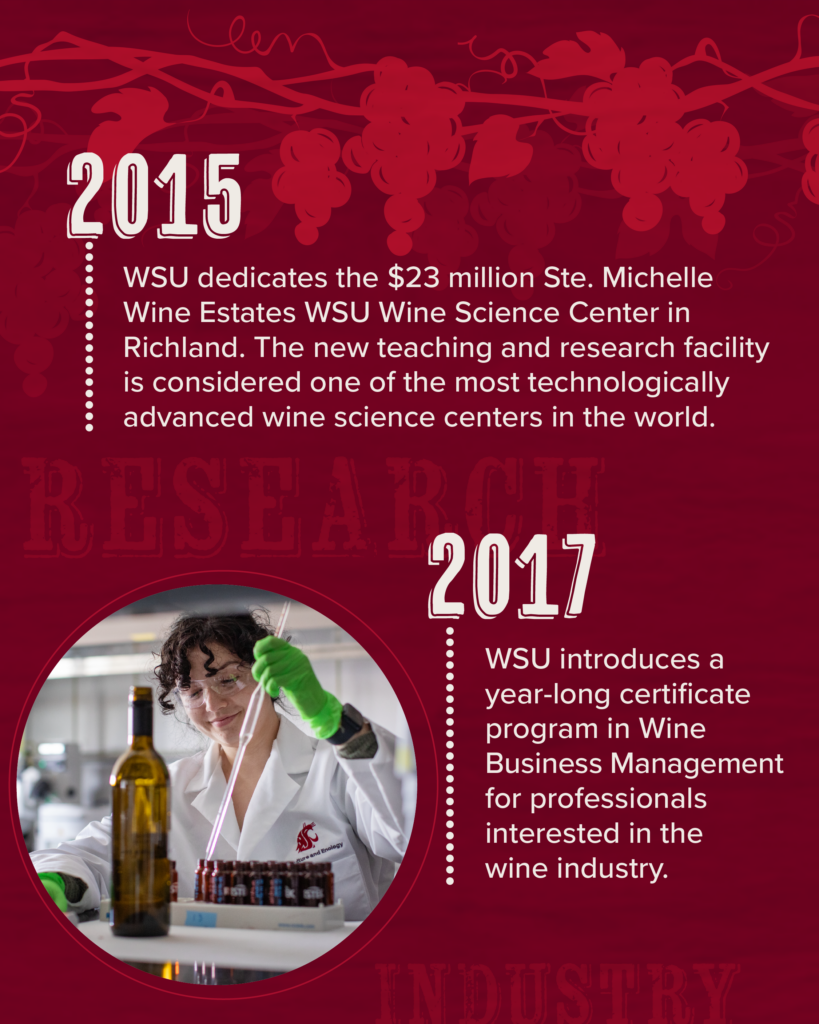
- 2015: WSU dedicates the $23 million Ste. Michelle Wine Estates WSU Wine Science Center in Richland. The new teaching and research facility is considered on of the most technologically advanced wine science centers in the world.
- 2017: WSU introduces a year-long certificate program in Wine Business Management for professionals interested in the wine industry.
- 2019: Washington’s wine industry reaches a major milestone with 1,000 active winery licenses in the state.
- 2022: WSU’s Viticulture & Enology program evolves to become the Department of Viticulture & Enology.
- 2025: WSU’s Viticulture & Enology Department expands its horizons to beer, offering a non-credit Brewing Certificate program.
- 2026: Washington has the second-largest wine industry in the United States, with over 1,000 wineries and contributing more than $10 billion in economic impact to the state each year. WSU Board of Regents approves the creation of a Master of Science in Viticulture & Enology degree to be offered on the WSU Tri-Cities campus.
Sources: Washington State University, HistoryLink.org, Wine Spectator, Washington Wine Commission.
WSU Delivers. Washington State University.
Explore WSU News to learn more about how WSU’s impact goes beyond the numbers.
WSU Delivers
The perfect blend
A star is born: WSU’s Cosmic Crisp® Apple

WSU is using AI to speed discovery in human health

WSU Global Campus: 100% online, 100% WSU

First-gen at WSU: Called to care

A positive reactor experience
Trending




Read on the original site
Open the publisher's page for the full experience