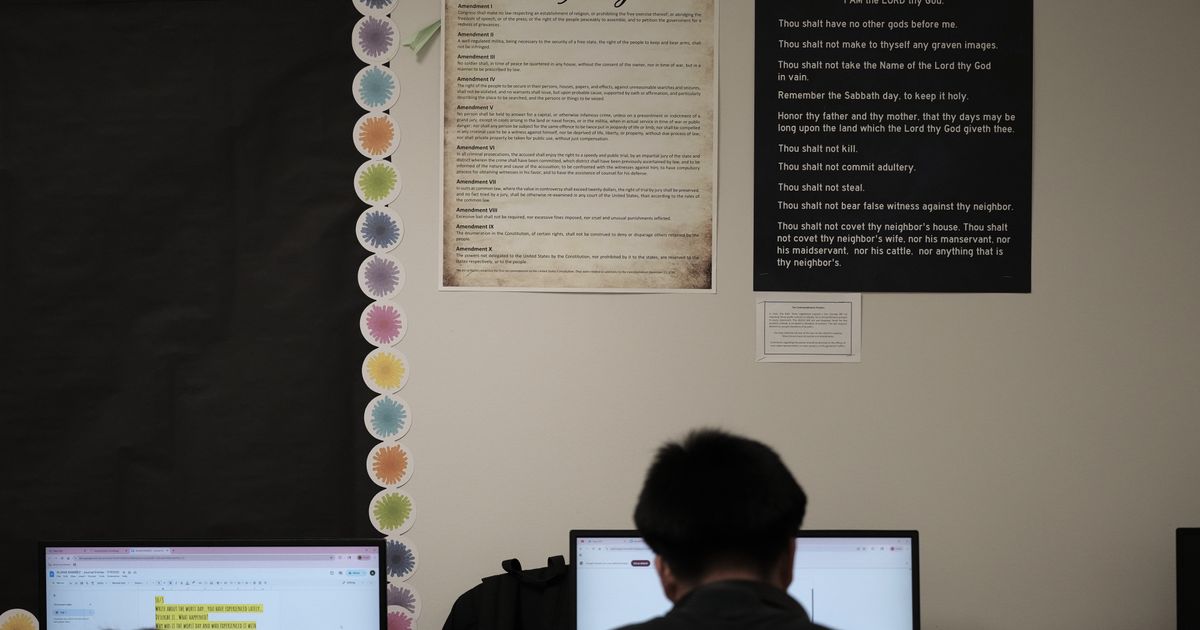
The first time I read that Texas is asking the Supreme Court to let public schools display the Ten Commandments, I had to sit with it for a second. Not because I'm shocked, but because it's such a clear example of how we keep arguing about the wrong thing in public life. The civil rights advocates pushing back have a point, and it's not just about religion. It's about who gets to decide what a classroom looks like and whether that space is actually for everyone. For students like us, who are already juggling classes, jobs, and trying to figure out our own beliefs, this isn't abstract. It's about whether school feels like a shared space or like someone else's living room.
Here's my honest take: displaying the Ten Commandments in a public school isn't neutral. It's a specific religious text, and putting it on the wall in every classroom sends a signal. It says, "This is normal. This is what we center." And if you're a kid who doesn't share that faith, or who's still figuring out what they believe, that's a quiet but real way of being told you're on the outside. That's not me being dramatic. It's the same reason we don't put the Nicene Creed or the Quran up in every classroom either. The state shouldn't be in the business of picking favorites, even if the text is old and familiar. The Supreme Court’s history on religion in schools has been messy, but the principle has mostly held: public schools shouldn't be in the devotion business. This case is asking them to flip that.
What does this mean for you, practically? If you're a WSU student or anyone on a public campus, it's worth paying attention to because it's about what kind of environment we're building. The Supreme Court agreeing to hear this case doesn't mean the law is good or even legal. It means they're willing to take a look, and that's a big deal. The Texas law was already challenged in lower courts and got blocked, so this isn't settled. The real question is whether the Court will use this to rewrite the rules on religious displays in schools, or just kick it back down. For students, this isn't just about a poster. It's about whether we want our classrooms to be places that challenge us to think, or places that tell us what to think before we even sit down.
If a reader asked me what to do with this, I'd say: don't tune out just because it's Texas. Court decisions have a way of rippling out, and what happens in a fifth-grade classroom in Austin could affect what's allowed in a study room here in Pullman. The specific thing to watch is whether the Court actually takes the case. If they do, the arguments will be about history and tradition, but the real fight is about inclusion. That's a conversation worth having, but it has to start with the truth that a classroom should be big enough for everyone to sit in, no matter what they believe. That's the standard I'd want, and it's the one we should hold the Court to.