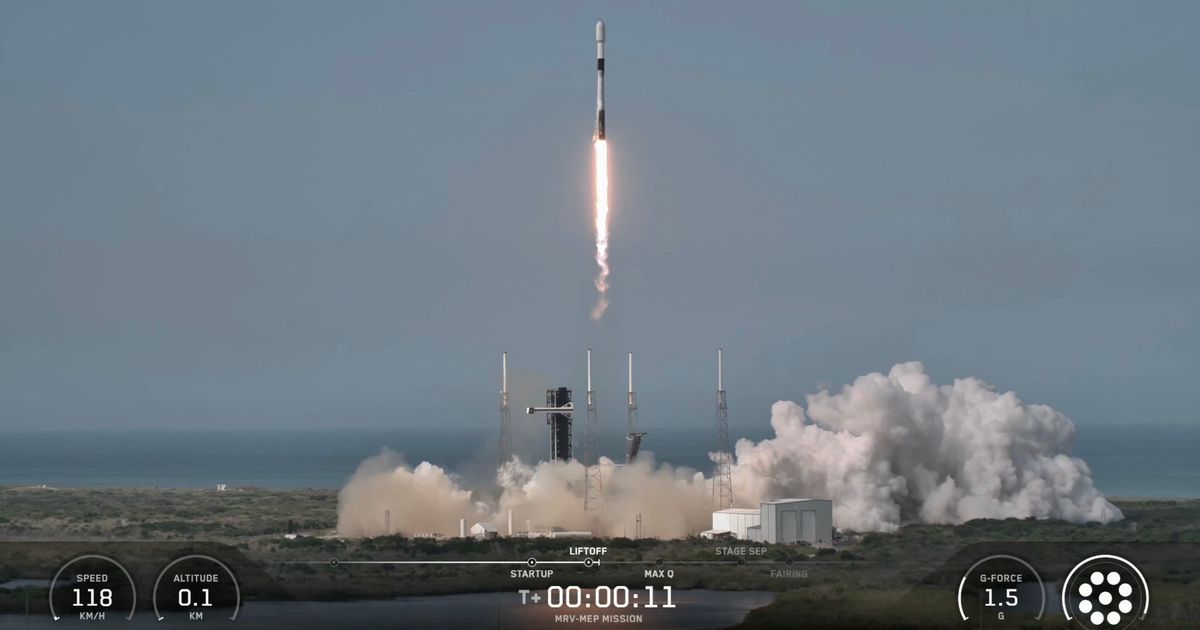
There's something quietly hopeful about a two-armed robot heading into space to give dead satellites another shot at life. These are machines built to fail, orbiting thousands of miles up, out of fuel and out of options. And now we're sending a fixer instead of a replacement. That's not just smart engineering. It's a mindset.
We talk a lot about sustainability on the ground, but up there, we've mostly treated orbit like an infinite resource. Turns out it's not. Every defunct satellite is a piece of the problem, and the old answer was always "launch a new one." This mission flips that. It's repair over replacement, which is a value we could use more of in our own lives, honestly. How many times do we toss something because fixing it feels too complicated? This robot is basically the friend who shows up with duct tape and a can-do attitude, except the duct tape costs millions and the friend is in space.
It's also a reminder that progress doesn't always look flashy. A two-armed robot extending a satellite's life isn't a headline that screams, but it's the kind of quiet, steady work that actually moves things forward. We see that same energy closer to home. The UW Robot Mimics Grasshopper, Masters the Jump piece is about a different kind of machine, but the throughline is there: small, clever steps in robotics add up. And when we zoom out to the big questions, like in the new galactic simulations narrowing the hunt for dark matter, we're reminded that a lot of discovery is about extending what we already have, not starting from zero.
For us, this is practical optimism in the best way. We plan ahead, we expect bumps, and we show up for the work that needs doing. This mission is exactly that. It's not pretending space is easy. It's acknowledging that we left a mess up there and deciding the next move is to clean it up, not just add to it. That's a real, grounded takeaway: fixing what's already in front of you is often smarter than buying something new.
So here's the detail I'm watching. This robot isn't just grabbing one satellite. The whole point is to prove the model works, to show that we can service these machines instead of abandoning them. If that catches on, it changes how we plan every future launch. We stop treating satellites as disposable and start treating them as assets worth maintaining. That's a shift in thinking that has ripple effects, both up there and down here. We should all be paying attention, because the next time something runs out of gas, the answer might not be to give up on it. It might be to send help.