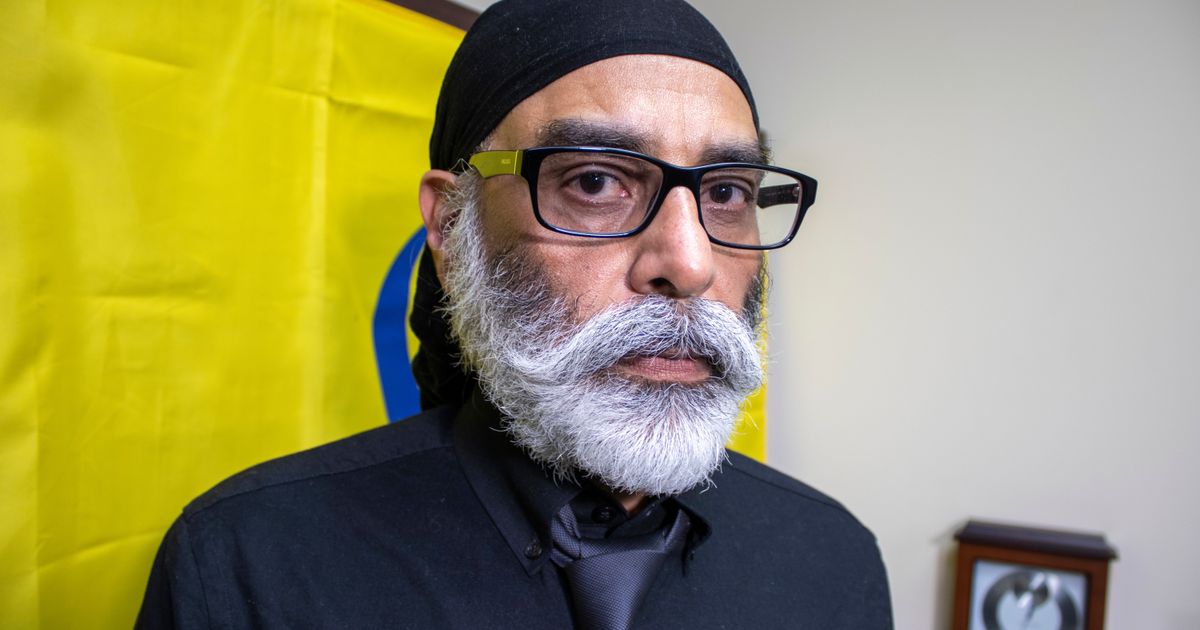
When the FBI and the RCMP warn someone that their life is in danger, that's not a small thing. A prominent Sikh separatist says both agencies have flagged a new credible threat against him, and that news lands heavy. It's easy to read a headline like this and move on, but I think we owe it to ourselves to slow down. This isn't just a story about one person in a distant conflict. It's about what happens when real-world tensions follow people across borders, and how institutions we trust to keep us safe have to act on intelligence that most of us will never see. We're not here to litigate the politics of it. We're here to say that when federal agencies warn someone they're in the crosshairs, that's a reminder that safety is fragile, even in places we think of as stable.
This story also fits into a bigger pattern that feels close to home for anyone paying attention to how institutions handle pressure. Not long ago, Utah University Apologizes After Dropping College Republicans Probe showed how quickly an institution can cave or correct course when the spotlight gets hot. And in a different lane, DOJ Finds Racial Discrimination at George Washington U Medical School proved that official investigations can land on real, uncomfortable truths. Those stories are about accountability and process, and they're worth holding next to this one. Because when the FBI warns about a credible threat, it's not a headline for the sake of drama. It's the system doing its job, imperfectly, quietly, and with high stakes. We don't get to see the evidence or the sources, but we do get to notice that these warnings are rare. That rarity is what makes them matter.
So what do we tell a reader who asks, "Why should I care?" Here's the honest take: this is a reminder that "credible threat" is a specific, loaded phrase. It's not hyperbole. It's the FBI and the RCMP saying, "We take this seriously enough to tell a man his life is at risk." For students like us, who are busy juggling classes and part-time shifts, it's easy to feel like international politics is someone else's problem. But this is about how governments handle the safety of people living in their country, and that's not abstract. It's about whether we believe the systems around us actually work when they're tested. And it's about paying attention, even when the story doesn't have a clean resolution yet.
Here's what I'm watching: how much detail emerges about the nature of this threat, and whether the public ever learns what changed between the last warning and this one. That's the open question. Not because we need every classified detail, but because transparency builds trust, and trust is exactly what's on the line. If you asked me, the takeaway is simple: take the warning seriously, take the story seriously, and don't let it get buried under the next news cycle. A credible threat against someone's life is not a rumor. It's a fact that demands our attention, even when we can't do anything about it. That's the part worth sitting with.