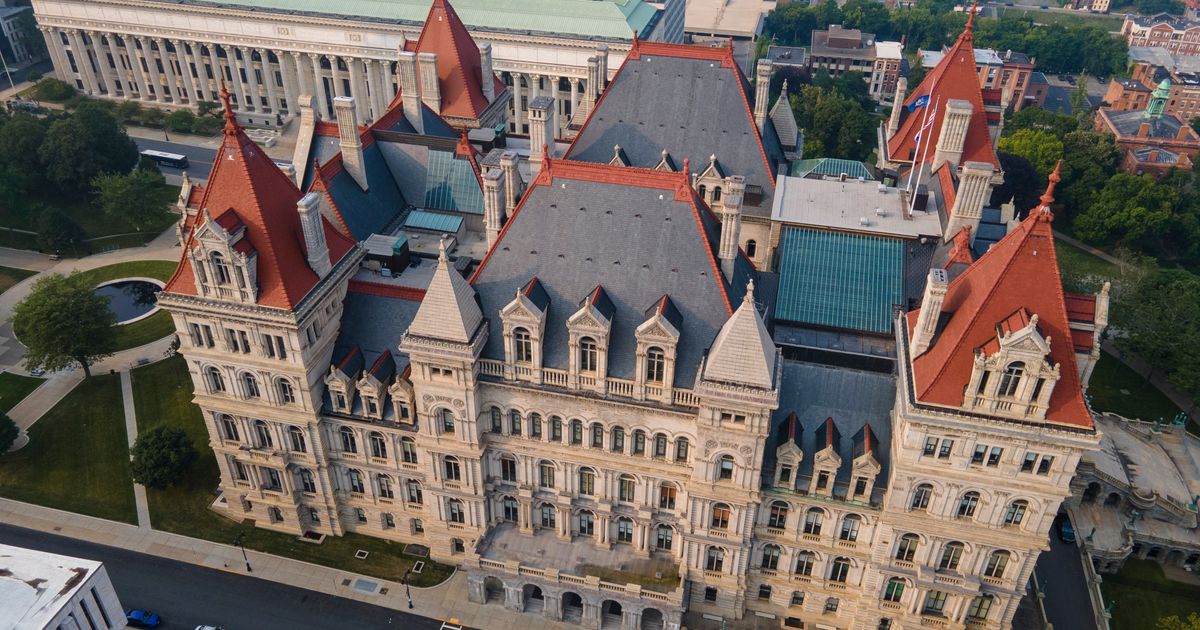
Somewhere in Albany, a woman is now facing federal charges for allegedly plotting to set off an explosive at the state Capitol and target lawmakers. The charge is providing material support to a foreign terrorist organization, which is a heavy, specific accusation. It is not the kind of thing that stays abstract for long, and it lands differently when you are a student who spends your days worrying about midterms and whether your roommate remembered to pay the electric bill. This is the part of the news that feels far away until it is not, and then it is suddenly very real, very close, and very much about the institutions we take for granted.
The details are still thin, and that is worth sitting with. We do not know much beyond the charge itself, and we should not pretend otherwise. But the charge matters because it connects a local, physical threat to a global network, and that is a hard thing to process. It is also a reminder that the people who do this work, the investigators, the prosecutors, the folks who notice a suspicious pattern, are doing exactly the kind of unglamorous, behind-the-scenes labor that keeps the rest of us safe while we are busy living our lives. In a state where the Capitol is just a few hours from Pullman, this hits close to home in a way that feels less like a headline and more like a warning. It is worth noting too that this is not an isolated incident. Just recently, a prominent Sikh separatist said the FBI warned him of a new threat on his life, and a professor at Troy was punished for writing to lawmakers on university letterhead. These are different stories, but they share a thread: the line between protected speech, political action, and security concerns is not always clean, and it is getting harder to navigate.
For our readers, the practical takeaway is not to spiral or to start eyeing every stranger with suspicion. It is to pay attention to the systems that are supposed to catch these things, and to ask questions about how they work. The FBI and local law enforcement do not always get it right, and the balance between security and civil liberties is a tightrope. But this charge is a sign that the system is at least awake. The real question is what comes next, and how much pressure we as citizens put on our leaders to be transparent about threats without inflaming fear. If a student asked me about this, I would say: do not let the news make you cynical, but do not let it make you naive either. Stay engaged, know your local representatives, and understand that safety is not just about locked doors. It is about a community that watches out for each other, and that includes knowing when something feels off enough to say something. The charge is a start, but it is not the end. The trial, the evidence, the full story, that is what we should be watching.