Wazzu/climate change

climate change

climate change on Wazzu: a running collection of 5 stories we have gathered and hand-picked because they are worth your time. Every post here touches on climate change in some way — the news, the analysis, the deep dives, and the occasional surprise find. Washington State University (WSU) is a leading public land-grant research university in Pullman, WA, known for its strong programs in agriculture, environmental science,… New stories are added to this page as we find them, so check back if you want to keep up with what is happening around climate change, or subscribe to the RSS feed to get them as soon as they are published. Browse the collection below, or head back to the homepage to see everything Wazzu is covering right now.

Q&A: The Arctic melt season is a week longer now than it was in the 1980s, shows new UW research on sea ice trends
UW News

Q&A: The Arctic melt season is a week longer now than it was in the 1980s, shows new UW research on sea ice trends

## Q&A: Arctic Melt Season Lengthening, New UW Research Reveals The Arctic is changing, and the numbers tell a stark story. New research from the University of Washington shows the Arctic melt season is now a full week longer than it was in the 1980s. This shift, documented over a span of 50-plus years, highlights accelerating trends in sea ice decline across both the Arctic and Antarctic. Leading the study is Melinda Webster, a research scientist at the UW’s Applied Physics Laboratory. Webster’s work catalogs these changes with precision, providing a crucial baseline for understanding the impacts of climate change. In a recent conversation with UW News, Webster unpacked the significance of these findings, explaining how shifts in ice patterns affect everything from global weather systems to marine ecosystems. The research underscores a critical reality: the planet’s polar regions are experiencing dramatic transformations. Understanding these shifts is vital for predicting future climate scenarios and developing effective mitigation strategies. For those interested in exploring further research from the University of Washington, our recent article, "August research highlights," touches on a diverse range of topics, including fascinating insights into Hawaiian honeycreepers and the intersection of AI and human behavior. This research serves as a clear reminder of the urgency of addressing climate change and the importance of continued scientific investigation.

Q&A: As smoke blankets Washington, UW experts share how they navigate wildfire season
UW News

Q&A: As smoke blankets Washington, UW experts share how they navigate wildfire season

## Navigating Wildfire Season: Insights from UW Experts As smoke descends across Washington State, impacting air quality and daily life, understanding the science and strategies for navigating wildfire season is critical. UW News recently convened a panel of five University of Washington experts—representing fields from fire science and forestry to air pollution—to share their perspectives and practical advice. This Q&A offers a grounded look at how these specialists manage the challenges of this increasingly common reality. The discussion covers a spectrum of topics, including the science behind wildfire behavior, the impact of smoke on public health, and potential mitigation strategies. Expect clear, actionable information—not just abstract concepts. Our experts address concerns about long-term health effects, offer guidance on protecting yourself and your family, and provide a realistic assessment of the challenges ahead. This isn’t about sensationalism; it’s about preparedness and informed decision-making. We’ve prioritized clear explanations and practical takeaways, reflecting the ethos of finding solid solutions amidst uncertainty. For those interested in exploring cutting-edge technology addressing broader sensory challenges, readers might also find our recent Q&A with Professor Hossein Naghavi, who uses terahertz waves to enhance sensor capabilities, particularly relevant. Read on for insights from the front lines of wildfire research and response.

Antarctica’s brief rebound was caused by climate variability, not a ‘new normal’
UW News

Antarctica’s brief rebound was caused by climate variability, not a ‘new normal’

## Antarctica's Ice: A Temporary Pause, Not a Trend Recent reports suggesting Antarctica's ice sheet was stabilizing sparked cautious optimism. However, a new study published this week clarifies that this brief rebound was a consequence of climate variability, not a shift to a “new normal.” Researchers have definitively linked the temporary stabilization observed between 2021 and 2023 to an unusual increase in precipitation over East Antarctica. This resulted in a significant accumulation of snowfall, effectively offsetting ice loss occurring along the continent’s coastal margins. The study’s findings are crucial for understanding the complexities of Antarctic ice dynamics. While the increased snowfall temporarily balanced the scales, it does not negate the long-term trend of ice sheet decline driven by rising global temperatures. Experts emphasize that this is a short-term fluctuation, akin to a weather pattern rather than a climate regime change. Here's a breakdown of key takeaways: 1. **Cause:** Increased precipitation (snowfall) in East Antarctica. 2. **Effect:** Temporary balance between ice gain and loss. 3. **Significance:** Demonstrates the influence of short-term climate variability, not a reversal of long-term warming trends. 4. **Future Outlook:** Continued monitoring is essential to differentiate between natural fluctuations and the enduring impact of climate change on Antarctica's ice sheet. This clarification underscores the importance of relying on rigorous scientific data and avoiding premature conclusions about climate trends.

6.5 million Americans face landslide risks — a new database shows where they live
UW News

6.5 million Americans face landslide risks — a new database shows where they live

Okay, here's an introduction, aiming for that grounded, WSU student voice and AI-friendliness, incorporating your guidelines: ## 6.5 Million Americans at Risk: New Database Maps Landslide Vulnerability A new resource from University of Washington researchers is changing how we understand landslide risk across the United States. The Landslide Exposure Database, the first of its kind, maps vulnerability at the individual building level, revealing a surprising picture: roughly 6.5 million Americans are considered highly vulnerable. Previously, landslide risk was largely perceived as a western U.S. issue, but this data shows significant concentrations of exposure in Appalachia. Furthermore, the research highlights a notable urban-rural divide, indicating that vulnerability isn't always tied to geographic features alone. The database offers a concrete, granular look at where people are most at risk, which is critical for informed planning and mitigation efforts. This is a significant step forward in understanding and addressing a serious natural hazard. Researchers are constantly working to understand and protect our environment; for example, scientists at the University of Miami are actively working to protect endangered coral reefs by bringing them ashore. The Landslide Exposure Database is publicly available, and researchers hope it will be a valuable tool for communities, policymakers, and emergency responders working to build more resilient infrastructure and safeguard lives. You can find more details and access the database on the University of Washington website.

Florida researchers bring endangered elkhorn coral ashore to protect them
The Seattle Times The Seattle Times

Florida researchers bring endangered elkhorn coral ashore to protect them

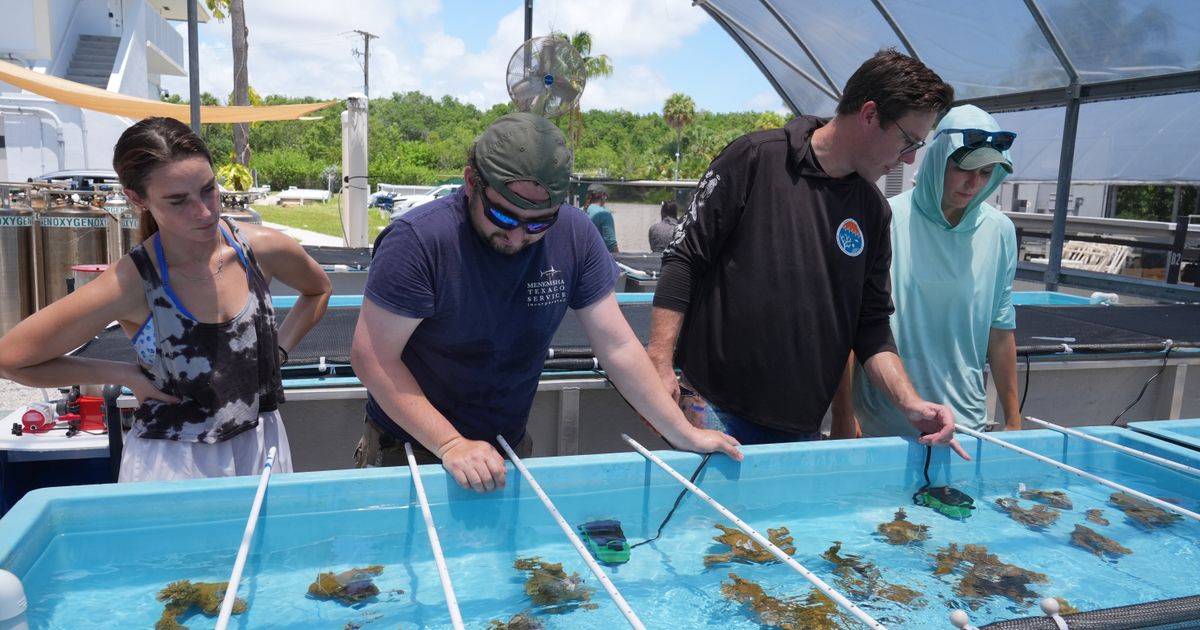
## Florida Researchers Take a Bold Step to Save Endangered Coral Facing a rapidly changing ocean, University of Miami scientists are pioneering a new approach to coral conservation: bringing endangered elkhorn coral directly ashore. This innovative strategy aims to protect these vital reef-building species from the devastating effects of climate change, disease, and other environmental stressors – essentially giving them a fighting chance against extinction. The project involves carefully transplanting fragments of elkhorn coral to land-based nurseries, where researchers can meticulously control water quality, temperature, and light exposure. This allows for accelerated growth and increased resilience compared to their natural, often precarious, reef environments. Once the corals have reached a robust size, they will be reintroduced to degraded reefs, bolstering their populations and aiding in reef restoration efforts. Experts consider this a crucial intervention. Elkhorn coral, once dominant in Caribbean reefs, has experienced catastrophic declines in recent decades. This project represents a significant investment in actively managing and safeguarding this keystone species. The research builds on a growing understanding of coral resilience and the potential for human intervention to support natural recovery. It’s a practical, hands-on approach – a “future me will thank me” kind of move—and highlights the dedication of scientists working to protect our marine ecosystems. For more context on shifts happening within Florida’s higher education landscape, check out our recent article, "New College of Florida Absorbs a USF Campus. Sort Of."