Thousands Of Seafarers Remain Stranded In And Around Strait Of Hormuz Amid U.S.-Iran Conflict
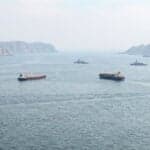


Thousands of seafarers remain stranded in and around the Strait of Hormuz as the conflict involving Iran continues to disrupt one of the world’s busiest shipping routes.
Among them is Indian seafarer Ankit Yadav, who has been stuck at an inland Iranian port for nearly two-and-a-half weeks with three other crew members.
Their small vessel was carrying steel and operating between Iran, Kuwait and Oman before the conflict halted movement. The crew has been surviving on limited food supplies of tomatoes and potatoes.
Yadav said the vessel could have sailed to Oman, where the crew hoped to return to India, but permission was not granted because of the U.S. Navy blockade.
He told Reuters that the shipping company had not agreed to sign them off because of high air ticket costs, leaving the crew dependent on government help for repatriation.
Another Indian seafarer, Salman Siddiqui, is also stranded at an Iranian port aboard a Comoros-flagged cargo vessel that had been bound for Oman.
Siddiqui told Reuters the crew spends its time trying to get through each night and praying they are not hit in an attack. He said the ceasefire has brought some relief, with fewer explosions than before.
India, one of the world’s top three suppliers of seafarers, has more than 300,000 maritime workers, and the conflict has raised serious concerns over crew safety.
Siddiqui said the crew had heard more than 100 explosions and saw projectiles flying and exploding close to their vessel. Some crews have managed to leave the area.
Surindra Kumar Chaurasia was among those repatriated to India after being stranded near Sharjah port with 20 other crew members while waiting for approval to load urea when the conflict began.
He told Reuters the vessel remained stranded in the Persian Gulf for about four days before the shipping company negotiated safe passage with Iran.
During that period, the crew saw ships being attacked by drones, heard warning messages from the Islamic Revolutionary Guard Corps over VHF radio and witnessed fighter jets operating in the area.
Chaurasia said the vessel’s captain was given a route by the IRGC and sailed close to Iranian and Omani waters because sea mines were reported on the other side.
India’s shipping ministry has helped repatriate about 2,680 Indian seafarers since the conflict began.
The war has also taken a toll on Indian crews. Three Indian sailors have been killed during the conflict. On April 18, two Indian-flagged vessels were fired upon by the IRGC while trying to pass through the Strait of Hormuz.
The Strait of Hormuz remains one of the world’s most important maritime trade routes, and the disruption is affecting not only shipping but also the safety and movement of crews caught in the conflict.
Reference: Reuters
Want to read more?
Check out the full article on the original site