WSU is using AI to speed discovery in human health
Our take
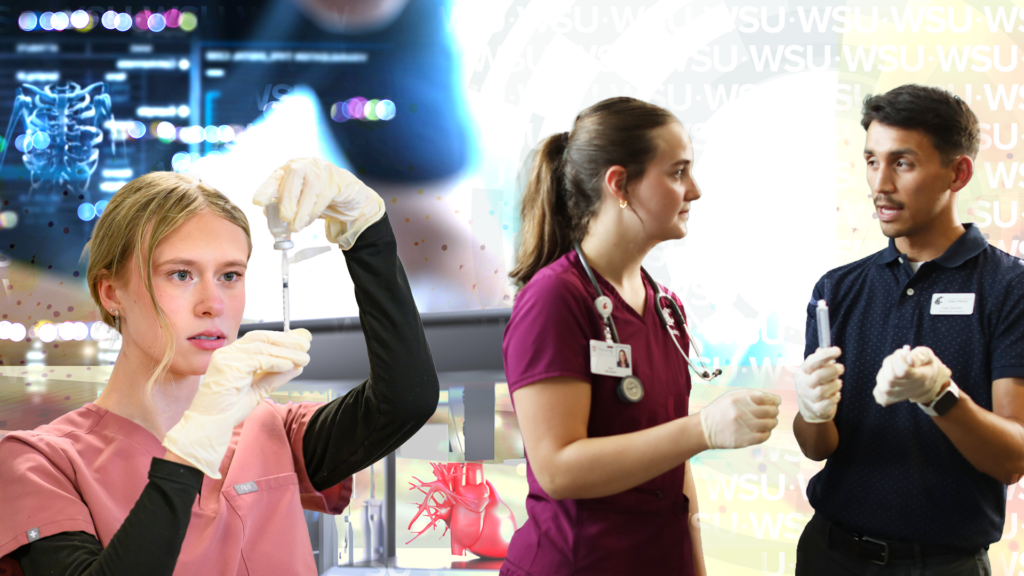
WSU's new push to use AI for faster health discoveries is the kind of news that makes me proud to be a Coug. When I first heard about it, my initial thought was honestly pretty simple: "Bet, this is actually cool." But the more I read, the more I realized this isn't just another tech headline. This is about our university walking the walk on its mission of service—and that's worth paying attention to.
What stands out to me is the focus on health equity and outreach. A lot of times, big announcements like this feel distant, like something happening in a lab that has nothing to do with my day-to-day. But WSU is explicitly saying they're looking at how AI can actually reach people who need it most. That's the difference between innovation for innovation's sake and innovation that matters. As someone who's watched friends struggle to access healthcare resources, this feels personal. The University of Washington has been making similar moves with their Microsoft partnership to enhance AI learning and research, and it's encouraging to see Washington schools thinking about how this tech serves people beyond the campus bubble.
Here's why this hits different for students like me: we're the generation that's going to live with whatever systems get built right now. If AI is going to shape healthcare—and let's be real, it definitely is—I'd rather see it shaped with equity in mind from the start. That's way better than trying to fix broken systems later. WSU's approach feels like they're asking the right questions early, which is exactly what a land-grant university should do. We're not just consuming this technology; we're helping shape what it looks like in practice.
The practical side of me also notes that this could open doors for students interested in health, tech, and community work. Research opportunities, internships, projects that actually matter—those are the kinds of experiences that define a college experience beyond just the classroom. I'm curious to see how this plays out in specific programs and whether students will have real pathways to get involved. The best innovations happen when they're collaborative, and that includes input from the people they're meant to serve.
What I'm watching now is whether this focus on equity translates into real, tangible outreach. Words are great, but I'm interested in action. Will there be community partnerships? Student internships at local clinics? Resources that actually reach Pullman and the surrounding areas? That's what will tell me if this is a genuine commitment or just a headline. Either way, it's a conversation worth having, and I'm glad our university is starting it. Future me—and a lot of other people—might really thank them for it.
WSU is using AI to speed discovery in human health
True to its mission of service, the university is also looking at how AI can improve health equity and outreach.
At Washington State University, artificial intelligence is accelerating discovery. Researchers are using AI to sift through vast biological datasets, detect patterns, speed the search for new treatments, and get deeper insight into how living systems work.
AI is ramping up WSU’s work in genomics, pharmaceuticals, immunology and more, fueling change in how human health is studied and medical care is delivered.

Using AI, for example, WSU scientists are building a web-based tool designed to put massive amounts of cancer data at the fingertips of researchers, public health officials and clinicians. The informatics tool will enable researchers to analyze combined national datasets across a range of cancer-related characteristics, potentially accelerating critical research into the disease that claims millions of lives each year.
At the Paul G. Allen School for Global Health, researchers have developed a machine learning model that identifies animals that harbor viruses that could spread to humans, which could help limit, or even prevent, future pandemics.
WSU computer scientist Diane Cook, a pioneer in the field of smart sensing and AI, has worked with colleagues to develop a system of in-home sensors that monitor the activities of residents and use machine learning to flag behavioral changes. Such information could help detect signs of a new or worsening problem and offer great promise for helping people stay in their homes as long as possible.
Addictions researchers at the Elson S. Floyd College of Medicine are eyeing the possibilities of AI to personalize apps that help people quit smoking or manage other use disorders.
This AI-based deep learning program was very, very accurate at looking at these tissues. It could revolutionize this type of medicine for both animals and humans.
Michael Skinner
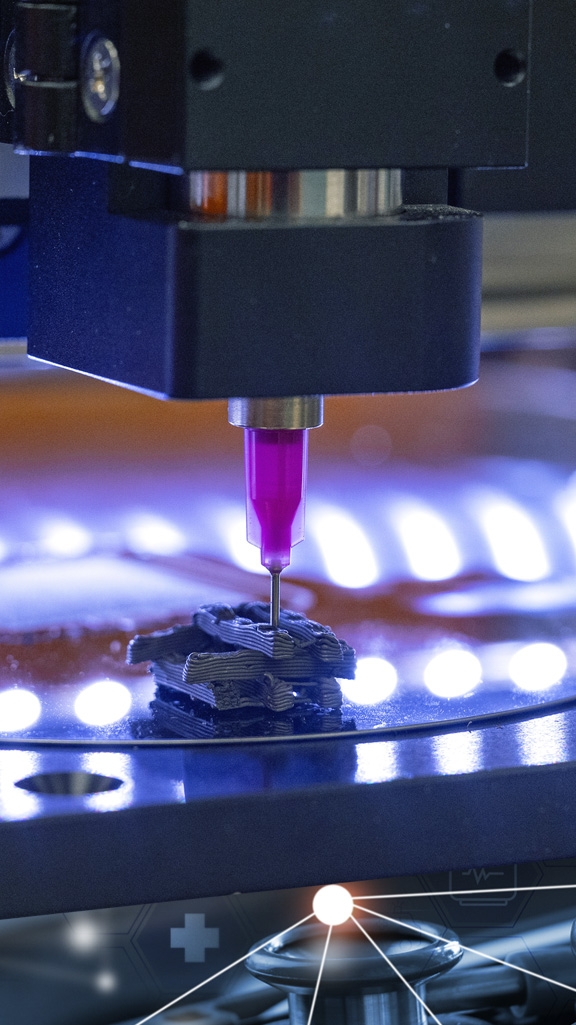
Computer scientists in the Voiland College of Engineering and Architecture have designed an AI model that improves 3-D printing that could be applied to the creation of artificial organs, among other uses.
There’s an AI tool that analyzes hundreds of hair samples in seconds, and another deep learning model that could have a major impact in improving accuracy and speed in diagnosing signs of disease in human and animal tissue.
“This AI-based deep learning program was very, very accurate at looking at these tissues,” said Michael Skinner, a professor in WSU’s School of Biological Sciences. “It could revolutionize this type of medicine for both animals and humans.”
WSU, a land-grant university whose mission is service, is also investigating the role AI could play in improving health equity and outreach.
One project, for example, used AI to generate reminder messages for healthcare appointments at a rural medical clinic. Another project at the same clinic will provide patients who have type 2 diabetes with an app to help manage their condition.
But university scientists, mindful that technology can have lopsided benefits, are integrating human questions about privacy, access and resources into their research, too.
Said Anna Zamora-Kapoor, an associate professor in the departments of Sociology and Medical Education and Clinical Sciences, “There is a risk that AI exacerbates inequities, with a segment of the populations able to use AI to their advantage and the advantage of their families, while others are left behind.”
Explore WSU News to learn more about how WSU’s impact goes beyond the numbers.
WSU Delivers
WSU is using AI to speed discovery in human health
WSU Global Campus: 100% online, 100% WSU
First-gen at WSU: Called to care
A positive reactor experience

Solar schools
Bees on the brink
Trending




Read on the original site
Open the publisher's page for the full experience