When Claude Met Claude
Our take
The recent installation at San Francisco's de Young Museum, titled "Monet and Venice," has sparked a conversation about the intersection of art and technology, particularly through the lens of AI. While the exhibition celebrates Claude Monet's enchanting depictions of Venice, the presence of Anthropic's AI chatbot, Claude, raises questions about authenticity and engagement in cultural experiences. This installation is part of a growing trend where tech companies seek to align themselves with the arts to gain cultural legitimacy. It draws parallels to other initiatives in academia and conservation, like the efforts described in articles such as UW researchers decipher beluga calls to bolster conservation efforts and How Peer Mentoring Supports Neurodivergent Students.
Anthropic's chatbot offers an interactive experience that seems appealing on the surface. However, the reality of its functionality often disappoints. Visitors are instructed to keep their inquiries short, limiting meaningful engagement. Instead of fostering a deeper understanding of Monet’s artistic intentions, the AI often regurgitates information already available in the exhibition’s text. This raises a crucial concern: when does technology enhance our experiences, and when does it merely serve as a gimmick? The promise of AI in cultural settings is that it could provide personalized insights and facilitate richer interactions. Unfortunately, in this case, the interaction felt hollow, emphasizing the limitations of AI in capturing the nuances of human artistic expression.
Moreover, the sponsorship of such exhibitions by tech companies like Anthropic can be seen as an attempt to sanitize their image amidst growing skepticism about AI's impact on society. Much like how the Sackler family has faced scrutiny for their association with the arts, Anthropic's efforts to align themselves with Monet may reflect a deeper need to gain trust and credibility. The art world, with its emphasis on creativity, emotion, and human experience, stands in stark contrast to the cold efficiency often associated with AI technologies. This tension raises essential questions about the future role of AI in arts and culture: can it ever truly replicate or enhance the human experience, or will it always remain an impersonal tool?
While the allure of interacting with an AI chatbot next to masterpieces is enticing, it’s essential to remember that art is inherently a human experience, steeped in emotion and context. The interaction at the exhibition ultimately felt like a missed opportunity to engage deeply with Monet’s work. Instead of enriching visitors' understanding, the chatbot served as a reminder of the limitations of technology in grasping the subtleties of art. As we look ahead, the challenge will be finding ways to integrate technology that genuinely enhances cultural experiences without overshadowing the authentic voices behind the art. In a world where AI and human creativity increasingly intersect, how can we ensure that our cultural experiences remain grounded in genuine connection and understanding? This question is worth pondering as we navigate the evolving landscape of art and technology.
Shower thoughts are typically best left in the shower. Such as: What might Claude the AI chatbot have to say about Claude Monet?
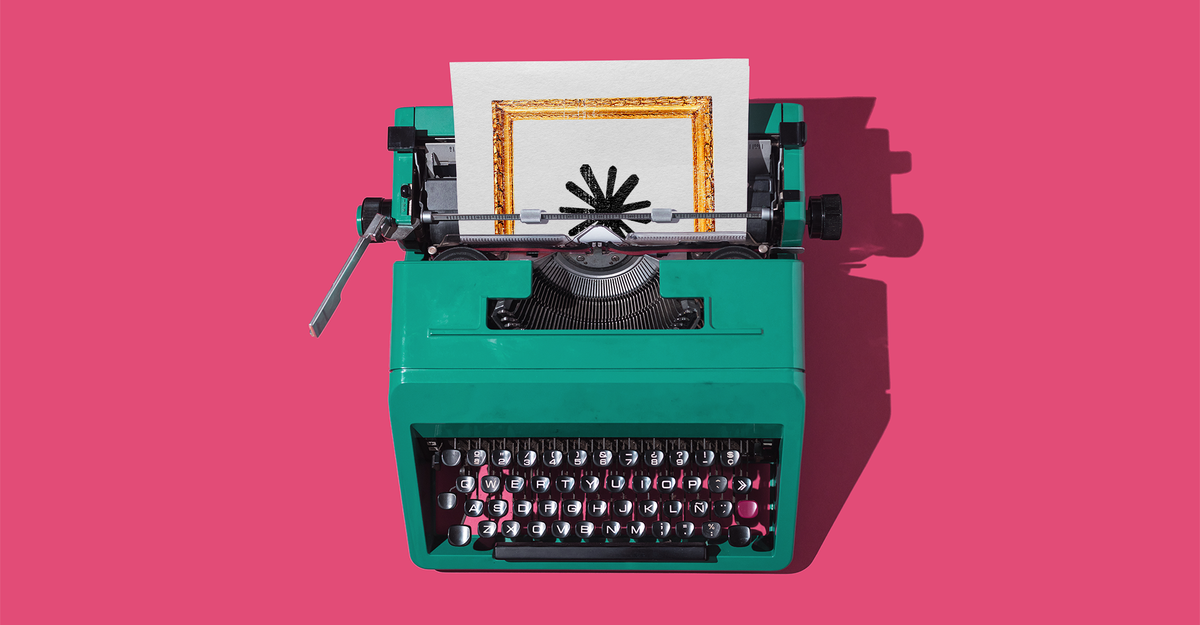
Earlier this month, San Francisco’s de Young Museum unveiled its newest exhibition, “Monet and Venice,” which is dedicated to the impressionist painter’s beautiful and meditative canvases of the floating city. And Anthropic, perhaps having seized on a marketing opportunity, is one of the show’s lead sponsors. Through tomorrow, visitors are able to partake in a temporary “interactive experience” that Anthropic set up in a room adjacent to the galleries. Essentially, the AI firm turned two typewriters into interfaces to chat with Claude. You type in a question about the exhibition, and Claude, based on information about Monet that the museum provided, such as exhibit labels, punches out an answer onto the same sheet of cream cardstock.
When I approached one of the Claude typewriters, which were placed next to art books and paintbrushes on top of wooden desks, an employee instructed me on how to proceed and stressed, repeatedly, that I should not prompt the bot with more than eight to 10 words. To get things started, Claude typed onto the paper, “What caught your eye in Monet and Venice? Type a word or short phrase and I’ll tell you more.” Questions I really wanted to ask—about the intentions behind and effects of the seemingly coarse weave of the canvases, or how Monet, obsessed with color, selected his pigments—were hard to pare down on the spot. I wrote that I noticed “shimmering water in varying lights.”
[Read: The human skill that eludes AI]
Claude paused for several seconds, then typed a response about Monet’s approach to painting water that restated, in many instances verbatim, information that I’d learned from wall text throughout the galleries. I had follow-up questions, but the paper ejected too quickly for me to ask them. In theory, Claude the AI was supposed to deepen my knowledge of Claude the painter. But all the typewriter added to my experience was ink and, I suppose, a piece of reprocessed dead tree to take home.
Anthropic’s sponsoring of and installation alongside “Monet and Venice” is the latest in a litany of attempts by AI companies to purchase cultural cachet. Typewriters, stationery, fine-art museums, the quintessential impressionist painter—these are all associated with taste, beauty, and craft, as well as with intentionality and care, the opposite of the ruthless technological efficiency that repels many from generative AI. OpenAI, for its part, recently backed an AI-animated film aiming to debut at this year’s Cannes Film Festival. The ChatGPT maker has also partnered with the Palace of Versailles to create an app to let visitors “talk” with statues in the garden—spewing, it would appear, empty clichés. (“Perhaps strength lies in understanding both beauty and power together,” Achilles told me.) Last fall, Anthropic partnered with Air Mail, a weekly newsletter with a small storefront in Manhattan, to distribute blue baseball hats that read thinking, as in thinking cap; tote bags; and little packets of Anthropic-branded, otherwise unlabeled wildflower seeds. I was too scared of what an “Anthropic” plant would be to sow mine.
Yet this is also the same company that ripped the spine off millions of books, scanned their pages, and fed the text into Claude’s training data. Companies and wealthy scions donate to museums and sponsor exhibitions all the time, sure. Bank of America sponsored “Monet and Venice” at the Brooklyn Museum, where the show debuted; the Sackler family has eponymous museum wings around the country. Even so, leveraging historic artworks to elevate the brand of a company whose product is shaking the very foundations of human culture is just too on the nose. Let’s not pretend that the Claude AI–Claude Monet typewriter room is anything more than a hollow gimmick. (Anthropic declined to answer questions about the typewriters and exhibition sponsorship.)
[Read: Ted Chiang is wrong about AI art]
After using the device, I was directed to two file cabinets filled with Anthropic-branded postcards and Keep thinking bookmarks. Stacked on top of one of the file cabinets were three large books titled Édouard Manet, Paul-Cézanne, and Claude Monet. The errant hyphen in Cézanne’s name, and an identical font across all three covers that looked very similar to an Anthropic typeface, caught my eye. I picked up the top title, ostensibly about Manet, to examine its contents and found it to be almost weightless—these objects were not bound sheaves of paper, it turned out, but cardboard boxes. Even Jay Gatsby had the decency to fill his library with real books, if unopened ones.
Like many people, I adore both the work of Claude Monet and the canals of Venice. I was fortunate enough to grow up in New York City, going to the Metropolitan Museum of Art on weekends and the Museum of Modern Art for family programs, where Monet’s monumental water-lily canvases were among the many works that beckoned me to fall in love with painting. My mother went to college in Venice. I found the exhibition dedicated to Monet’s paintings of Venice enchanting; I had seen it in Brooklyn as well, and will surely return at least once more.
Monet’s dappled brushstrokes and the thick, coarse texture of his paint; how his palette varies by season and time of day, the same sea composed of stunning blues on one canvas and a fury of greens and pinks on an adjacent one; the impressionist’s paintings alongside depictions of Venice by James McNeill Whistler, Pierre-Auguste Renoir, and Canaletto—the exhibition beckons visitors to view canvases from up close and from afar, to look at paintings in isolation and in juxtaposition. I found myself most drawn to the lesser-known bridges and villas depicted, trying to recall if my mother and I had walked by them.
Monet sent letters and postcards across a continent of space and a century of time, to be imbued with new and varied meanings by every curator, software engineer, child, and parent who lays eyes on them. An art gallery was already an interactive experience.
Read on the original site
Open the publisher's page for the full experience