Trump’s Giant Face Is Everywhere
Our take
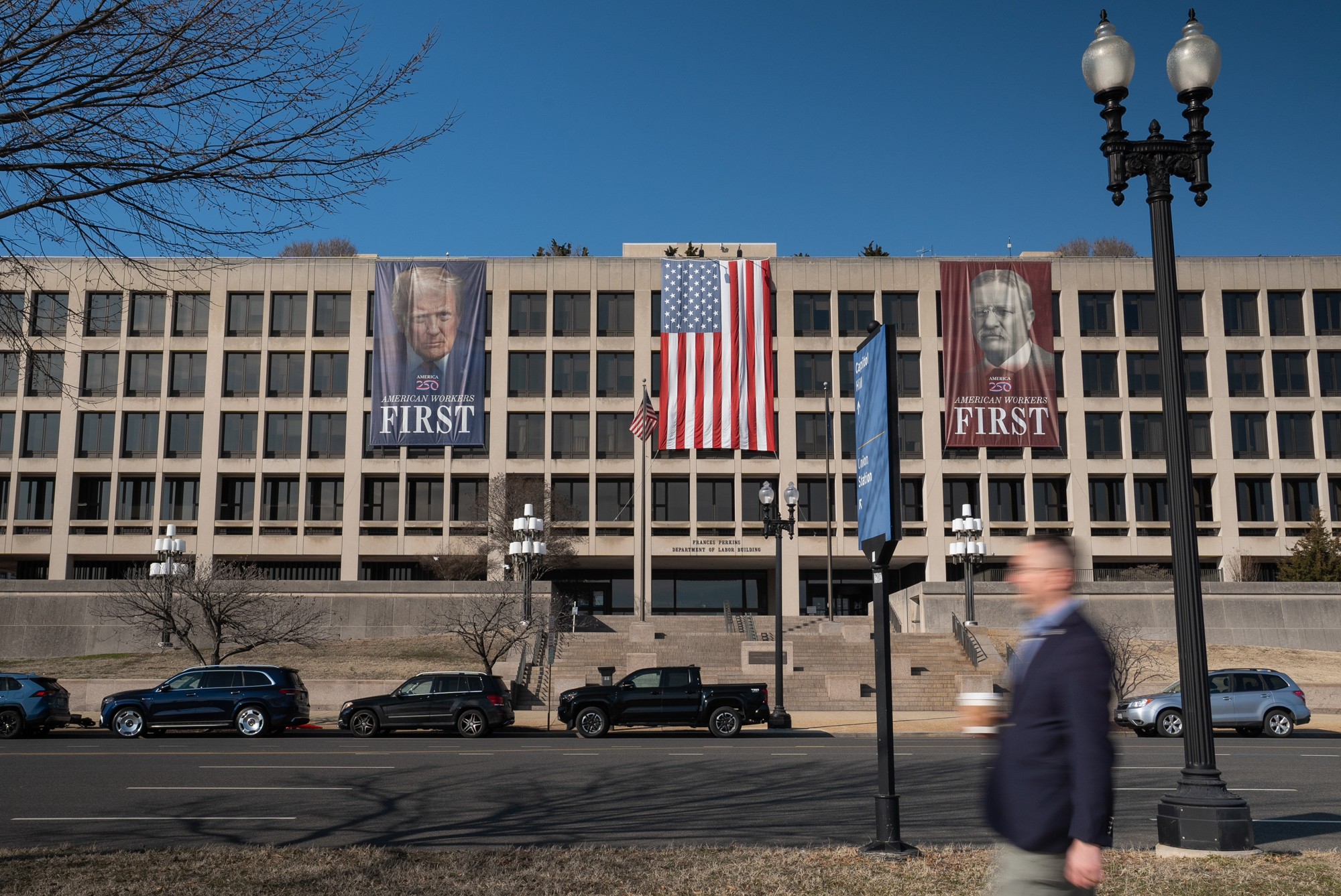
In recent months, the capital has become a canvas for what can only be described as an audacious display of political branding—Donald Trump's image looming large, quite literally, over the city's iconic landmarks. Carolyn Van Houten's piece, "Trump’s Giant Face Is Everywhere," captures the essence of this phenomenon, illustrating how Trump's visage, much like a corporate logo, has become synonymous with federal institutions. This raises important questions about the intersection of politics and branding, especially in an era where the lines between personal image and public service are increasingly blurred. It evokes critical reflections on how we perceive authority and national identity, particularly in the wake of the power dynamics explored in related articles like Court Rules Texas State Must Reinstate Prof Fired for Israel-Palestine Talk and Kentucky State University Students, Alumni Sue to Block New State Law.
The omnipresence of Trump’s likeness in D.C. serves not only as a personal branding project but also as a stark reminder of the shifting landscape of American politics. The article draws parallels to authoritarian regimes where leaders’ images are plastered across public spaces, creating a narrative of control and reverence. This is not merely a matter of aesthetics; it speaks volumes about the psychological manipulation inherent in such visibility. By embedding his identity within the very fabric of governmental institutions, Trump is not just promoting himself; he is attempting to redefine the relationship citizens have with the state. It's a tactic that transforms governance into a personal brand, where loyalty to an individual becomes intertwined with loyalty to the country itself.
The implications of this branding extend far beyond the physical space of Washington, D.C. They resonate with American society at large, challenging us to consider how we view leadership and authority. As citizens, we must reflect on whether we want our government to be represented by a single personality or if we aspire for a more collective representation of democratic values. The idea that a single face can dominate public spaces raises concerns about the erosion of democratic principles in favor of autocratic tendencies. It forces us to confront our comfort levels with such imagery and what it means for our democracy moving forward.
As we look ahead, it's crucial to consider the potential consequences of this trend. Will the branding of political figures become more normalized, leading to a culture where leaders are viewed more as celebrities than public servants? What does it mean for the future of civic engagement if a singular image dominates the narrative? The visibility of Trump’s face may provoke a momentary reaction—be it admiration or disdain—but ultimately, it should ignite a broader conversation about representation, accountability, and the essence of leadership in contemporary society. As we navigate this complex landscape, we must remain vigilant and engaged, ensuring that our democratic ideals are not overshadowed by the cult of personality.
Photographs and videos by Carolyn Van Houten
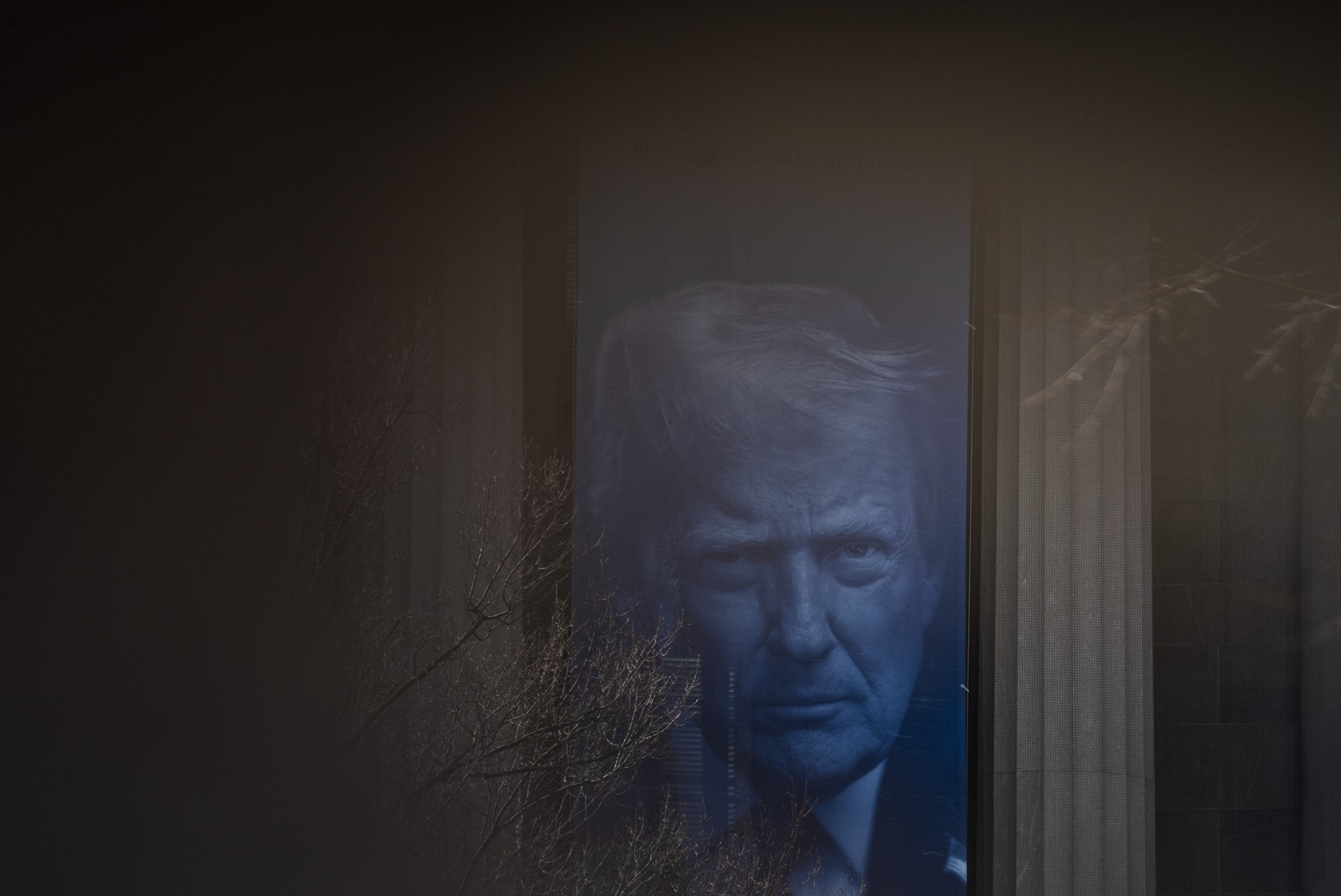
Strolling through the capital these days, you can’t go far without encountering an image of the president’s face. It drapes down over the front of the Department of Labor building, and peeks out from behind the trees that cluster at the entrance to the Department of Justice. What is the expression playing out on his lips, magnified to a hundred times their actual size? There is something of a Mona Lisa quality to this particular photo of Donald Trump. He could be scowling, or maybe slyly smiling. His glowering eyes, though, are less enigmatic; they seem to follow the pedestrians scurrying around the city from above.
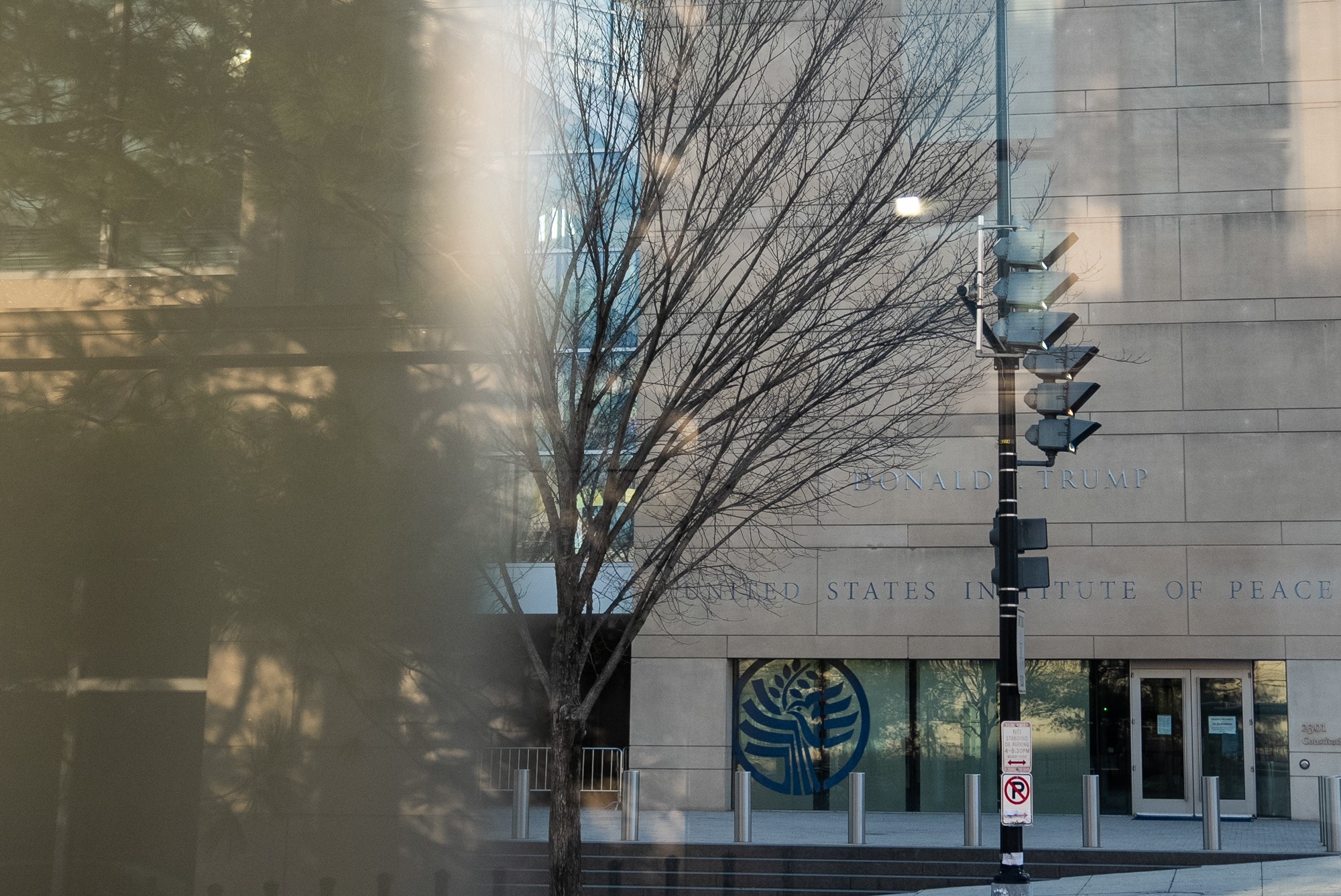
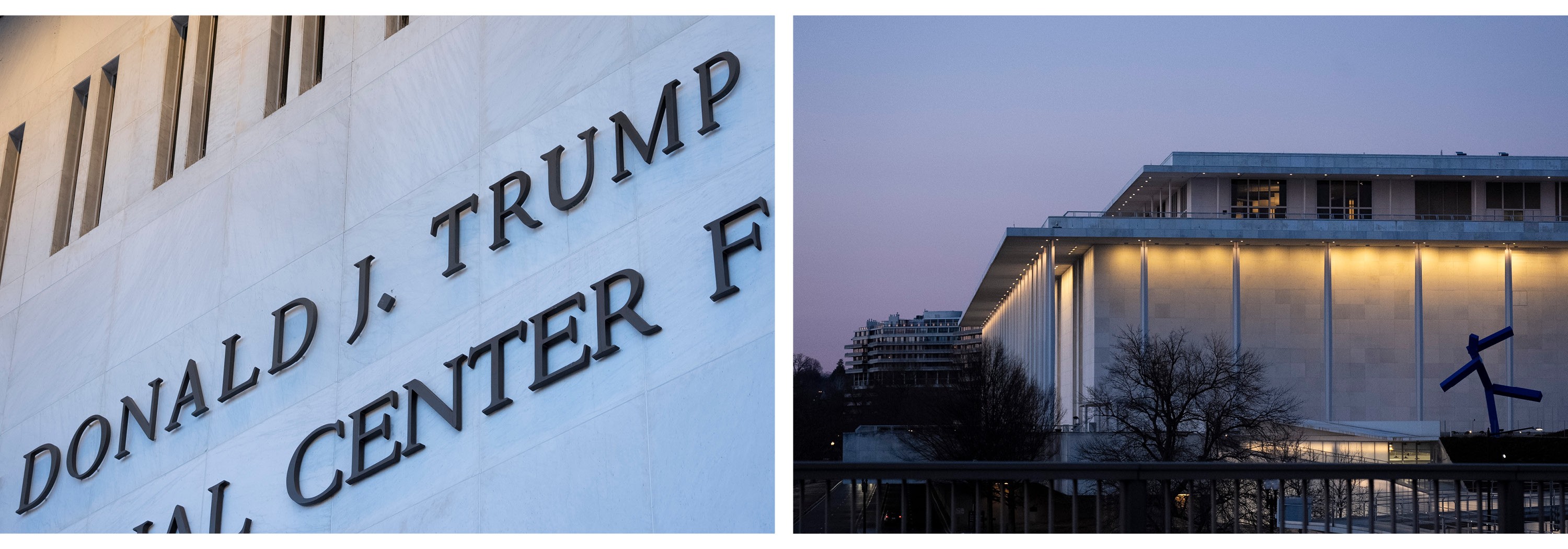
The rollout of these banners, and the placement of Trump’s name in front of those of institutions such as the Kennedy Center and the Institute of Peace, continue the president’s long history of shameless branding (see: products as varied as Trump steaks and Trump University). Except in this case the brand is being emblazoned on federal institutions that Trump himself does not own—for example, the Department of Agriculture. Last May, a 31-foot banner with that same brooding portrait hung (temporarily) down the side of the USDA building next to one depicting Abraham Lincoln, who established the department. The display, accompanied by the motto Growing America Since 1862, reportedly cost taxpayers $16,400.
The festooning of his face and name all over D.C. might be Trump’s personal way of compensating for the disappearance of his name from New York City projects—including a golf course, skating rinks, and a number of buildings—but it is also consistent with a predilection common among authoritarian leaders. You don’t need to equate Trump with Joseph Stalin or Mao Zedong to recognize a shared desire to loom over their citizens from a variety of public places. In the Soviet Union, Stalin’s portrait was everywhere, from the public square to the “red corner” in people’s homes. These pictures had the sacred quality of religious icons. In his book The Stalin Cult, the historian Jan Plamper described a group of students, including some World War II veterans, who flipped the Stalin poster in their dorm to face the wall before talking candidly about their wartime experience. The image of the leader was meant to inspire fear and reverence, to appear simultaneously distant and omnipresent—a remote father figure whose gaze could not be escaped.

Authoritarian leaders want their face in your face. Their ubiquitous images personalize the state, making it synonymous with one man’s power. And they turn the citizen’s relationship with that leader into an emotional one. Mao had the Mona Lisa thing down well. In the 20-foot-tall portrait that still hangs over the gate to Tiananmen Square, he seems to be smiling in a way that could seem kindly, but also menacing, or at the very least projecting the kind of watchfulness that seems like a threat.
Adulation and fear are not the only goals. To me, the everywhere portrait also seems intended to create a sense, through repetition, that the leader is an organic, immutable part of the landscape. A truism among brand consultants is that for a campaign to be effective, a potential consumer needs to see the same slogan or hear the same jingle multiple times until it feels almost natural—what other soap or cereal could you possibly buy? What other president could you imagine than the one whose gigantic face is everywhere?
Read on the original site
Open the publisher's page for the full experience