The War With Iran Is Exposing Big Problems for the Military
Our take
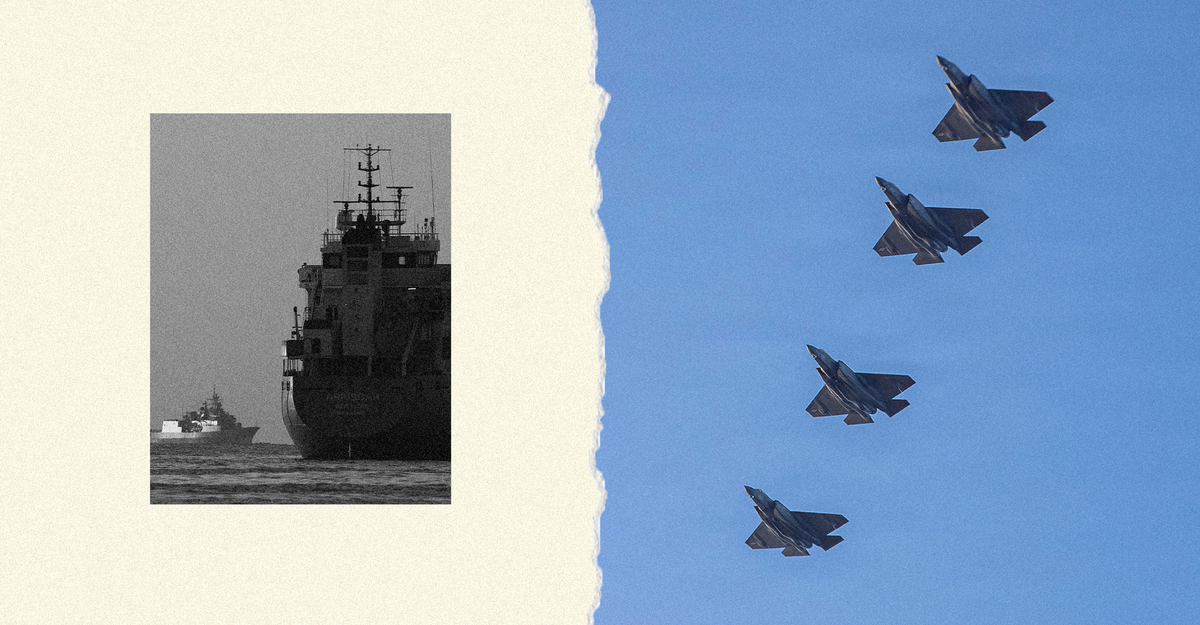
The current conflict in the Persian Gulf has prompted a critical self-examination of the U.S. military's capabilities and strategies. As highlighted in the recent piece, "The War With Iran Is Exposing Big Problems for the Military," this audit reveals significant deficiencies that could have dire implications for future engagements. The performance of high-tech assets like the F-35 and the professionalism of military leadership stand in contrast to alarming shortages in essential munitions and naval resources. This dissonance raises crucial questions about how well-prepared the U.S. is for prolonged conflicts against capable adversaries, especially as we are reminded of past oversights, such as those discussed in another relevant article, The Countdown to a Ground War.
The article underscores a worrying trend: the U.S. military's longstanding prioritization of quality over quantity. This approach may have worked in previous conflicts, but the current situation reveals that a lack of adequate resources can lead to vulnerability. The reality is that while advanced technologies are impressive, they do not replace the need for a robust and versatile fleet capable of handling diverse threats. The stark reduction in naval combatants, particularly smaller warships essential for specific missions, reflects a shortsightedness that could be detrimental as the geopolitical landscape continues to shift. With rising tensions in the Indo-Pacific, as noted in the analysis, the military's readiness for a multi-front conflict is questionable.
Moreover, the article highlights a fundamental misconception that underpins U.S. military strategy: the assumption that wars will be quick and low-casualty. This notion, rooted in the success of the 1991 Gulf War, has fostered complacency in strategic planning. The ongoing conflict serves as a reminder that modern warfare is unpredictable, and the capacity to manage supply chains, equipment losses, and troop replacements during an extended engagement must be prioritized just as much as initial tactical success. This shift in mindset is essential if the military hopes to adapt to the realities of contemporary conflicts, where adversaries may employ unconventional tactics like drone strikes, which have already exposed vulnerabilities in U.S. defenses.
As we look ahead, the critical question becomes: how will military leadership respond to these lessons? While the current administration has proposed increased funding for military operations, it remains unclear how these resources will be effectively allocated. For the armed forces to emerge from this audit with a clearer understanding of their needs, a comprehensive and multi-year strategic plan is essential. This plan must prioritize not only technological advancements but also the expansion of capabilities across the board, including the procurement of smaller vessels and the enhancement of logistical support.
The stakes are high, and the implications of these decisions will resonate far beyond the current conflict. As the military grapples with its identity and readiness, it must learn from both successes and failures. This audit may very well define the future trajectory of U.S. military engagement. Will leaders take the necessary steps to ensure that American forces are equipped to face the complex challenges of tomorrow, or will they continue to operate under outdated assumptions? The next few months will be telling as we observe the military's response to this crucial juncture in its history.
In 1986, the British historian Correlli Barnett published The Audit of War, a brutal critique of Britain’s industrial performance in World War II. One can learn from his controversial effort: The United States is going through its own audit of war right now as we close in on a month of conflict in the Persian Gulf.
No other country could have projected force from its homeland on the scale that America so far has—and not just in a couple of large raids, but in a sustained campaign conducted over a vast expanse of land and sea. Though the intelligence story of this war is, as ever, in the shadows, there is no question that American intelligence-gathering and analysis, especially but not exclusively from technical sources such as satellite imagery and signal intercepts, have been extraordinary.
At the high end, the performance of advanced American-military technology such as the F-35 fighter bombers flown by the United States and its ally Israel has been stunning. Not a single F-35 has been lost. These airplanes, which are flying computers and sensors as much as they are bomb droppers, have remarkable abilities to coordinate with other aircraft, identify threats, and escape detection. So, too, do B-2 bombers and many other remarkable airborne platforms.
[Nancy A. Youssef and Missy Ryan: The U.S. and Iran are fighting a massively asymmetrical war]
The professionalism of the American military has been on display from top to bottom. The chairman of the Joint Chiefs of Staff, General Dan Caine, and the head of Central Command, Admiral Brad Cooper, have been models of clarity, calm, and decisiveness. The young men and women flying, maintaining, and fixing the airplanes and manning defenses have displayed competence and grit.
All good news. But there is plenty of bad news as well, for which the armed services and previous administrations as well as the current one are responsible. The stockpiles of advanced munitions (particularly interceptor missiles) are radically inadequate and will remain so for some time. In the Middle East conflicts of 2025, most estimates have it that nearly a quarter of the stocks of the Army’s high-altitude interceptor, the Terminal High Altitude Area Defense missile, were consumed; a comparable number may have been used up in the current conflict. Many other high-end precision-strike systems have already been consumed at greater than the yearly rate of replenishment scheduled for fiscal year 2026.
The relatively modest size of the naval task force in the Persian Gulf is also notable. In the 1980s, during a previous conflict with Iran, the U.S. Navy deployed some 30 warships in the Gulf; today it has scarcely a dozen just outside it. In 1986, the Navy had 214 surface combatants (cruisers, destroyers, and frigates); in 2026 it has only half as many, at a time when the Chinese navy is arguably a greater threat than the Soviet navy ever was.
One particularly significant shortage is of effective minor warships. In 1986, the fleet included 113 frigates, ships smaller than destroyers but vital for missions such as escorting convoys. Now there are none, their place having been taken by some two dozen littoral combat ships, which have proved mechanically unreliable, underequipped for high-threat environments, and unsuited for key missions. Worse: The attempt to replace them, with an Italian-designed frigate, has collapsed because of modifications that made the proposed warship wildly expensive. The Navy is now considering modifying a class of Coast Guard cutters that would lack basic armaments such as vertical tubes for launching a variety of anti-aircraft and anti-ship missiles.
The dearth of mine-hunting vessels is stunning as well. The Navy had 21 mine-warfare ships in 1986. Today it has four aging mine-countermeasure vessels, due for retirement, with unproven modules for deployment on the littoral combat ships, which were not designed principally for mine warfare. And yet, the Navy first encountered Iranian mines in the Persian Gulf nearly 40 years ago.
There is more bad news as well, including the apparent vulnerability of American radars (as many as 10) to precision hits from Iranian drones—a threat that should have been defeated with the kind of technologies that Ukraine deploys at scale every day.
The underlying explanations for these deficiencies go well beyond the Trump administration. Some of it is the result of the illusion of peace following the Cold War, and the willful neglect of the defense industrial base, which has been well documented. But the conflict has also exposed a fundamental flaw in the modern American way of war.
The United States for many years has exhibited a deep-rooted bias toward quality over quantity. The same tendency, to a lesser extent, was on display at the beginning of World War II, when the Navy preferred to build large fleet destroyers instead of the vessels it needed to defeat German submarines. As a result, even Fleet Admiral Ernest J. King, the wartime chief of naval operations, concluded that “the Navy did not obtain adequate means to deal with the U-boat until late in 1943.” The solution lay in shifting production to smaller destroyer escorts, the ancestors of contemporary frigates—smaller, slower, cheaper, and quicker to build. More than 500 were built for the Navy alone during that war. In the current case, the Navy now has so few vessels that the loss of even one ultra-valuable major warship would be a humiliation; the loss of several, a catastrophe. But history suggests that in naval wars, ships sink.
The post–Cold War military assumption seems to be that the United States operates on offense, not defense. The Air Force has been reluctant to spend $5 million to $30 million on hardened shelters for aircraft that cost an order or two of magnitude more than that. When I would fly into Al Udeid, our massive air base in Qatar, in the early 2000s, I was always stunned to see airplanes of all types—fighters, bombers, refuelers—lined up wingtip to wingtip, just as they were at Clark Air Base in the Philippines on December 7, 1941. Again, changes are under way—too little, though hopefully not too late.
For similar reasons, drones and, more important, defenses against them have, until very recently, been relatively low on the priority list of the armed forces. They exist, and some are very fine as pieces of technology, but the military has purchased too few, and procured too little by way of stockpiles behind them.
Which leads to the third assumption: quick, low-casualty wars. The 1991 Gulf War was a stunning victory for the United States military, which has colored its assumptions about what conventional war—as opposed to counterinsurgency, a mission unwanted and disliked—should look like. In wars lasting a month or so with relatively low casualty rates, managing massive ammunition consumption, assembling and training replacements, and renewing equipment losses during a war, not after it, are simply not issues.
[Karim Sadjadpour: Iran is trying to defeat America in the living room]
The uniformed leaders of the armed services over the past three decades bear much responsibility for these shortcomings, because we rely on them to be our experts on warfare, but final accountability lies with civilian leadership. And the Trump administration has yet to prove that it understands just how perilous this situation is. It has talked of a $200 billion supplemental appropriation for the military, but has yet to spell out what this will buy. Rather than bluster and braggadocio, the Department of Defense needs a well-conceived and thoughtfully presented multiyear program to build a military fit for large-scale and sustained war. Congress needs to take its role just as seriously, and demonstrate its willingness to endorse deliberate inefficiency—by, for example, authorizing the building of two factories where one might do in order to maintain capacity to expand production of all kinds of munitions and platforms in a crisis.
American and Israeli operations over Iran have been, on the whole, remarkably effective and efficient. Whether they will bring about the desired ends (assuming both countries have a clear idea of what those ends should be) is uncertain. But the lessons drawn even from success should be sobering. A war against a more capable opponent, particularly in the Indo-Pacific, could be far, far more painful than this one. John Paul Jones famously declared that he intended to sail into harm’s way, and then he did, winning an epic sea fight but losing his ship, the Bonhomme Richard. His successors must be robustly equipped to dare, and if necessary suffer losses, in the same way.
Read on the original site
Open the publisher's page for the full experience