The Autocrat’s Dilemma
Our take
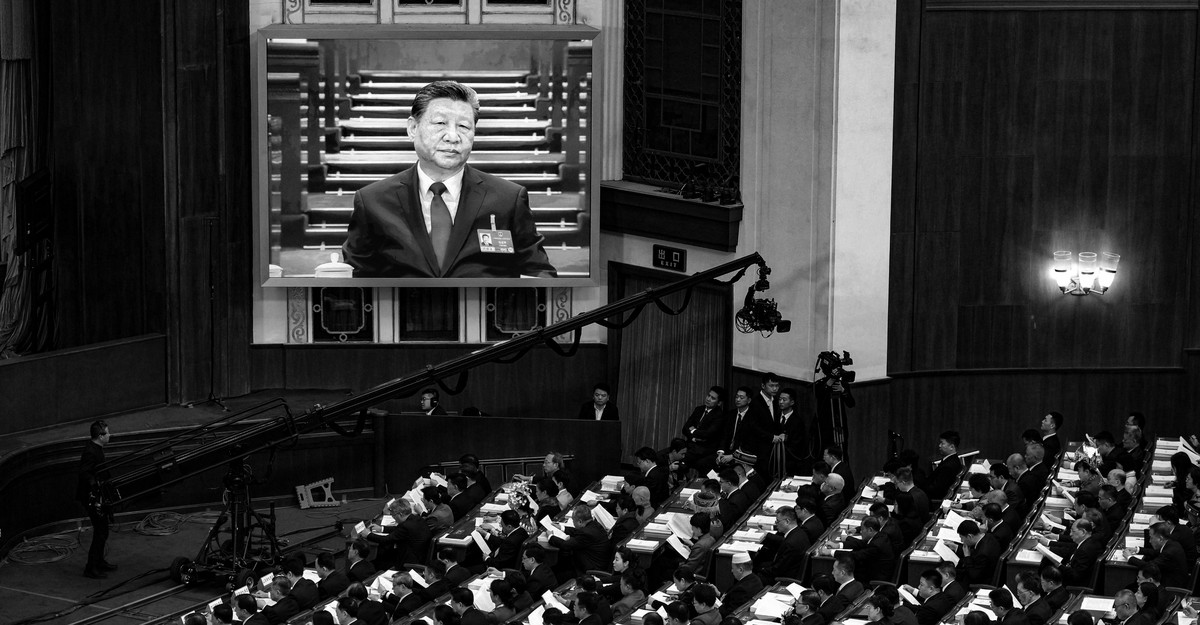
The recent discourse surrounding Donald Trump’s admiration for Chinese President Xi Jinping raises serious questions about the allure of authoritarian leadership and its implications for global politics. In a 2024 episode of Joe Rogan’s podcast, Trump praised Xi as a “brilliant guy” for his ability to control 1.4 billion people with an “iron fist.” This reflection on Xi's leadership style appears to romanticize autocratic governance, overlooking the significant challenges that such a centralized authority can present. As seen in other contexts, including the court ruling for Texas State and the Kentucky State University lawsuit, the implications of prioritizing power over accountability can be dire.
What Trump seems to ignore is how Xi’s heavy-handed approach has, in many respects, weakened China. The removal of key military figures, like General Zhang Youxia, signals a regime more focused on consolidating personal power than fostering institutional strength. The ongoing purges within the People’s Liberation Army, where 40 out of 44 top officers have been either dismissed or gone missing, demonstrate a dangerous trend. As noted by analysts, these actions can sap military readiness and effectiveness, rendering China vulnerable at a critical time, especially amid geopolitical tensions exacerbated by Trump’s own foreign policy maneuvers. The implications of these leadership choices are profound, particularly as China’s economy struggles under the weight of Xi's rigid policies and lack of reform.
Xi’s leadership style starkly contrasts with the technocratic pragmatism that characterized China's rise to economic prominence in the past. In the 1980s, the Communist Party embraced a system that encouraged power transitions and policy discussions, all of which have eroded under Xi's tenure—replaced by a culture of fear and loyalty. This shift has not only stifled innovation but has also created a bureaucratic environment where dissent is dangerous and conformity is rewarded. The lack of diverse viewpoints in decision-making processes can lead to catastrophic miscalculations, as seen in Xi’s handling of the pandemic in Shanghai. The repercussions of such decisions extend beyond borders, affecting international relations and trade.
Looking forward, it’s essential to consider the broader implications of Trump’s admiration for Xi. The allure of authoritarianism may appeal to those seeking quick solutions to complex problems, but as history has shown, such governance often backfires. As the world watches China grapple with its internal contradictions and external pressures, it becomes crucial to question whether the centralization of power truly leads to stability or merely breeds chaos and uncertainty.
In this context, one must wonder: are we witnessing the dawn of a new era where the failures of authoritarian regimes serve as a cautionary tale for democracies? The ongoing developments in China and the lessons drawn from them could hold significant relevance for political landscapes across the globe. As leaders like Trump may seek to emulate such styles, the path forward remains fraught with peril and opportunity, demanding careful scrutiny and engagement from a global audience.
Donald Trump clearly romanticizes the strongman leadership of Chinese President Xi Jinping. On Joe Rogan’s podcast in 2024, Trump praised Xi for being “a brilliant guy. He controls 1.4 billion people with an iron fist.” As China’s government eliminated term limits on the presidency in 2018, Trump opined that “maybe we’ll have to give that a shot some day.”
What Trump has either missed or ignored is how Xi’s ruthlessness has served to make China weaker. Indeed, Xi’s reign in Beijing illustrates, especially now, what happens when an autocrat’s personal interests run counter to his country’s needs.
In late January, Xi sacked China’s top general, Zhang Youxia, the rare Chinese officer with actual combat experience. The government said only that Zhang is under investigation for unspecified violations of law and discipline, but the military’s main newspaper implied that the probe was part of a larger plan to strengthen the military by rooting out corruption. The opacity of China’s government makes it impossible to gauge the validity of any allegations against Zhang, a longtime ally of Xi’s. The timing is also unclear. But in removing Zhang, Xi is sending a signal that no one is safe from his wrath.
This was the most dramatic move in Xi’s campaign to reshape the military’s leadership, which has effectively decapitated the senior ranks of the People’s Liberation Army. Of the 44 officers selected to join the Communist Party’s top-leadership council, 40 have been purged or gone missing since mid-2023, Neil Thomas, a fellow at the Asia Society Policy Institute’s Center for China Analysis, told me.
[Michael Schuman: A possible upside to the Iran war]
These moves demonstrate how Xi’s relentless quest for control can perversely sap China’s strength. The turmoil created by Xi’s purges has likely undercut the Chinese military’s “readiness and combat effectiveness” for years, according to a recent report from the Center for Strategic and International Studies. The timing is also notable, given the ways Trump’s attacks on Iran and Venezuela have sparked global upheaval and challenged Chinese national interests.
Politics in Communist China—where power struggles are settled in back rooms and the penalty for losing can be death—have always been a dangerous business. But in the 1980s, the Communist Party developed a system of government that orchestrated regular transitions of power, balanced rival interests, encouraged policy discussion, and implemented bold economic reforms. China’s reputation for technocratic pragmatism underpinned the country’s economic success. It seemed safe to assume that China’s economy would eventually surpass even the United States’.
Since taking charge of the party in 2012, Xi has steadily dismantled the system that oversaw three decades of explosive growth by concentrating power in his own hands. He has marginalized party elders, tossed out political rivals, and sidelined members of other factions, which has stifled policy debates and removed checks on his power. Many of Xi’s moves are purportedly about rooting out corruption, but in a political system rife with graft, this tactic enables him to pick off anyone he wishes. In 2022, Xi packed the seven-member Politburo Standing Committee, the country’s most powerful governing body, with close associates and political allies. “Personal loyalty to Xi is his absolute priority and a baseline requirement for being promoted to the top leadership,” Thomas said.
Xi has sometimes prized loyalty over experience. Li Qiang, a colleague of Xi’s, had never served in the national government before Xi elevated him to the No. 2 spot in 2023. A year before his promotion to premier, Li had overseen Shanghai’s disastrous coronavirus-pandemic lockdown, which had confined the city’s 25 million residents to their homes for two months. Because these orders were issued without sufficient planning for necessities, many households ran short of food. Officials reinforced stay-at-home orders by erecting fences around some apartment buildings, essentially incarcerating occupants. Babies sick with the virus were forcibly separated from their parents and piled into cribs in crowded wards.
Most national leaders surround themselves with like-minded lieutenants who share their politics and priorities. But in an autocracy with a leader who is quick to promote allies and punish dissenters, officials have far more reason to implement Xi’s policy preferences than to challenge them. The diversity of views that was apparent in the early years of Xi’s tenure has all but evaporated. “The bureaucracy is incentivized to say what they think the leader wants to hear and to hold back recommendations that deviate,” Amanda Hsiao, a director in the China practice at the political-risk consultancy Eurasia Group, told me.
This has granted Xi almost full control of the policy-making process. There is simply no one left at the party’s senior levels with the power—or the incentive—to force Xi to compromise. This overreliance on one man “can be a good thing if Xi makes good decisions, but it can also be very dangerous if Xi makes bad decisions,” Thomas said.
And Xi has made his fair share of poor choices. Trump’s clashes with longtime American allies over trade, the Ukraine war, Greenland, and other matters have left room for Xi to grow China’s power by drawing these countries closer to Beijing. Several European leaders, including the French president, the German chancellor, and the British prime minister, have met with Xi in China in recent months in the hopes of improving relations to balance an unreliable Washington. But Xi sent them all home without making significant concessions on the matters that have strained their relations, including concerns over Beijing’s support for Russian President Vladimir Putin or China’s unfair trade practices that threaten European industry, among other contentious matters.
China’s leadership has appeared even more paralyzed over the country’s mounting economic woes. Xi has avoided reforms that could restore healthy growth, such as tackling the excessive supply and anemic demand behind China’s falling prices and ballooning trade surpluses. Instead, the country’s latest five-year plan, approved by an annual national congress in March, promises to double down on the very strategies Xi prefers, including heavy investments in industry and technology, which will likely exacerbate the economy’s problems.
[Michael Schuman: Rising prices are bad, but plummeting prices are worse]
Despite China’s enormous progress in new industries such as EVs, the economy overall has been underperforming on Xi’s watch. As a share of the global economy, China’s GDP in dollar terms peaked at about 18.5 percent in 2021 and has since fallen to about 16.5 percent, according to the International Monetary Fund.
In purging rivals and enhancing his control, Xi may assume that he is establishing the political stability and predictability that will ensure China’s prosperity. By dismantling the leadership within China’s army, for example, Xi clearly aspires to create a stronger and certainly more loyal military. But by deploying power without restraint and purging whomever he wishes on demand, he is instead creating “uncertainty, instability, and paralysis,” Alexander Davey, an analyst at the Berlin-based Mercator Institute for China Studies, told me. The more power Xi pursues, the more political, economic, and military chaos he seems to foment.
Instead of pushing China to liberalize, as recent U.S. presidents have done, Trump has sought to emulate Beijing’s authoritarianism by bullying his political opponents, silencing critics, and demanding unquestioned support from his own party. The lessons of Xi’s hubris seem urgent—and salutary for other countries, including the United States. But any leader who aspires to Xi’s level of power is unlikely to take note.
Read on the original site
Open the publisher's page for the full experience