Mutually Assured Energy Destruction
Our take
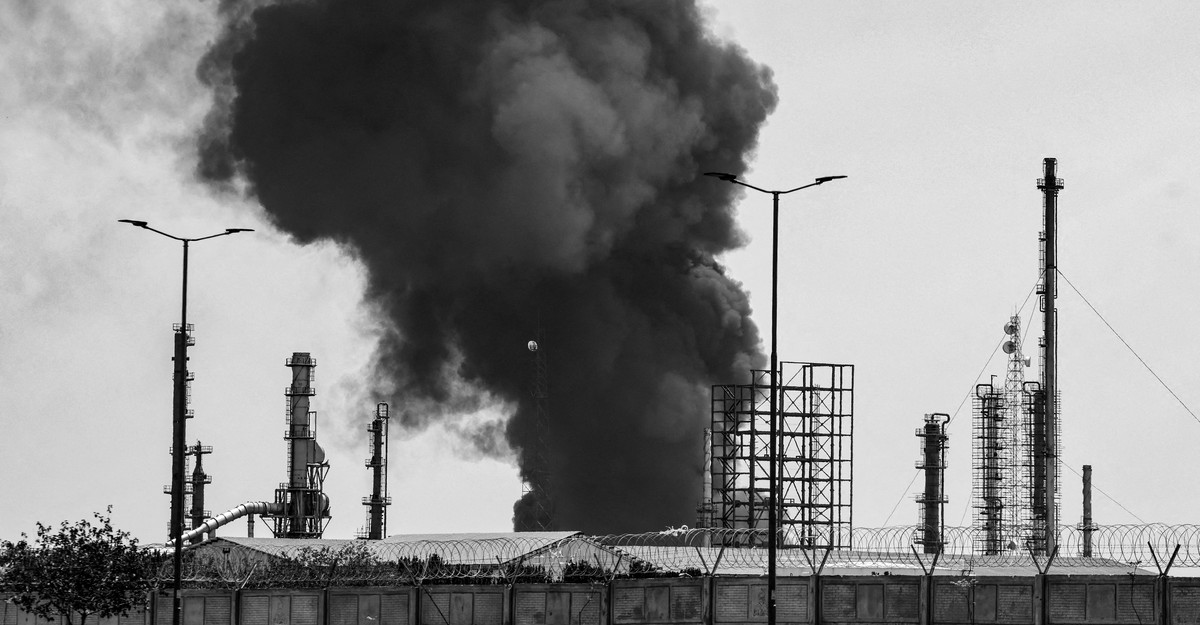
In the intricate web of global geopolitics, the current tensions surrounding Iran and its oil infrastructure cannot be overstated. The recent article, “Mutually Assured Energy Destruction,” sheds light on the precarious balance of power in the region, particularly as it relates to the oil-rich Gulf states. With threats being hurled back and forth, including Donald Trump's alarming pronouncements about targeting Iranian power plants, it becomes increasingly clear that any conflict involving oil infrastructure carries enormous implications not just for the nations involved, but for the entire global economy. This scenario echoes sentiments expressed in previous discussions, such as in Why Trump Thinks He Can Walk Away From the Strait of Hormuz and Trump Is Flailing on Iran, where the stakes of energy security are profoundly intertwined with national and regional stability.
The article highlights the advanced state of Saudi Arabia’s oil infrastructure, represented by a meticulous command center at Aramco that operates like a high-tech nerve center. It points to the physical vulnerabilities of oil facilities, which are relatively easy to target yet challenging to rebuild. An attack on this infrastructure could lead to catastrophic economic repercussions for the Gulf states, which depend heavily on oil revenues. The concept of “mutually assured destruction” extends beyond military capabilities in this context; it reflects a shared economic vulnerability. If Iran were to strike decisively against Saudi oil production, it would not only cripple its rivals but also inflict severe damage on its own economy, which relies on oil exports. Such a scenario underscores the complex calculus that dictates military action in this region: while the power to attack exists, the consequences of doing so could be mutually devastating.
Moreover, the ongoing conflict raises questions about the effectiveness of deterrence strategies employed by both Iran and the Gulf states. The article suggests that while Iran may possess the capability to wreak havoc, it is restrained by the knowledge that such actions would likely invite overwhelming retaliation from its adversaries, particularly the United States. This dynamic creates a high-stakes game of brinkmanship, where any miscalculation could spiral into a wider conflict. The delicate balance of deterrence thus plays a crucial role in shaping the decisions of state actors. The economic implications of such a conflict would resonate globally, affecting oil prices and market stability, which is a concern for economies far beyond the Middle East.
Looking ahead, it is essential to consider what this means for the future of energy security and geopolitical stability. The article hints at the potential for Iran’s regime to face collapse should it opt for maximum force against its neighbors. This scenario poses a dilemma: would Iran risk its own survival in pursuit of a military objective, or will it continue to play a cautious game of threats and limited actions? The answer to this question could shape the geopolitical landscape in the coming years. As nations grapple with their energy dependencies and the realities of military engagement, observers should remain vigilant about the evolving strategies employed by both Iran and its Gulf neighbors. Will restraint prevail, or will the allure of military action prove too tempting? The coming months will be critical in determining the trajectory of this high-stakes standoff.
A few years ago in Dhahran, the Saudi state oil company, Aramco, gave me a tour of its headquarters, a facility so sparkling and orderly that one could forget that its whole purpose was to extract from the ground one of the filthiest substances on Earth. The most impressive stop on the tour was the Aramco emergency command center, which I imagine is paying its workers a lot of overtime right now. It looked like the control room for a mission to Alpha Centauri. Men and women sat at their stations. The walls were aglow with constellations of green lights—each one, my host said, representing a functioning object in the Aramco galaxy of pipelines, valves, ships, buses, heat exchangers, and drill bits. If a light flashed red, it meant one of these objects was broken, and the people at those stations would vault into action to support the crew restoring it.
One major question in the current war is why Iran has so far failed, or perhaps declined, to make life miserable for the people in that room. The vow to annihilate energy infrastructure is one of two threats—American and Iranian—that remain, as of this writing, unfulfilled. On March 17, after Israel attacked Iran’s South Pars gas field, Iran threatened five key oil-and-gas facilities in Qatar, the United Arab Emirates, and Saudi Arabia. Last weekend, Donald Trump wrote that if Iran failed to open the Strait of Hormuz in exactly 48 hours, “the United States of America will hit and obliterate their various POWER PLANTS, STARTING WITH THE BIGGEST ONE FIRST!” (American air superiority over Iran is matched only by its overwhelming advantage in CAPITAL LETTERS, which Persian lacks.) So far, Trump has not attacked the power plants—in fact, on Thursday he extended the deadline to April 6—and most of the oil infrastructure in the region remains intact.
[Rogé Karma: Iran might use its economic-doomsday option]
Trump’s targeting of power plants would be a remarkable and possibly illegal step, if those plants are civilian, and it is difficult to imagine any other president openly threatening their obliteration. Iran’s targeting of oil-and-gas infrastructure, however, is predictable, and is one of the reasons every president before Trump declined to attack Iran at all. It is by far the most painful action Iran could take against the United States and its allies. Saudi Arabia, Kuwait, and Qatar all pay their bills through oil and gas, and if these stop flowing, they will rapidly turn from petrocrats to paupers.
Wrecking oil infrastructure is easy. It has no legs; it cannot run away or be hidden underground until danger passes. It is filled with materials at high temperatures and pressures, and some of them can be set on fire. In a 2019 attack that presaged the current war, a fleet of drones and a barrage of cruise missiles hit Saudi Arabia’s Abqaiq and Khurais oil fields. Abqaiq is the world’s most important oil field. Direct strikes on crude-stabilization columns and gas-oil-separation tanks reduced Saudi oil output by half. Saudi Arabia accused Iran of launching the attacks, and Crown Prince Mohammed bin Salman told me in 2022 that the U.S. was ready to punish Iran for the attack, but had held back to avoid “escalation.”
Rebuilding that same infrastructure is hard. A single well-aimed strike can set back a whole operation for a very long time. On March 18, Iran attacked Ras Laffan, Qatar’s main site for liquefied-natural-gas production, and Qatar estimated that repairs would take three to five years.
Taylor Coleman, an oil-and-gas operations expert at CapturePoint, told me that pipelines are relatively easy to fix, but refinery equipment is another matter. Hydrocrackers—which heat up and pressurize heavy oils, to convert them to lighter fuel products—are made of metal that is a foot thick, and are built to withstand temperatures reaching thousands of degrees. “There are only two or three foundries that can even make castings and forgings for some of those vessels, and delivery times can be two, three, even four years,” he said. This equipment is too expensive to stock spares. “We don’t keep an entire plant laid down in a yard somewhere, just in case one blows up.” The insatiable electricity needs of AI mean that if an oil-processing plant—which is also hungry for electricity—loses its transformers, it has to bid against, and get in line behind, technology companies that have already been waiting years for fulfillment.
Iran has attacked not only Qatar but also Saudi facilities at Ras Tanura and even Yanbu, all the way in the west, on the Red Sea. Perhaps these were Iran’s best attempts at obliteration, and they were mostly thwarted. (Ras Laffan was the most ruinous hit. Both Ras Tanura and Yanbu were hit by debris from downed drones, and not fatally damaged.)
But there is also a strategic consideration that might keep Iran from using maximum force. The logic of a devastating attack on oil-and-gas infrastructure is uncomfortably similar to mutually assured destruction: If Iran wipes out Saudi oil production, the immediate annihilation of its own infrastructure is nearly certain. The two countries rely about equally on oil and gas as shares of their exports, so such an attack by Iran would be tantamount to economic murder-suicide. It would also end all polite remonstrance from Iran’s neighbors, who have suggested that Iran’s regime might survive the war, if it forswears attacks, blockades, and terrorism. A direct attack on the oil fields would force the conclusion that the regime must fall. Destroying energy production in the Persian Gulf would also deal a grievous blow to Iran’s ally China, which devours both Arab and Iranian oil and would be left energy-hungry for years.
[Shane Harris: A turning point in the Iran war]
The final reason these attacks have not yet happened is probably the most important. Although Iran and the Gulf Arabs can mutually assure each other’s destruction, only the Arab oil-and-gas fields are assured to be reconstructed. Decades of sanctions and isolation have left Iran’s facilities ragged and corroded. If the Iranian regime somehow survives the war, no relief for this decrepitude will be forthcoming—whereas the Kuwaitis, Qataris, and Saudis will be overrun with technical experts, and showered with financing. And that reconstruction will be combined with redoubled efforts to cripple Iran’s ability to attack the fields again. The Ras Laffan attacks show that some constraints are physical and metallurgical, and even ultra-rich Qatar will have to spend years rebuilding. But cooperation of rich allies can work wonders. After the 2019 Abqaiq attack, Saudi oil was flowing at pre-attack levels within a matter of weeks, in part because when the U.S. and China both want your oil, they will defy economic and physical laws to obtain it.
The purpose of the Iranian military was never to win a war—there is no “winning” a war against a military as advanced as America’s—but to deter and punish anyone who started a war with it. This logic of deterrence bought Iran decades, which is why it can boast a glorious past of successful resistance against American power. The same logic now would lead to escalation beyond Iran’s ability to manage, and could cost it an equally boastworthy future.
Read on the original site
Open the publisher's page for the full experience
Related Articles
- Why Trump Thinks He Can Walk Away From the Strait of HormuzThe oil shocks of the 1970s forced traumatic austerity on Americans. Some gas stations had miles-long lines; fuel was rationed based on whether a car’s license-plate number was even or odd; the White House Christmas tree went unlit; daylight savings was imposed year-round. The fuel crisis that America’s war on Iran has unleashed is far larger—the biggest oil-supply shock in history, an estimated three times the disruption caused by the Arab oil embargo. Iran has effectively cut off the Strait of Hormuz, through which one-fifth of the world’s oil and liquefied natural gas (LNG) flowed until recently. And yet, unlike in the ’70s, America is now an energy superpower, largely insulated from the economic pain caused by its actions, which instead are now being borne by Asia and will soon reach Europe. The dynamic is like a psychology experiment played out on a global scale: America can administer shocks to other countries without feeling much pain itself. The man at the control panel is Donald Trump. The president, a lover of leverage, not only understands that American allies are bearing the brunt of his actions—he is reveling in it. In his prime-time speech from the White House on Wednesday, Trump said that the strait’s closure was not America’s problem: “The United States imports almost no oil through the Hormuz Strait and won’t be taking any in the future.” As far as he was concerned, all of the suffering countries could simply fix the problem themselves. “Build up some delayed courage,” the president said. “Go to the strait and just take it, protect it, use it for yourselves.” He went on, “When this conflict is over, the strait will open up naturally. It will just open up naturally.” In other words: Best of luck! The next day, the clear lack of an American-led plan to open the strait caused stock-market declines and oil prices to shoot up nearly 8 percent. Many of America’s allies in Asia—where the price of LNG has roughly doubled since the start of the war—are already taking extreme measures. The Philippines, whose power plants run predominantly on imported fuel, has declared a state of emergency; it may order a grounding of civilian aircraft. In Japan, ferry services are being cut back and bathhouses are shutting down. South Korea is restricting the export of jet fuel. In Pakistan and Bangladesh, which are heavily dependent on Middle Eastern oil and have small stockpiles, violence is breaking out at gas stations. For American consumers, the cost to fill up a car has increased since the war began by $1 a gallon—because oil prices are set on the global market. Yet this is counterbalanced by the $60 billion windfall that American oil producers could earn if prices remain high. The U.S. price of LNG, by contrast, is set in a more localized market, and has gone almost unchanged. [David Frum: Why Trump didn’t predict the gas-price spike] In Europe, LNG prices are about 60 percent higher than before the war. The last tankers that departed Qatar before Iran bombed its Ras Laffan facility have been arriving in European ports. Thereafter, supplies will diminish quickly. European reservoirs of LNG were already low because of a colder-than-expected winter. Britain and Italy, where electricity comes disproportionately from gas-fired power plants, will be hit the hardest. Unlike the Persian Gulf oil supply, some of which can be routed overland, LNG is well and truly stuck until the Hormuz crisis is resolved. If and when a cease-fire occurs, restarting production will take weeks—and Iran’s attacks have destroyed 17 percent of Qatar’s LNG-exporting capacity, which will require years to repair. The United States will not have such monumental problems, but it will have some—all of which cut against Trump’s previously pledged goals. Having campaigned in 2024 against Biden-era inflation, Trump will be directly responsible not just for higher prices at the pump, but for higher general inflation, because fuel is an intermediate input in the production of most goods. Trump pledged to make buying a house easier for Americans: The average interest rate on a 30-year fixed-rate mortgage has shot up by half a percentage point since the start of the war, as markets anticipate that the Federal Reserve will now be more hesitant to pursue expansionary monetary policy. Trump pledged to do right by farmers, who had already been buffeted by his erratic tariff regime and Chinese retaliation. But because one-third of the world’s fertilizer flows also transit through the Strait of Hormuz, farmers face much greater costs as the spring planting season begins. The Hormuz crisis has some beneficiaries: America’s adversaries. To prevent even higher oil prices, the Trump administration has lifted sanctions on Russian exports and even some of Iran’s. “Things that Iran and Russia had sought to achieve through negotiations with the United States, they’ve managed to achieve without having to negotiate,” Michael Froman, the president of the Council on Foreign Relations, told me. “This is bailing out the Russian economy, which had been on the ropes, and, at least temporarily, it is giving a windfall to Iran.” Russia could recoup an additional $40 billion or more in oil exports this year, which it can plow into its war effort against Ukraine. Iranian oil production may be as high as before the war. Although China is a heavy net importer of Middle Eastern gas and oil, it is recouping different dividends. China has learned that “if there is a crisis of any kind over Taiwan, we are not prepared for the ensuing economic fallout. We have not coordinated with allies about how we’re going to deal with the supply-chain disruptions,” Eyck Freymann, a fellow at the Hoover Institution and the author of a forthcoming book, Defending Taiwan, told me. China does not need military superiority to triumph in a conflict over Taiwan; it may simply need to outlast the West. “China has built a fortress economy that is designed to withstand severe or even total disruptions in key commodity supply chains for several months,” Freymann said. The country has huge stockpiles of oil it can tap, and it has considerably diversified its energy sources, relying on coal, nuclear, and renewables. [Robert Kagan: America is now a rogue superpower] For America, the war effort will incur different costs—ones that are less tangible and less immediate. Pax Americana has never looked like a shakier proposition. America’s allies in Europe and Asia took the indignity of unilateral tariff increases with relatively little retaliation. Trump’s handling of his war on Iran—attacking without consultation, expecting unwavering support, forcing higher prices on others—has dealt another blow to these relationships. Spain and Italy have both denied America use of military bases in their territory; Britain, the erstwhile steadfast ally of America, wavered on the issue, too. Trump is once again toying with the idea of leaving NATO out of anger. Most countries would prefer American hegemony to a multipolar world where they are consigned to one of China’s or Russia’s spheres of influence. But the distinctions between these visions of the world are diminishing. The alienation of longtime U.S. allies will continue for as long as Washington exercises its military and economic clout selfishly and capriciously. Criticisms of the U.S. president that would once have been made in private diplomatic cables are now spilling out into the open. Asked about Trump’s management of the crisis on Thursday, Emmanuel Macron, the president of France, had this to say: “When we’re serious, we don’t say the opposite of what we said the day before every day, and maybe one shouldn’t speak every day.”
- Trump Is Flailing on IranDonald Trump’s way of talking about war has always swung between extremes. He threatens “fire and fury” one day and extols his dictator buddies for their kind and thoughtful gestures the next. Since the conflict with Iran began, however, the cycle between aggression and conciliation has spun more rapidly. The president issues new and more terrible threats against Tehran, then backs off with soothing praise. He has now begun to do these things simultaneously. The reason may be that world markets, especially for oil, want the war to end, so that shipping can presumably resume through the Strait of Hormuz. Trump has learned that he can encourage the markets to expect a speedy end to the war by promising that talks are proceeding toward a settlement, or at least that he intends to quit the conflict and frame it as a victory. However, the Iranians can also read these messages. Every time Trump signals that he wants the war to end, they recognize his desperation. So, to counter this effect, Trump attempts to threaten Iran with new punishments should it fail to make a satisfactory deal. But of course, the markets can also read the threats. So Trump must counteract the impression caused by his saber-rattling with promises of peace. [Read: Six days of war, 10 rationales] A little more than a week ago, Trump warned, “If Iran doesn’t FULLY OPEN, WITHOUT THREAT, the Strait of Hormuz, within 48 HOURS from this exact point in time, the United States of America will hit and obliterate their various POWER PLANTS, STARTING WITH THE BIGGEST ONE FIRST!” Then he extended the deadline twice, explaining that he was holding promising talks with the Iranians. The Iranians have responded that no such discussions have occurred. It is difficult to assess which of these notably unreliable parties is accurately conveying the state, or non-state, of negotiations. Even so, a discouraging sign emerged yesterday in the form of a morning Trump post on Truth Social. It begins by reiterating his most dovish claims that the Iranian regime has changed, thereby fulfilling his prewar objective, and is now negotiating with him: “The United States of America is in serious discussions with A NEW, AND MORE REASONABLE, REGIME to end our Military Operations in Iran.” Regime change, in fact, refers specifically to ending a country’s system of government, not merely changing the individual people running it. The revolution that deposed the shah and replaced him with an Islamic theocracy was regime change. Replacing one leader with his son does not constitute “regime change” any more than electing a Republican president to succeed a Democratic one does. At least this fiction is consistent with Trump’s apparent attempt to find a way out by spinning his adventure in Iran as a success. Praising the “new” regime as reasonable likewise advances this goal. Yesterday’s Truth Social post reiterates that the U.S.-Iran negotiations—which, again, may or may not be happening—are making progress, and will probably succeed. But Trump also vows that failure will be met with terrible violence: “Great progress has been made but, if for any reason a deal is not shortly reached, which it probably will be, and if the Hormuz Strait is not immediately ‘Open for Business,’ we will conclude our lovely ‘stay’ in Iran by blowing up and completely obliterating all of their Electric Generating Plants, Oil Wells and Kharg Island (and possibly all desalinization plants!), which we have purposefully not yet ‘touched.’” Threatening to commit war crimes—and destroying civilian infrastructure such as desalination plants would certainly qualify—is generally an uncomfortable rhetorical pivot in any presidential text. It is even more awkward when the threat immediately follows praise of the prospective target’s leadership for its reasonableness. Trump does try to supply a moral justification, of sorts, for such a crime: “This will be in retribution for our many soldiers, and others, that Iran has butchered and killed over the old Regime’s 47 year ‘Reign of Terror.’” If the president is planting a defense for a future war-crimes trial at The Hague, he has not given his prospective legal team much to work with. As a motive for committing atrocities, “retribution” is more of a confession than an alibi. What’s more, whatever moral force Trump generates by citing the regime’s “Reign of Terror” as a rationale for harming its citizens is undercut by his casually noting that those offenses were committed by the old regime, the one that Trump claims has changed. The Allies bombing Dresden in 1945 was notorious, but bombing it in 1946 would have been altogether worse. [Watch: Trump’s mixed messages about Iran] A normal politician would attempt to convey that he is being reasonable and negotiating in good faith, whereas his adversaries are violent war criminals. Trump is arguing the reverse. Perhaps he is calculating that Iran has blundered by surrendering its well-honed “unstable aggressive fanatic” identity, and now he has a chance to own that brand. Or, more likely, he is desperately flailing for a message that will reassure the stock market and scare the Iranians—rather than the other way around. To be sure, there is another group that is alarmed both by Trump’s wild threats of escalation and by his intimations of peace: the rest of the world, which is coping with an economic crisis caused by Iran’s closure of the Strait of Hormuz. Trump proposes in a new post this morning that, having changed the regime, he will leave the wee problem of the strait for our former allies to deal with. Not our problem; they should have thought of it before we started the war.