Justice Sotomayor apologizes for highly personal criticism of Justice Kavanaugh
Our take
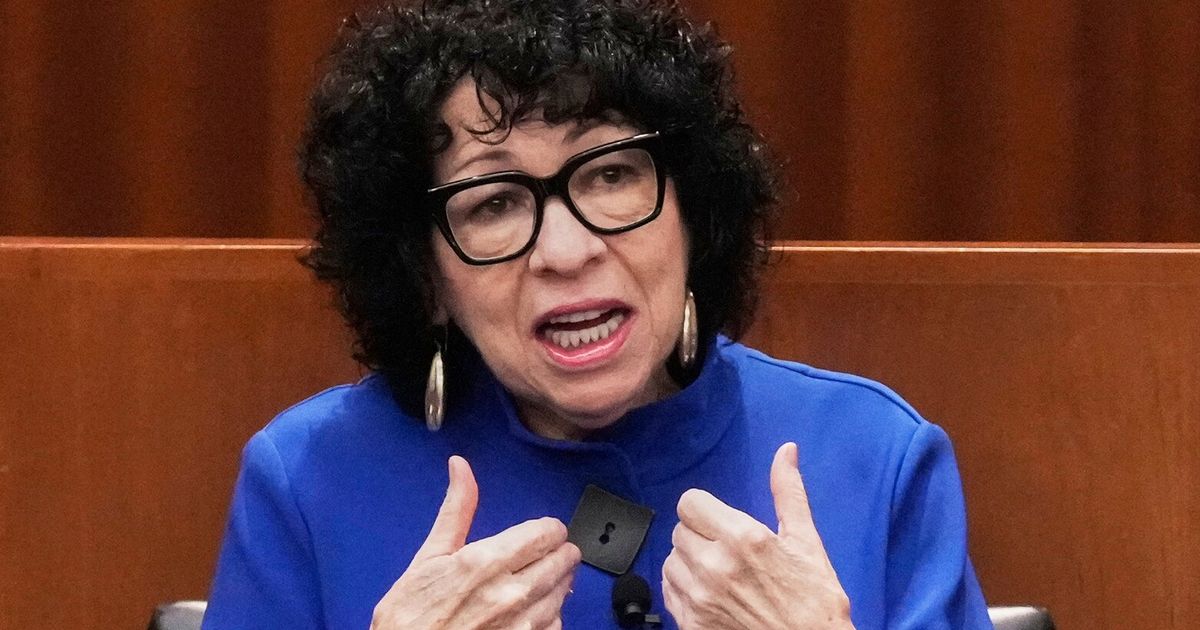
Justice Sonia Sotomayor recently made headlines for her candid remarks about her Supreme Court colleague, Justice Brett Kavanaugh, during a talk at the University of Kansas School of Law. In discussing Kavanaugh's views on immigration in relation to a high-profile case, she expressed personal criticism that some perceived as crossing a line. However, she later recanted, acknowledging that her comments were overly personal and not reflective of the professional decorum expected from justices of the highest court in the land. This incident has sparked conversations about the boundaries of judicial discourse and the implications for public trust in the Supreme Court.
The significance of this episode extends beyond the immediate context of the comments. It raises questions about the nature of judicial responsibilities and the expectations placed on justices as both legal authorities and public figures. As the political climate becomes increasingly polarized, the Supreme Court often finds itself at the center of contentious debates, such as those surrounding immigration laws and civil rights. For instance, recent articles like Court Rules Texas State Must Reinstate Prof Fired for Israel-Palestine Talk and Kentucky State University Students, Alumni Sue to Block New State Law illustrate the heated discussions that can emerge from legal interpretations that impact social justice and individual rights.
When justices speak publicly, their words carry weight. Sotomayor's apology underscores the delicate balance between personal conviction and professional restraint. In an era where public trust in institutions is waning, particularly among younger generations, maintaining a sense of decorum in judicial matters is crucial. The court's credibility hinges not just on its rulings but also on the behavior of those who serve on it. For readers and observers, Sotomayor's misstep serves as a reminder that the justices are human, but it also emphasizes the necessity for them to navigate their roles with care.
As we reflect on this incident, it is essential to consider the broader implications for the judiciary and its relationship with society. Sotomayor's comments could be interpreted as a reflection of genuine concern for the implications of Kavanaugh's legal interpretations, particularly for marginalized communities affected by immigration policies. This raises an important question: how should justices balance their personal beliefs with the impartiality expected of their roles? As we follow the evolving dynamics of the Supreme Court, it will be interesting to see whether this incident influences how justices communicate publicly, especially in light of ongoing debates surrounding judicial activism and restraint.
In conclusion, while Sotomayor's apology may defuse immediate tensions, it also opens the door for deeper discussions about the ethical boundaries of judicial speech. As the landscape of American law continues to shift, the conversation surrounding personal versus professional expression in the judiciary will remain vital. Readers should keep an eye on how such incidents may shape future interactions within the court and influence public perception of its legitimacy and authority.
At the University of Kansas School of Law last week, she criticized her colleague while discussing his views in an immigration-related case.
Read on the original site
Open the publisher's page for the full experience