How Much Can Dietary Changes and Food Production Practices Help Mitigate Climate Change?
Our take
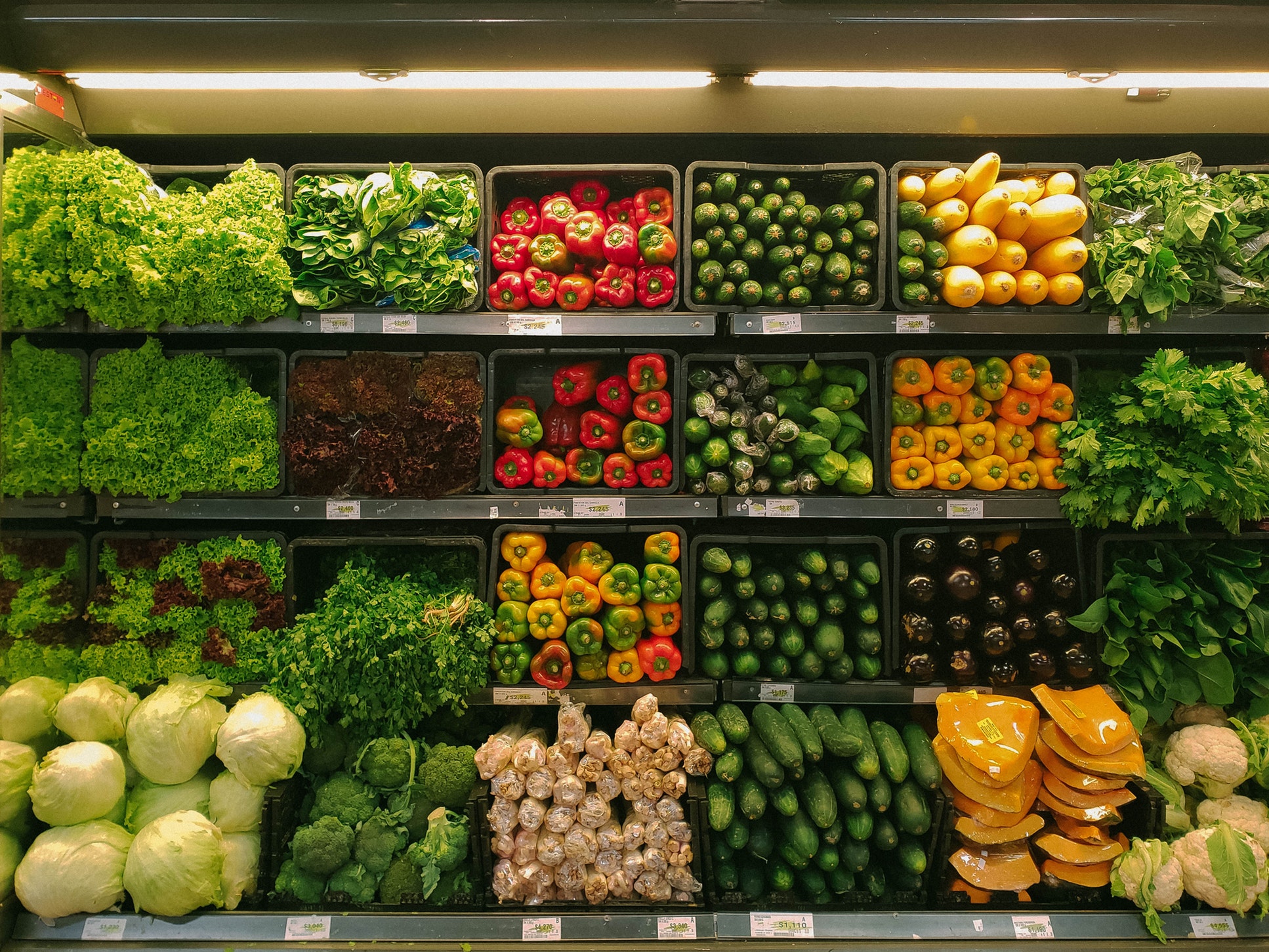
The recent article titled "How Much Can Dietary Changes and Food Production Practices Help Mitigate Climate Change?" dives into a pressing issue that intersects personal choices with global responsibility. As the International Panel on Climate Change has highlighted, agriculture and land use are significant contributors to greenhouse gas emissions, accounting for about 23 percent of the total. This statistic is staggering and serves as a wake-up call for individuals and policymakers alike. The article encourages readers to consider how individual dietary shifts and sustainable farming practices can play a critical role in combating climate change. In a world where every small action can culminate in significant change, this topic deserves our attention, especially alongside related discussions, such as the legal battles surrounding academic freedom in the Court Rules Texas State Must Reinstate Prof Fired for Israel-Palestine Talk and the ongoing efforts to bolster conservation through innovative research, as seen in UW researchers decipher beluga calls to bolster conservation efforts.
The article emphasizes the potential of individual dietary changes to contribute to environmental sustainability. For many, the thought of changing their eating habits may seem daunting or insignificant in the grand scheme of climate change. However, the reality is that collective action begins with individual choices. By opting for plant-based diets, reducing food waste, and supporting local farms, consumers can significantly lessen their carbon footprints. This aligns with a growing awareness among many young people, particularly those at institutions like WSU, who are increasingly concerned about climate action and are seeking ways to make a positive impact.
Moreover, the article sheds light on the importance of sustainable food production practices. It is not enough for consumers to change their diets; there needs to be a concurrent shift in how food is produced. Sustainable farming techniques not only reduce emissions but can also enhance food security and biodiversity. As we witness the effects of climate change intensifying—be it through wildfires, floods, or other extreme weather events—it becomes clear that our agricultural practices must evolve. This is where the intersection of community and environmental stewardship becomes invaluable. Local efforts to promote sustainable practices can create ripple effects, fostering a sense of belonging while addressing the urgent need for climate action.
As we look to the future, it’s essential to ask ourselves how we can support initiatives that promote these dietary and production changes. Are there opportunities for those of us on campus to engage in discussions or projects that advocate for sustainable practices? The responsibility lies not only with individuals but also with communities and institutions. Universities can play a pivotal role in shaping policies that encourage sustainable food systems and empower students to take action.
In closing, the conversation surrounding dietary changes and sustainable food production is not merely an environmental issue; it’s a matter of social responsibility. As we navigate our daily lives and choices, let’s keep in mind that our actions today can lead to a more sustainable tomorrow. What steps can we take, both individually and collectively, to ensure that future generations inherit a healthier planet? The challenge is immense, but so too is our potential for positive change.
Last week, the International Panel on Climate Change, the United Nations body for assessing scientific research related to climate change, released a Summary for Policymakers of the Special Report on Climate Change and Land. This summary outlines ways current land management practices contribute to global climate change and explores potential paths toward better land management that can help mitigate greenhouse gas emissions and improve land sustainability.
Agriculture, forestry, and other types of land use account for 23 percent of anthropogenic greenhouse gas emissions, according to the IPCC. To tackle such impacts, the IPCC included one idea that’s popping up more and more: a wide-scale shift to plant-based diets featuring sustainably produced foods.
“Balanced diets featuring plant-based foods, such as coarse grains, legumes, fruits and vegetables, and animal-sourced food produced sustainably in low greenhouse gas emission systems, present major opportunities for adaptation to and limiting climate change,” Debra Roberts, co-chair of IPCC Working Group II, said in a press release. (In the summary of the report, the IPCC acknowledges that factors like financial barriers and cultural habits may influence the adoption of such diets.)
But how much difference can such choices really make? A wealth of research supports the idea that adopting a low- or no-meat diet is a significant way to lower an individual’s greenhouse gas footprint. The IPCC report cites data showing that livestock production accounts for the greatest portion of ice-free land on Earth’s surface, and contributed to over half of anthropogenic nitrous oxide emissions in 2014.
While there is limited data available that can confidently measure the expansion of the meatless population, societal indicators like the double-digit sales growth of plant-based food options between 2014 and 2017 reflect a growing consumer demand for vegan and vegetarian foods. Still, an analysis by Animal Charity Evaluators found that between 2 and 6 percent of Americans self-identify as vegetarians, and only 1 percent of Americans self-identify as vegetarians and report never consuming meat.
“The fundamental problem with climate change is that it’s a collective problem, but it rises out of lots of individual decisions. Society’s challenge is to figure out how we can influence those decisions in a way that generates a more positive collective outcome,” says Keith Wiebe, senior research fellow at the International Food Policy Research Institute.*
Wiebe argues that policy has limited potential to influence individual dietary choices. He sees a tax on meat, for instance, as a blunt tool that doesn’t take into account the nuance of people’s varied dietary needs. Such a tax also wouldn’t necessarily sway a wealthy consumer from buying meat because food is already a relatively small portion of their expenses, and a small price increase makes little difference to them, he says.
Something that has a greater influence, Wiebe says, is generational social change. He notes, for example, how car ownership, which was a hallmark of independence and freedom when he was young, has declined greatly in his children’s generation. Fewer young people need or want cars. Similarly, young people today are much more tuned in to global concerns like climate change than Wiebe’s generation was, he said. This fact is visible through the worldwide participation in youth climate strikes earlier this year.
“These types of generational changes can have a big impact well beyond anything that would come out of a policy measure or an educational system that would tell you how to change your behavior,” he says.
David Festa, senior vice president for ecosystems for the Environmental Defense Fund, argues that placing too much emphasis on individual dietary choices oversimplifies the highly complex system of agriculture. Instead of thinking just about what they eat, more people should be thinking about and having conversations about how their food is produced and what it means to produce food in a sustainable way, he says.
For farmers, sustainable food production has to do with things like soil health, groundwater, and fertilizer efficiency. If farmers build the health of their soil rather than strip it of its nutrients, manage water without depleting underground aquifers, and use fertilizer in a way that avoids pollution of water and air, then that will ultimately increase crop yields, Festa says.
Consumer demand is one of four important variables that, when combined, can influence and shape farming practices, according to Festa. The other three are the culture of farming communities, governmental policies, and the economic system that drives farming. The rise of organic farming exemplifies how these factors can come together: Consumers want organic food, the United States Department of Agriculture has issued policy standards for it, farmers have grown comfortable in their communities turning to organic practices, and there’s an economic incentive for farmers to grow organic in the form of price premiums. Festa argues that this is why organic farming in the U.S. saw a 56 percent increase between 2011 and 2016.
To Festa, the success of the organic movement is an indicator that people already care about the nuances of how their food is manufactured or grown, and those conversations will lead to more effective, sustainable change than simply urging people to do something like stop eating meat or adopt new dietary guidelines: “You get more traction with people [by] instead of saying ‘Don’t do this,’ say[ing]: ‘Hey, ask how your beef was produced. Find out more about that. Learn about that.'”
While Wiebe says policy changes can have limited influence on consumer dietary choices, Festa says those changes are, in fact, making a big difference for sustainable production. For instance, as a part of the 2018 farm bill, the USDA now provides grants to farmers to incentivize them to adopt practices like no-till and cover crops, which researchers have found help keep carbon in the soil rather than releasing it in the air, improve overall soil health, and increase crop yields.
“Policies that support sustainable land management, ensure the supply of food for vulnerable populations, and keep carbon in the ground while reducing greenhouse gas emissions are important,” Eduardo Calvo, co-chair of the Task Force on National Greenhouse Gas Inventories, said in the IPCC press release.
Given the state of our global climate, scientists, policymakers, farmers, and individual consumers will inevitably keep thinking about how they can do their part to decrease greenhouse gas emissions and improve the sustainability of our land and our food supply. Wiebe points out that, as more organizations like the IPCC promote diets rich in plant-based foods, it’s important to consider the implications of such a large-scale diet shift on the environment—something nobody has yet researched or projected, he says.
“Some of the dietary recommendations talk about getting more protein from nuts, for example,” Wiebe says. “If all of a sudden seven billion people double their consumption of ground nuts or almonds or other types of nuts, that’s going to have a big impact on land use going to those crops that we really haven’t looked at yet.”
*Update—August 16th, 2019: This post has been updated with the correct spelling of Keith Wiebe’s name and to clarify his position on policy’s potential to influence individual dietary choices.
The post How Much Can Dietary Changes and Food Production Practices Help Mitigate Climate Change? appeared first on Pacific Standard.
Read on the original site
Open the publisher's page for the full experience