A Radical Message for a Kids’ Movie
Our take
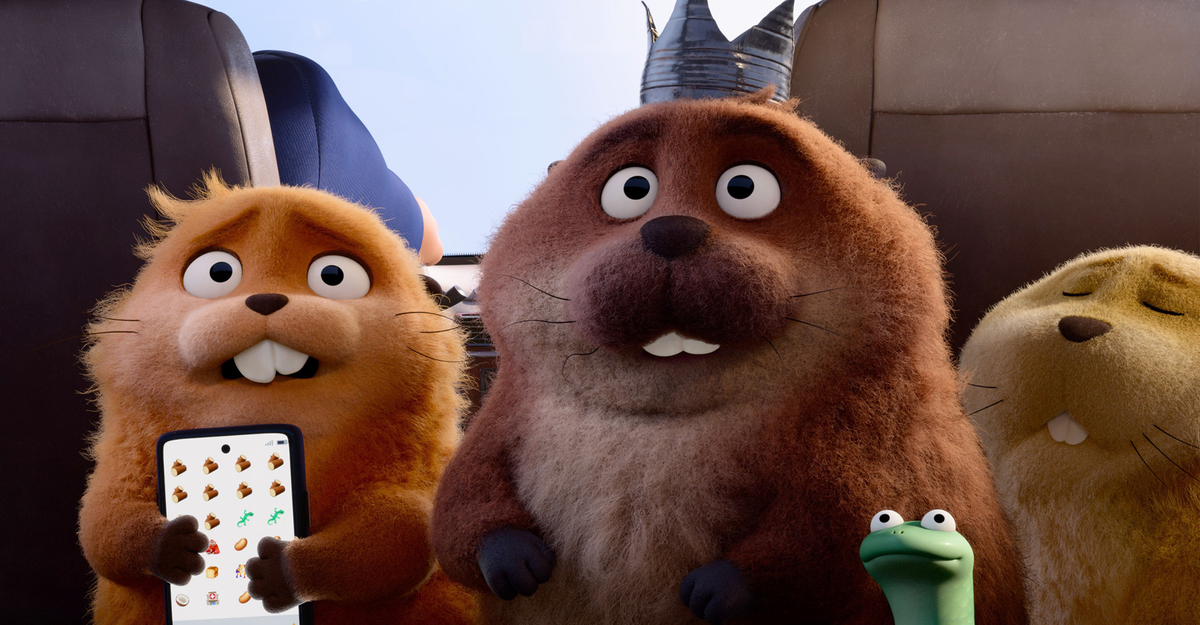
In the world of children's entertainment, movies often paint a rosy picture where animals coexist in harmony, as seen in hits like *Zootopia* and its successors. The recent article, “A Radical Message for a Kids’ Movie,” highlights how Pixar's latest offering, *Hoppers*, takes a significantly different approach. While previous films offered a utopian vision of animal society, *Hoppers* delves into the complexities of collective action and the challenges of fighting for a cause. This shift in narrative is not only refreshing but also relevant, especially in a time when young audiences are increasingly engaged with themes of activism and social justice. It raises questions about how we prepare the next generation for the realities of the world around them, much like the discussions surrounding the recent court ruling on academic freedom or the challenges faced by students at Kentucky State University regarding new state laws, which reflect real-world complexities that extend beyond the silver screen.
At the heart of *Hoppers* is Mabel Tanaka, a college student who fights to save a beloved habitat from destruction. Unlike the protagonists of *Zootopia* or *Goat*, who navigate a world of animated whimsy with clear-cut resolutions, Mabel’s journey is rife with complications. The film highlights that while activism can be well-intentioned, the outcomes can often lead to chaos rather than the hoped-for harmony. This is a pragmatic message for young viewers: change is messier than it seems. Mabel's struggle to unite various animal factions only leads to disorder rather than seamless cooperation. This distinction is crucial; it suggests that the road to progress is often fraught with challenges, a lesson that resonates with the realities of social movements today.
What makes *Hoppers* particularly compelling is its willingness to explore the limits of collective action. The film's portrayal of a chipper beaver named George, who embodies the incrementalist approach to activism, juxtaposes Mabel's more radical tactics. This dynamic serves as a powerful metaphor for the broader discourse on how change is achieved. It invites viewers to reflect on their own beliefs regarding activism: should we be idealistic, aiming for sweeping changes, or realistic, understanding that progress often requires compromise? This nuanced perspective is a departure from the simplistic narratives often found in children's films and encourages critical thinking. It echoes sentiments found in discussions on environmental conservation, as seen in the recent piece on deciphering beluga calls to enhance conservation efforts.
Ultimately, *Hoppers* challenges the notion that simply being "right" guarantees success. It emphasizes that understanding the complexities of any situation—including the necessity for collaboration among diverse parties—is essential for achieving meaningful outcomes. This narrative choice sets a new standard for children's cinema, which has often shied away from portraying the messiness of activism. As audiences engage with this film, they may find themselves reflecting on the implications of collective efforts in their own lives and communities.
As we look ahead, one wonders how this more sobering take on activism will influence future storytelling in children's media. Will other filmmakers follow suit, embracing the complexities of real-world issues as *Hoppers* has done? This thoughtful approach could reshape the landscape of animated films, encouraging a generation not just to dream but to grapple with the realities of making those dreams a reality.
My daughter is now of the age where she will go see any new animated film in a theater, which means that again and again, I encounter a very specific utopian vision from the world of children’s entertainment: Wouldn’t it be nice if all of the animals lived together in harmony? The theme is certainly a knock-on effect from Zootopia, the 2016 smash hit whose sequel was the highest-grossing American film of 2025. But that success also led to the sci-fi woodland antics of The Wild Robot; the Oscar-winning, postapocalyptic vision of feline collaboration in Flow; and the paean to basketball teamwork that was this year’s Goat. Now there’s Hoppers, the latest blockbuster Pixar film, which follows a girl who beams her brain into a beaver robot in the hope of saving a beloved habitat.
I expected Hoppers to offer some fanciful twist in the manner of those other movies. Take the Zootopia series and Goat, in which animals exist in a human-free world and play our roles: They don clothes, earn money, and defy their basic instincts in order to maintain their weird, civilized societies. Each of those films also features a plucky, diminutive hero who succeeds in the face of naysayers—an easy figure for any kid watching to root for. In Zootopia, the main character (a rabbit named Judy Hopps) becomes a police officer despite the fact that, as a bunny, she’s seen as “prey” rather than “predator.” In Goat, the pygmy goat Will Harris is the first “small” to play a super-intense version of basketball against teams of elephants, giraffes, and other big creatures. But if these movies are progressive allegories of beings transcending their differences, then Hoppers is a surprisingly blunt pushback to that notion. Its advertising promises goofy hijinks amid an enclave of diverse species whose ecosystem is threatened by humans. The movie, in actuality, is refreshingly mordant about what might really happen if prey and predators were to try banding together: Their efforts would immediately devolve into a despairing, even political quagmire.
Hoppers is set in a reality that more closely resembles our own than that of other animal-centered films, and it even has a human protagonist. Mabel Tanaka (voiced by Piper Curda) lives in Beaverton, Oregon, and fights to save the idyllic forest glade that she often visited with her grandmother when she was growing up. The glade has mysteriously emptied of wildlife just before a highway is set to be built straight through it. Mabel, now a college student, hijacks her professor’s experimental new technology to “hop” into an artificial beaver body, which allows her to communicate with animals—so that she can coax the missing critters back home. (It’s silly, yes; just go with it.)
[Read: A cartoon gateway to real-world issues]
Mabel quickly realizes that the glade’s inhabitants have not left of their own accord but have been pushed out by the scheming mayor, Jerry (Jon Hamm). Jerry has installed fake trees that emit high-frequency noises to scare them away, allowing him to develop the land as he pleases. Mabel’s mission seems clear and appropriately legible for a children’s film: She simply has to mobilize the animals in protest, dismantle Jerry’s devices, and restore peace to her beloved meadow. But the underlying message of Hoppers is that the strange animal collective Mabel is working with is no well-oiled machine. The movie interrogates the limits of collective action: Mabel and her furry buddies do manage to save the glade, yet they achieve more chaos than progress in the meantime.
In response to their home being invaded, the glade’s various groups of fauna have each anointed a friendly “king” to lead them. The mammals are led by a chipper naïf of a beaver named George (Bobby Moynihan), who insists that everyone can still live in harmony even as their territory shrinks. Mabel is the incensed revolutionary, whereas George is the establishment incrementalist, working to plug holes on a steadily sinking ship and refusing to fight back against the people who have taken their land. Hoppers is about their two viewpoints meeting in the middle: Mabel is correct that George is sticking his head in the sand a little bit; George, however, is correct that the animals can’t just get everything they want through protest.
That perspective struck me as an amusingly pragmatic one for a cartoon to impart to little kids, and it underscores much of the plot. Mabel, in faux-beaver form, rallies the wildlife to fight Mayor Jerry but sows anarchy in doing so. A megalomaniacal butterfly (Dave Franco) grows obsessed with “squishing” the humans who have killed his kind for so long. A flock of seagulls lifts a shark from the sea so that it can try eating Jerry alive. A wildfire eventually breaks out, requiring some expert dam destruction from George’s fellow beaver pals to just barely save the day. This comic violence is mostly in the name of fun for the children watching, of course, but the lesson Mabel learns from it is clear: Merely knowing that you’re in the right isn’t enough.
[Read: What Pixar should learn from its Elio disaster]
The takeaway here is much more sobering than those of cinema’s other big animal fantasies, in which the hardworking mammalian protagonists tend to triumph over adversity. Hoppers is a much more measured viewing experience, a youth-focused lecture on how we should have a ceiling to our radical hopes and dreams. The core theme also automatically makes it the most interesting work Pixar has put in theaters in years, a sign of what long ago set the studio apart as an animation storytelling powerhouse. Whereas other movies aimed at kids advocate for how being yourself is the best approach to life, Hoppers adds a caveat—that “being yourself” doesn’t mean you’ll get everything you want.
Read on the original site
Open the publisher's page for the full experience